
This post may contain affiliate links. Please read our disclosure policy.
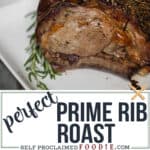
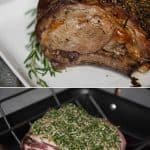
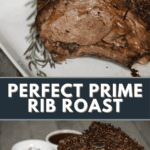
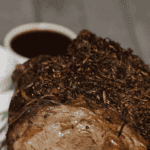
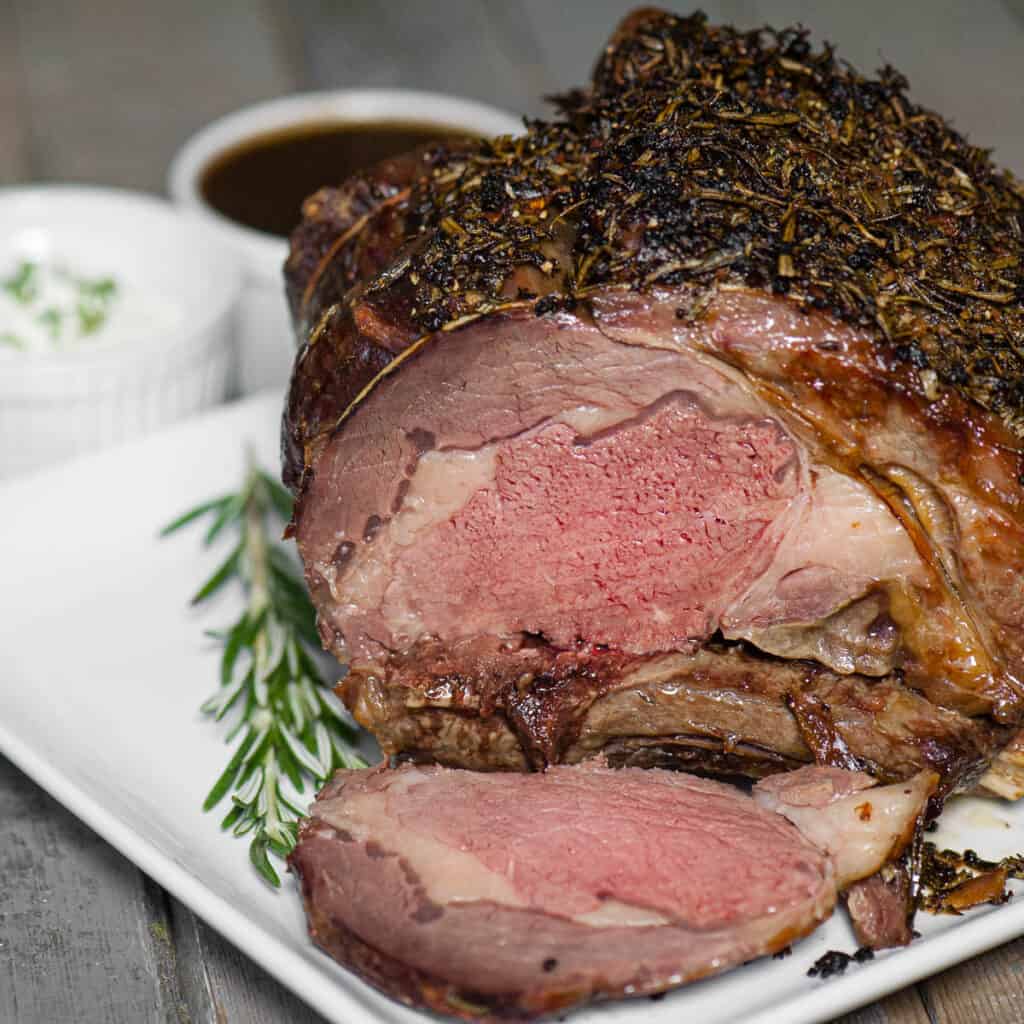
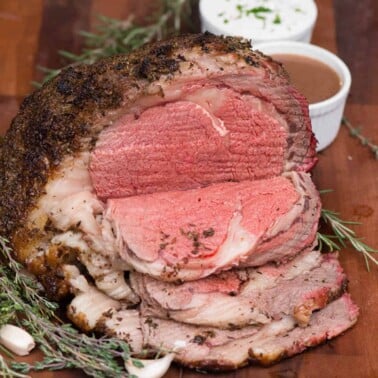
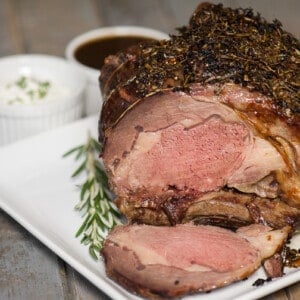
This recipe will explain how to cook the most mouthwatering, tender, and flavorful oven roasted Prime Rib with a delicious fresh herb crust and divine rich wine sauce. Everything you need to know to get perfect results is below.
Don’t be intimidated by this roast. It’s not cheap, so you definitely don’t want to mess it up. I get it. This recipe works for any size roast. This is a standing rib roast recipe, meaning the roast is sold with the bones, but it can be used to make a boneless prime rib as well.
Looking for other impressive main dish recipes? You can’t go wrong with perfectly cooked Filet Mignon, Smoked Prime Rib, or Broiled Lobster Tails.
Table of Contents
- Prime Rib Roast at a Glance
- Krissy’s Notes
- Prime Rib Roast Explained
- Boneless vs Bone-in Prime Rib Roast
- Prime Rib Calculator: How Much Per Person
- How Long to Cook Prime Rib
- Prime Rib Temperature
- Recipe Tip
- How to Cook Prime Rib in the Oven
- Step 1: Set Up the Roasting Pan
- Step 2: Add the Broth and Wine
- Step 3: Mix the Herb Crust
- Step 4: Add the Herbs and Thermometer
- Step 5: Roast, Then Rest
- Step 6: Make the Red Wine Sauce
- Red Wine Sauce (and What to Use Instead of Wine)
- Common Prime Rib Mistakes (and How to Avoid Them)
- Side Dish Recommendations
- Prime Rib Roast FAQs
- How do I choose a good prime rib roast?
- What is the best way to carve a prime rib roast?
- Can I prepare the herb crust in advance?
- Do I cover the roast while it cooks?
- What if I don’t have a roasting rack?
- Can I cook two roasts at the same time?
- Does a boneless prime rib roast cook faster?
- Do I need more herb crust for a bigger roast?
- More Prime Rib Recipes
- Perfect Prime Rib Roast Recipe
Prime Rib Roast at a Glance
- The recipe: a bone-in standing rib roast with a fresh garlic and herb crust, roasted over beef broth and red wine that turn into the sauce.
- Why you’ll love it: the roast and the red wine sauce come out of the same pan, so there’s no separate au jus to make.
- Time: an hour on the counter first, then about 2 hours in the oven for a 5-pound roast and 20 minutes to rest.
- Main ingredients: prime rib roast, red wine, beef broth, olive oil, garlic, fresh rosemary and thyme.
- Method: 20 minutes at 450°F to brown the outside, then 350°F until the thermometer says it’s done.
- When to pull it: 120 to 125°F for medium rare. It climbs to 130 to 135°F while it rests.
- Quick tip: a leave-in meat thermometer is the one tool you can’t skip.
Krissy’s Notes
This is the prime rib I make every Christmas, and this recipe has been viewed well over 2 million times. It’s just as good for Easter or any big family dinner.
- Best Christmas Dinner: Prime rib roast is an excellent cut of beef to enjoy for a special or holiday dinner. Why? Because you can buy various sizes of the roast that will feed anywhere from 4-20 people. Plus, by the nature of how prime rib cooks, you will end up with servings that range anywhere from rare or medium rare all the way to well done.
- Worth the Cost: Prime rib is an expensive cut of meat for good reason. The incredibly tender cut is marbled with fat in all the right places to yield the most delicious beef roast you’ll ever enjoy. That being said, it can be rather intimidating to spend that much money on a roast if you’ve never cooked one before. Never fear; I will walk you through everything you need to know to achieve perfect results.
- Amazing Sauce: During the cooking process, all of that wonderful fat marbling throughout the roast and the fat cap on top will render. I add wine and beef broth to the roasting pan that catches all of those flavorful herb infused drippings. Instead of making an au jus to serve, this amazing wine sauce gets reduced while the roast is resting.
- Simple and Easy To Make: This recipe has always been my favorite because it is actually incredibly simple. You’ll find that the roast turns out flavorful and moist because of the cooking method and the herb crust. The rich red wine sauce is the perfect accompaniment.
Prime Rib Roast Explained
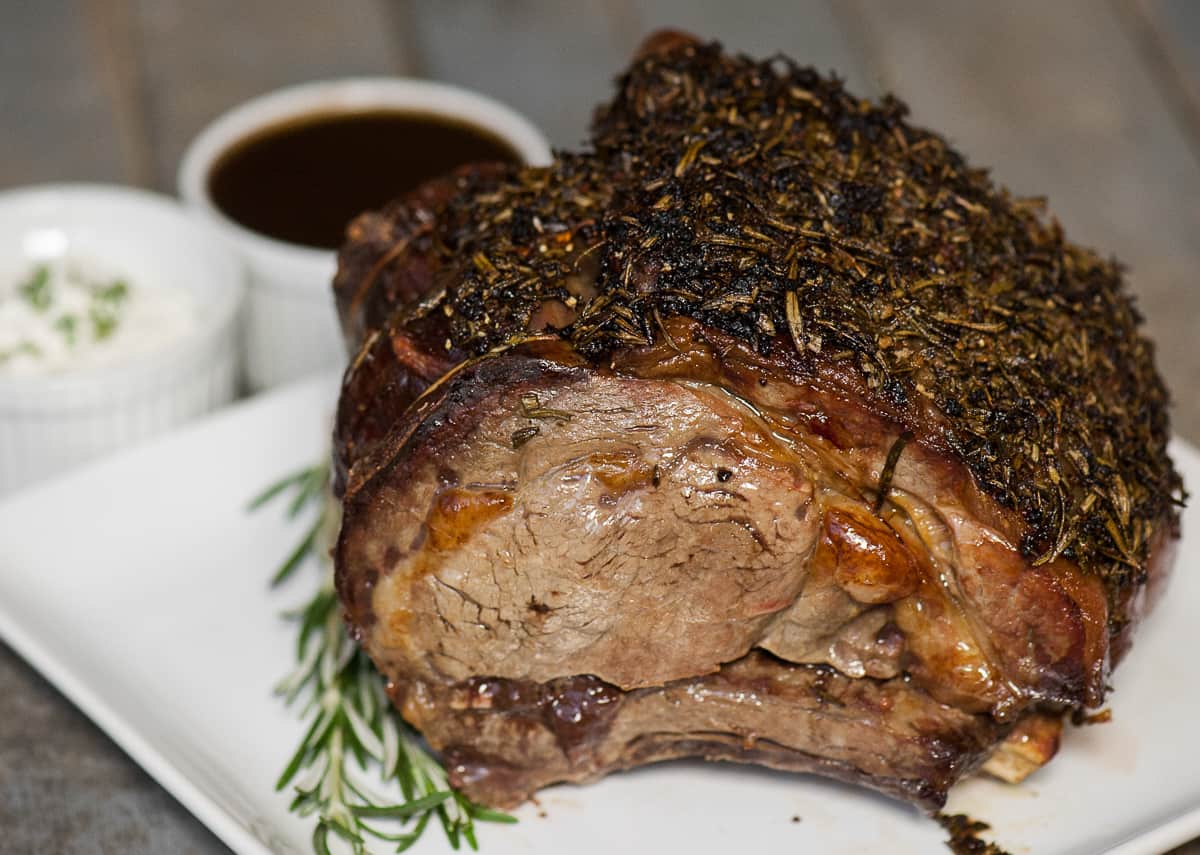
A prime rib roast is an expensive primal cut of beef from the ribeye section that can be purchased as boneless or bone-in.
It is extremely flavorful and tender, typically roasted whole, and known for its rich marbling and succulent taste.
They can usually be found at a local butcher, but during the holiday season, you can also easily find them at places like Costco and your local grocery store.
Boneless vs Bone-in Prime Rib Roast
A standing prime rib roast is sold with the beef ribs. It is referred to as a standing rib roast because the butcher separates the ribs from the roast but ties them together with kitchen twine. The roast stands on the bones, creating an insulating layer of protection.
The bones do not add to the flavor like they would if they were braised in liquid, however they do insulate the meat and are also quite delicious. Save them after dinner, too: leftover rib bones make a rich roasted beef bone broth.
In my opinion, the perfect prime rib roast is cooked with the bones, but it is more common to find boneless prime rib sold in grocery stores and at the butcher shop.
Prime Rib Calculator: How Much Per Person
How much prime rib is needed per person is a very common question.
Prime rib roasts often range in size from 4-pounds all the way up to 20-pounds.
- Bone-in: A bone-in prime rib roast can contain anywhere from 2-7 bones. Since the ribs can be eaten and they add to the weight of the roast, they are factored into how much you will need to buy. Plan on about 1-pound per serving if you are buying a prime rib roast with rib bones.
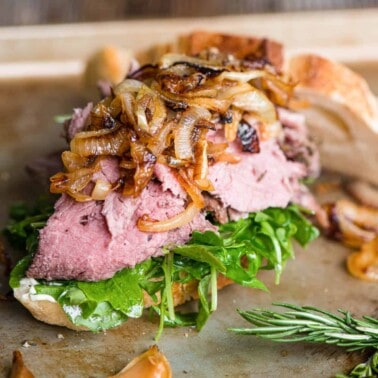
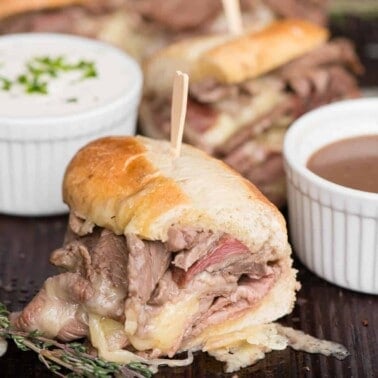
- Boneless: If you are buying a boneless roast, you can plan on needing a minimum of a 1/2-pound per serving. I always round up, however, because we have big eaters and love to make leftover prime rib sandwiches with caramelized onions. We also use the meat to make French Dip sandwiches or add it to a massive baked potato.
How Long to Cook Prime Rib
This recipe uses a very high heat to first sear and seal the roast which creates a flavorful crust. Then, the heat is lowered and the roast continues cooking in the oven.
For that reason, this recipe does not take that long to cook, but the total cooking time completely depends on a number of factors:
- size of the roast
- starting temperature of the meat
- consistency of the oven
- final desired temperature of meat (rare, medium rare, etc.)
Using this recipe, a 5-pound roast will only take about 2 hours to roast, plus rest time.
Prime Rib Cooking Time Chart
Use these times to plan your day, not to decide when it’s done. They’re for this recipe’s method (20 minutes at 450°F, then 350°F) with a roast that sat out for about an hour, pulled at 120 to 125°F for medium rare.
I always use a thermometer that stays in the roast so I can watch the temperature the whole time. If you only have an instant-read thermometer, the “start checking at” column tells you when to take your first reading.
| Roast weight | Start checking at | Plan for about |
|---|---|---|
| 4 pounds | 1 hr 20 min | 1 hr 40 min |
| 5 pounds | 1 hr 35 min | 2 hr |
| 6 pounds | 1 hr 50 min | 2 hr 20 min |
| 7 pounds | 2 hr 5 min | 2 hr 40 min |
| 8 pounds | 2 hr 20 min | 3 hr |
| 10 pounds | 2 hr 50 min | 3 hr 40 min |
| 12 pounds | 3 hr 20 min | 4 hr 20 min |
Cooking to medium takes a little longer, so keep going until the thermometer reads 125 to 135°F before you pull it.
Cooking Prime Rib in a Convection Oven
I use my convection oven all the time now, and I think it’s fantastic for roasting. The fan moves hot air all around the roast, so it browns beautifully and cooks faster.
With convection, I start the roast at 400°F instead of 450°F for the first 20 minutes, then drop it to 300°F instead of 350°F. The chart above won’t match, so start checking early. One reader’s 6-pound roast was already at 145°F after about 1½ hours in a convection oven at the regular temperatures!
Prime Rib Temperature
You must have a good thermometer in order to properly cook a prime rib roast.
Because I do not want to open the oven door while the roast is cooking, or pierce the roast to allow the juices to escape, I do not recommend using an instant-read thermometer.
Instead, I recommend using a meat thermometer that is inserted into the thickest part of the roast and designed to track temperatures over an extended period of time.
- Plan to remove your prime rib roast from the oven when it is at 10 degrees below your desired final temperature.
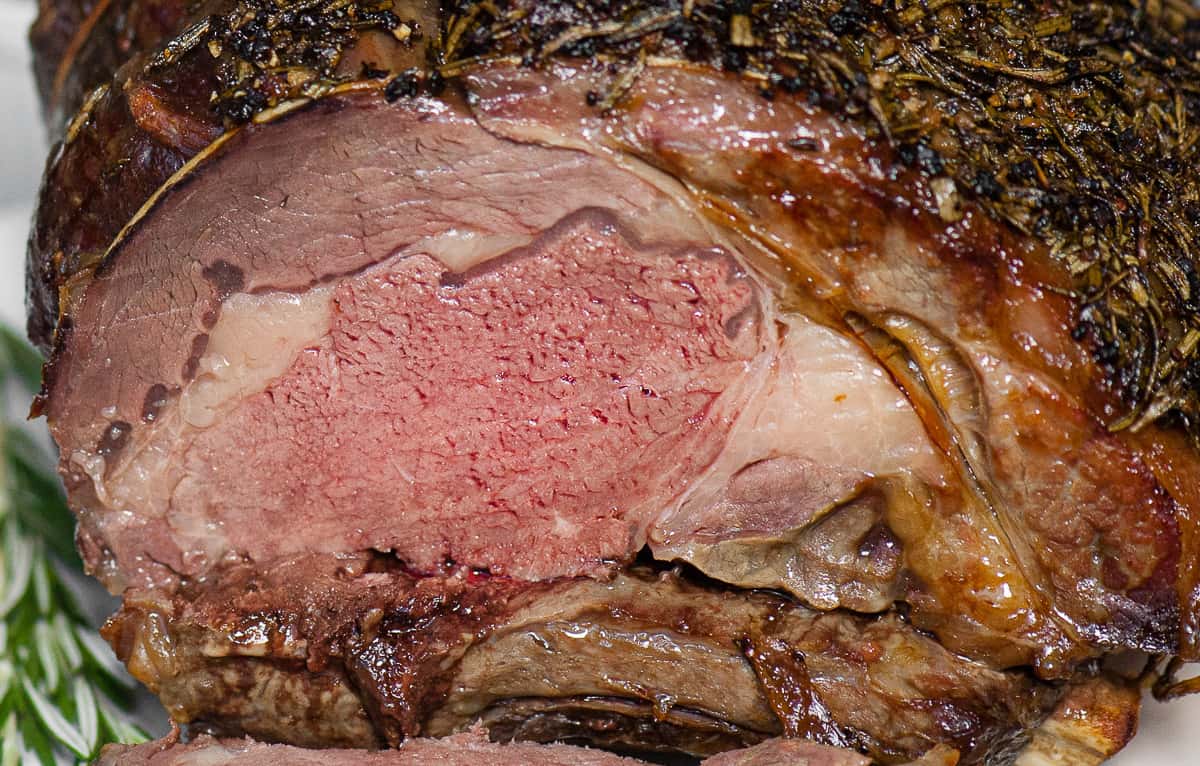
- The final prime rib temperature for rare meat is 120-130°F, medium rare is 130-135°F, medium is 135-145°F, medium well is 145-155°F, and well done is 155°F and up.
- Although the USDA recommends cooking beef roasts to 145°F with a rest of at least 3 minutes, I prefer my prime rib medium rare.
- Keep a close eye on the internal temperature as it approaches your desired temperature. The rate at which the temperature increases will accelerate the closer the roast is to being cooked.
- When you cook for a crowd, the best rule of thumb is to remove your prime rib roast from the oven when it hits 120°F and allow it to rest for about 20 minutes while loosely tented with foil.
Recipe Tip
Take the roast out of the refrigerator at least an hour before it goes in the oven, but no longer than 2 hours (that’s the food-safety limit for raw meat sitting out). If the prime rib is taken directly from the refrigerator to the oven, the ends will be cooked much more than the center.
How to Cook Prime Rib in the Oven
Full instructions with ingredient quantities are located in the recipe card below, but here is a summary.
Step 1: Set Up the Roasting Pan
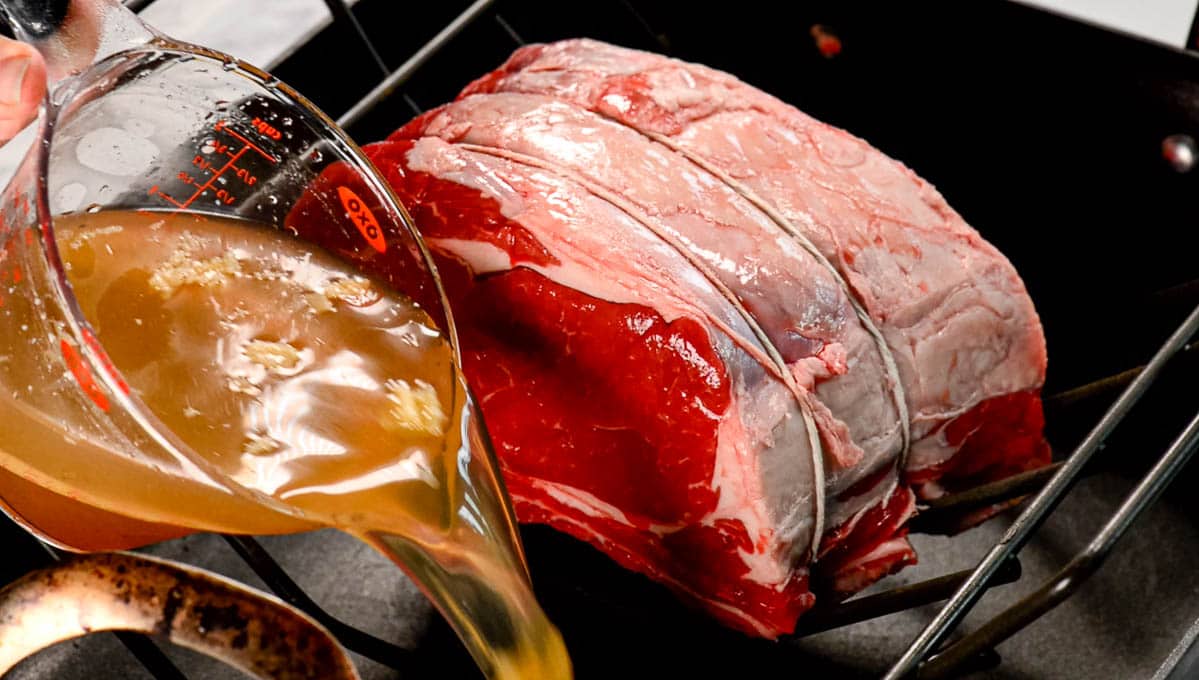
Place the roast on a rack in a roasting pan with the fat side facing up. If using a bone-in roast, place the bones underneath the roast.
Step 2: Add the Broth and Wine
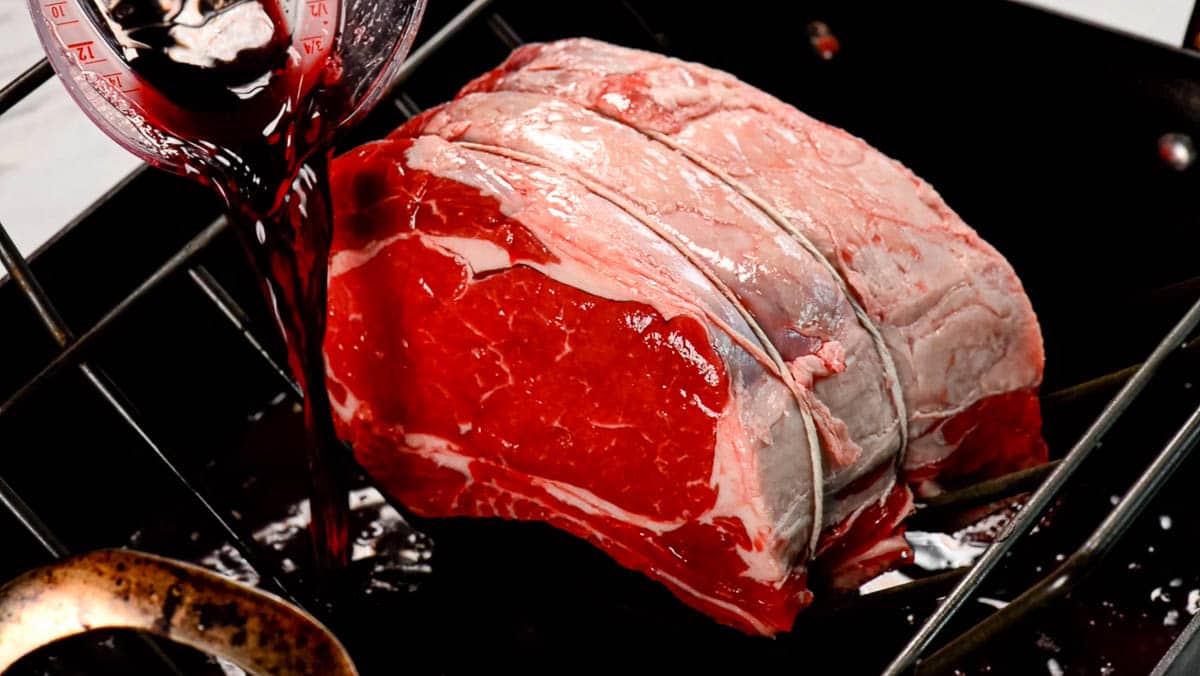
Pour the beef broth and some of the red wine into the pan.
Step 3: Mix the Herb Crust
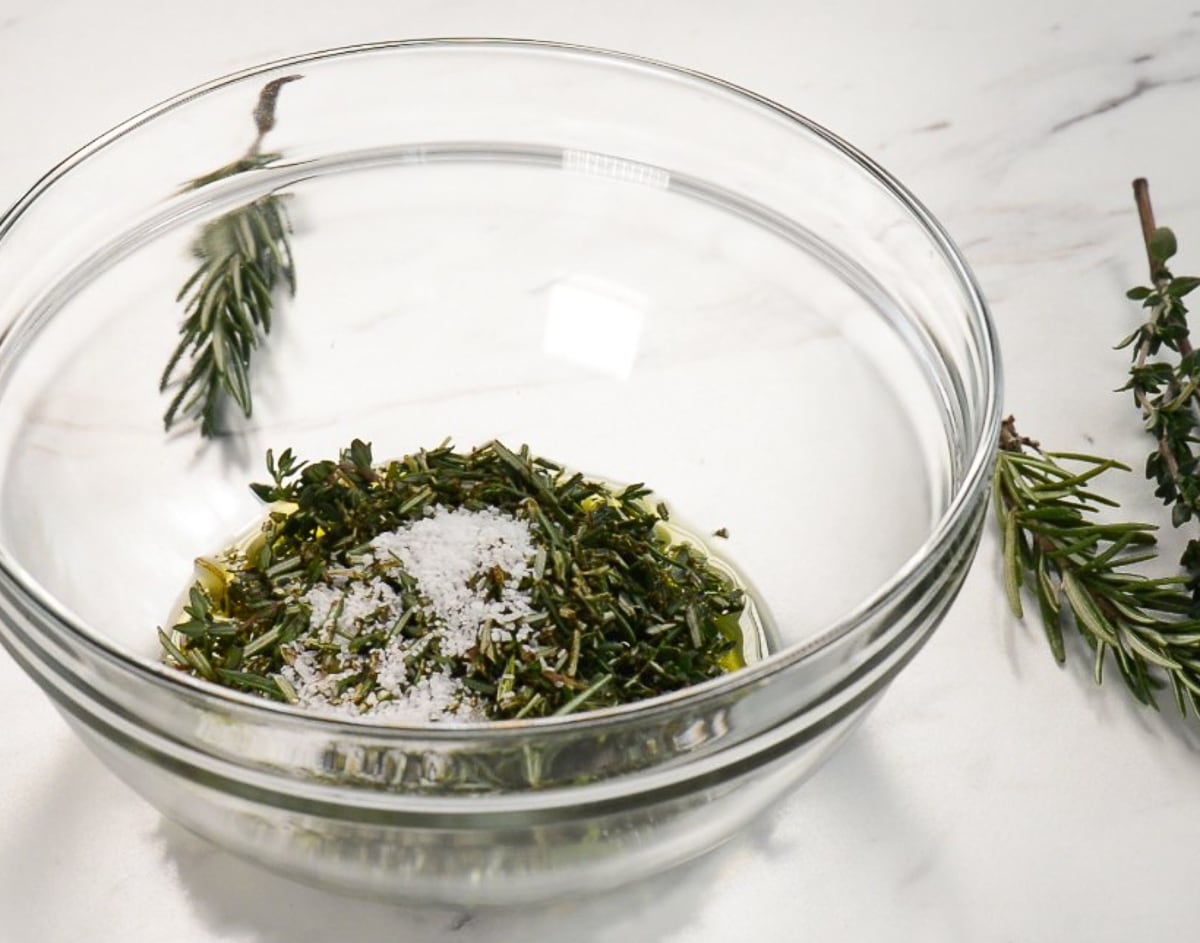
Mix together olive oil, fresh garlic, rosemary, thyme, salt and pepper in a small bowl.
Step 4: Add the Herbs and Thermometer
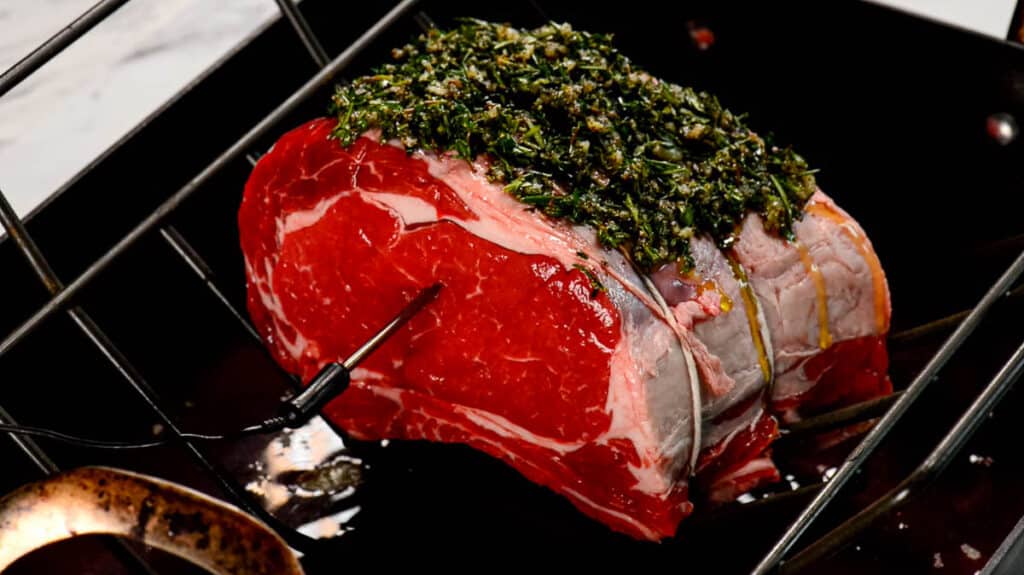
Spread the herb mixture over the top of the roast. Insert a meat thermometer into the center of the roast, without touching a bone.
PRO TIP: Set the oven rack low enough that the roast sits in the middle of the oven. If the top of the roast is too close to the heat during the 450°F start, the herbs burn instead of turning into a golden crust.
Step 5: Roast, Then Rest
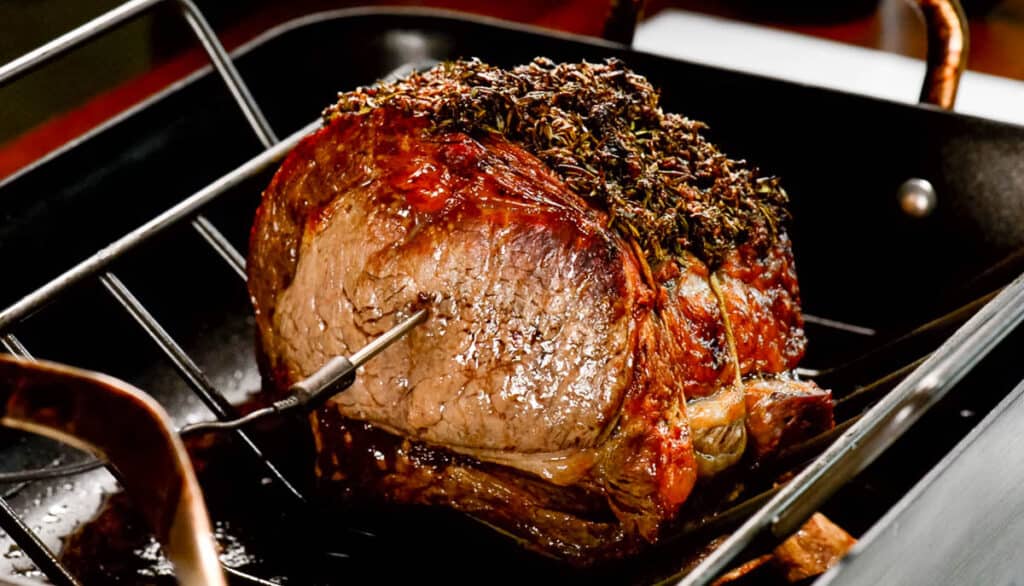
Cook the prime rib in a preheated 450°F oven for about 20 minutes. Then reduce the oven temperature to 350°F and, without opening the oven door, continue cooking until the desired internal temperature is met. Transfer the roast to a large plate or cutting board and loosely tent it with aluminum foil to keep it warm while it rests.
Step 6: Make the Red Wine Sauce
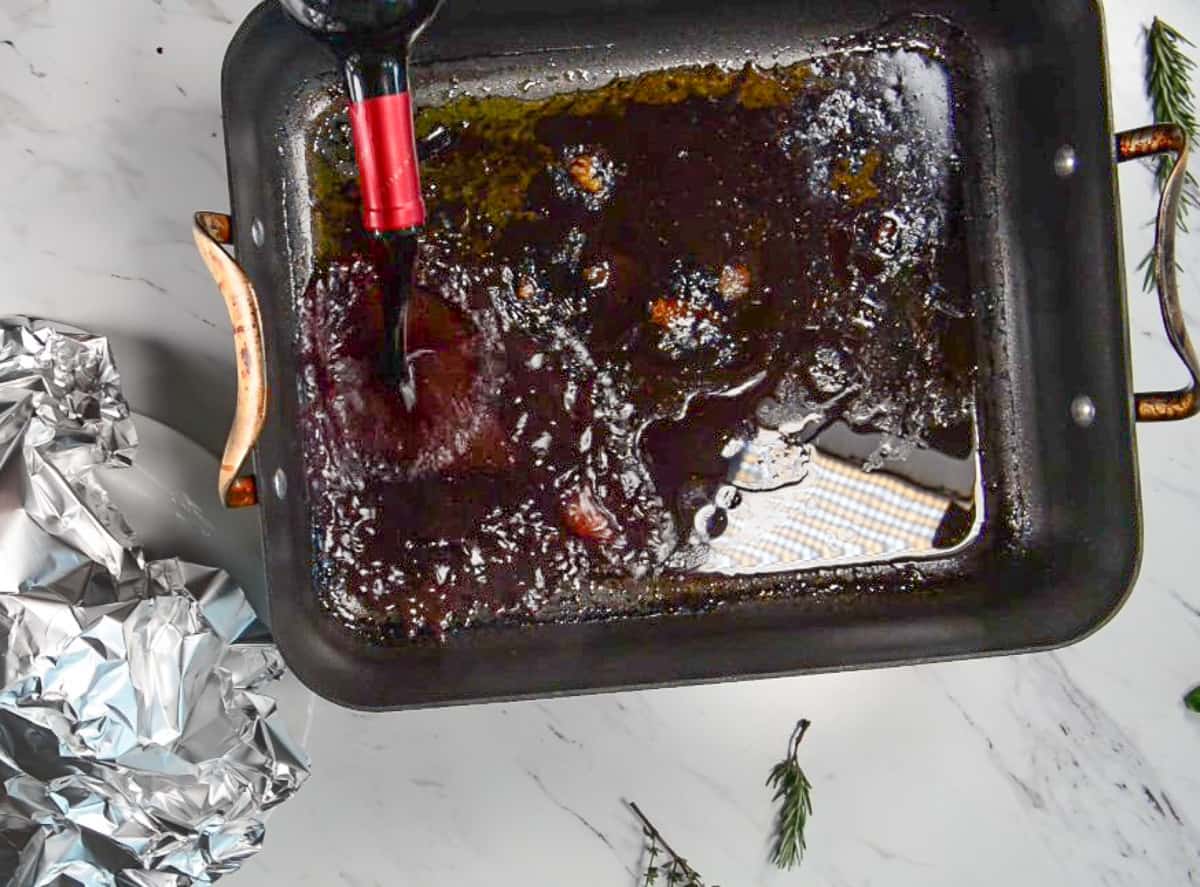
Pour the drippings into a saucepan, add the rest of the wine and let it gently simmer while the roast rests. Serve the warm sauce alongside the sliced roast.
Red Wine Sauce (and What to Use Instead of Wine)
Which wine: any dry red you’d happily drink. I usually use a Pinot Noir, but Cabernet Sauvignon, Merlot or a red blend all work. Just skip anything sweet, like port.
No wine? Use all beef broth. You’ll still end up with a rich sauce. If you miss the little bit of tang wine gives it, stir a teaspoon of balsamic vinegar into the finished sauce and taste.
Common Prime Rib Mistakes (and How to Avoid Them)
Almost every prime rib problem I hear about in the comments comes down to temperature. Get that right, and it turns out perfect.
- Not trusting the thermometer. Every roast is a different size and shape, and every oven runs a little different, so the clock is only a guess. When the thermometer says it’s ready, take it out, even if it’s earlier than you planned.
- Letting the pan go dry. If all the liquid evaporates, the drippings on the bottom of the pan burn, and so does your sauce. Check the pan once or twice and add more beef broth if it’s getting low.
- Herbs falling off when you slice. Chop the rosemary and thyme as finely as you can. The finer they are, the better they stick to the roast.
★★★★★
“ABSOLUTE PERFECTION!!! I followed directions exactly and this is hands down the best prime rib I’ve ever made. Thank you. It will be at our Christmas table again this year.”
Kimberly, reader review
Side Dish Recommendations
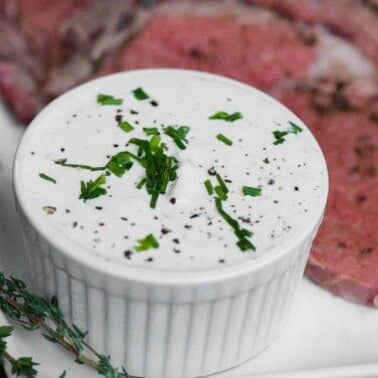
I always make horseradish sauce to accompany prime rib. If you’d like an alternative to the wine sauce, you can make a homemade au jus.
- Homemade lobster bisque makes a fantastic starter to this fancy meal.
- Brown Butter Mashed Potatoes, Roasted Garlic Mashed Potatoes, or Gorgonzola Celery Root Mashed Potatoes for your starch.
- Wilted Garlic Spinach, Garlic Parmesan Oven Roasted Asparagus, or Roasted Green Beans as a dark green vegetable.
- Homemade Dinner Rolls or Cornmeal Yeast Rolls with butter are also heavenly!
Prime Rib Roast FAQs
Here are some of the reader questions I’ve gotten about this recipe with my responses.
How do I choose a good prime rib roast?
Look for well-marbled meat with a thick layer of fat on top for added flavor and juiciness. Choose a roast with a bright red color.
What is the best way to carve a prime rib roast?
Slicing the roast is easiest with an electric serrated edge knife. This is what I always do.
Can I prepare the herb crust in advance?
Yes, it can be made a day ahead and stored in the refrigerator. Bring it to room temperature before using.
Do I cover the roast while it cooks?
No. Roast it uncovered so the outside browns. Only cover it, loosely with foil, while it rests.
What if I don’t have a roasting rack?
Set the roast directly on the oven rack and put the roasting pan with the broth and wine on the rack below it to catch the drippings. You want the roast above the liquid, not sitting in it.
Can I cook two roasts at the same time?
Yes. Space them out so they aren’t touching, and put a thermometer in each one. They may take a little longer, and each roast comes out when it reaches its own temperature.
Does a boneless prime rib roast cook faster?
It can, so start checking the temperature at the low end of the time chart. Everything else about the recipe stays the same.
Do I need more herb crust for a bigger roast?
Yes. If your roast is about twice the size, double the herb crust ingredients. You don’t need to double the wine and broth.
More Prime Rib Recipes
If you tried this Prime Rib Roast recipe or any other recipe on my website, please leave a 🌟 star rating and let me know how it went in the 📝 comments below. Thanks for visiting!
Pin this now to save it for later
Pin ItPerfect Prime Rib Roast
Ingredients
- 5 pound beef prime rib roast I prefer bone-in where the bones are cut and then tied to the roast. Weight can vary. For a roast about twice this size, double the herb crust. Use 1 bottle of wine and 2 cups of broth for any size roast.
Wine sauce:
- 750 milliliters red wine one bottle, divided
- 2 cups beef broth Might need more, see note below
Herb crust:
- 2 tablespoons extra virgin olive oil
- 2 tablespoons garlic minced
- 2 tablespoons fresh rosemary minced
- 2 tablespoons fresh thyme minced
- 1 tablespoon kosher salt
- 1 teaspoon freshly ground pepper
Instructions
- For best results and even cooking, set roast out at room temperature for at least an hour (but no more than 2 hours) prior to cooking. When ready to cook, preheat oven to 450°F and ensure top rack is low enough such that the roasting pan will be in the middle of the oven.
- Prepare roast: Using a roasting pan with a rack, add 2 cups of wine (reserving the rest for later) and the 2 cups beef broth to the base of the pan. Set the 5 pound beef prime rib roast in the rack with the fat side up. Insert meat thermometer into center of roast, avoiding contact with the bones.
- Add herbs: In a separate bowl, mix 2 tablespoons extra virgin olive oil, 2 tablespoons garlic, herbs (2 tablespoons fresh rosemary and 2 tablespoons fresh thyme), 1 tablespoon kosher salt, and 1 teaspoon freshly ground pepper and spread this mixture on top of the roast.
- Roast in oven: Place roasting pan in hot 450°F oven for 20 minutes, then reduce heat to 350°F and continue cooking until the internal temperature reaches 120 to 125°F for medium rare (130 to 135°F after resting), or 125 to 135°F for medium (135 to 145°F after resting). And remember, a roast will continue to rise by 5 to 10°F as it rests. Total cooking time will depend on size of roast and initial temperature. NOTE: Keep an eye on the liquid in the roasting pan as the roast is cooking. If it appears that the liquid is evaporating, add additional beef broth. If all the liquid evaporates, the contents on the bottom of the pan will burn.
- Rest: Once removed from oven, transfer roast to plate or cutting board, loosely tent with foil, and allow to rest for at least 15-20 minutes. Leave the thermometer inside the roast so you can monitor the temperature.
- Make red wine sauce: While the roast is resting, transfer any liquid and drippings from the roasting pan to a saucepan. Add the remaining wine, heat until the mixture starts to bubble around the edges, then reduce heat as low as you can to maintain a gentle simmer. When the roast has finished resting, skim off any fat from the wine sauce and serve warm sauce alongside the roast. You may strain this sauce before serving, if desired.
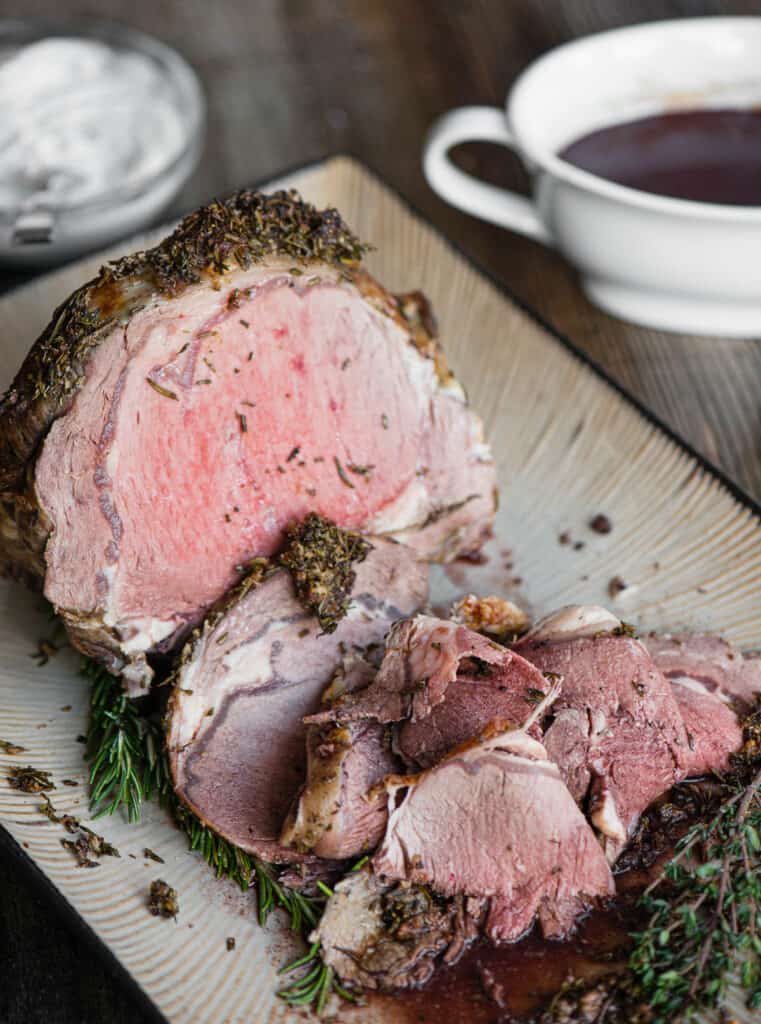
- Serve: Slice prime rib roast and serve with red wine sauce on the side.
Notes
- Allow meat to sit at room temperature for at least an hour (but no more than 2 hours) prior to cooking.
- Keep a close eye on the internal temperature as it approaches your desired temperature. The rate at which the temperature increases will accelerate the closer the roast is to being cooked.
- Any kind of dry red wine will work. I will typically use a Pinot Noir.
- Be sure to let it properly rest if you want a perfectly cooked, tender, juicy roast.
- A 4-5 pound roast should take approximately two hours to cook. There are many factors impacting total cook time including the size and starting temperature of the roast, the accuracy of your oven temperature, and how consistently your oven cooks.
- Slicing the roast is easiest with an electric knife.
- Convection oven: start at 400°F for 20 minutes, then 300°F. It cooks faster, so start checking early.
- NOTE: Keep an eye on the liquid in the roasting pan as the roast is cooking. If it appears that the liquid is evaporating, add additional beef broth. If all the liquid evaporates, the contents on the bottom of the pan will burn.
Video
Nutrition
Nutrition information is automatically calculated, so should only be used as an approximation.
This post was originally published in November 2016. I’ve updated the photos and tips since then, including a cooking time chart and clearer pull temperatures in the recipe card. Don’t worry – the ingredients and method haven’t changed!












Oh wow! This looks perfect! Such an amazing addition to our holiday menu!
I don’t have a rack. Will it still work
Hi Donnie, So sorry for the late reply – I took a few days off for the holiday. I’ve only ever cooked prime rib on a rack. How did you end up cooking yours? You can always set your roast directly on the oven rack and put a large roasting pan underneath on the rack below.
This looks so delicious! Anyone making this is invited to my house for the holidays!
Hi Krissy! Should the roast sit in the liquid as it’s cooking? I don’t have a roasting rack so I’m planning to set up a make-shift one with either foil or a cooling rack but wasn’t sure if it’d be okay for there to be a few inches of space between the roast and the liquid/bottom of the pan. Thanks for the delicious looking recipe! 🙂
Hi Win, I always cook my roast on a rack above the liquid, not in it. You can always cook on the oven rack and set the roasting pan on the rack below. Hope it worked for you!
I love prime rib! It’s a bit spendy to buy. So I appreciate how thorough your guide is! I always worry about messing it up.
Hi Krissy,, I have one bone-in prime rib and one boneless. I have some family that won’t eat ”even pink” meat” which roast will be done first.?? They are both in the same roasting pan..
Hi Barb, do you have two thermometers? If yes, I would use both and take each roast out separately depending on the temperature. The good thing about prime rib is that the ends are always well done when the center is rare to medium rare (if you have a LARGE roast). If you have a small roast, you can plan on it being more evenly cooked. As far as which would cook faster – typically it’s the boneless. A bone-in prime rib is a little different than another roast with a bone in because the bones are basically underneath, not really part of the roast if that makes sense, so it doesn’t affect the cooking time all that much.
Hi Krissy. I was wondering about sour cream and horseradish sauce. Is this 1/4 cup sour cream and 1-2 teaspoons creamed horseradish per serving and if yes, do you serve in small containers? Or do you make more and serve in bowl for people to spoon on plates. First time making this recipe. Sounds great!
Hi Mary! You can totally increase the amount if people really like that horseradish sour cream mixture. I find that not everyone uses it, so it’s sort of like an optional thing I set on the table. Having a couple different little bowls with it around the table is a fabulous idea!
What a beautiful hunk of meat! It’s just my husband and myself these days, so I’d only prepare something like this with family visiting. Although one is a pescatarian. When we stayed at a condo for Christmas one year, I made a prime rib. I love the simplicity of it. Basically put it in the oven and that’s it! So easy you can cook it at a hotel! But I love your rosemary rub.
Can I use a Cabernet Sauvignon red wine instead of the Pinot noir ?
Absolutely! Just not something sweet like a port. Cab, pinot, merlot, red blend – they all work great!
That sure does look like the perfect prime rib! Just what I need for a holiday dinner!