
This post may contain affiliate links. Please read our disclosure policy.

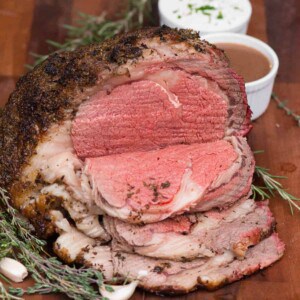
Smoked Prime Rib Roast with a reverse sear at the end is easy to make and one of the most delicious ways to enjoy prime rib. This recipe will tell you EVERYTHING you need to know to achieve flawless results, from selecting the roast, to getting the timing perfect, and ensuring you please everyone by providing servings that range from rare to medium to more well done.
If you’ve been wondering how to cook a prime rib roast, you can make my popular oven roasted prime rib or this smoked version.
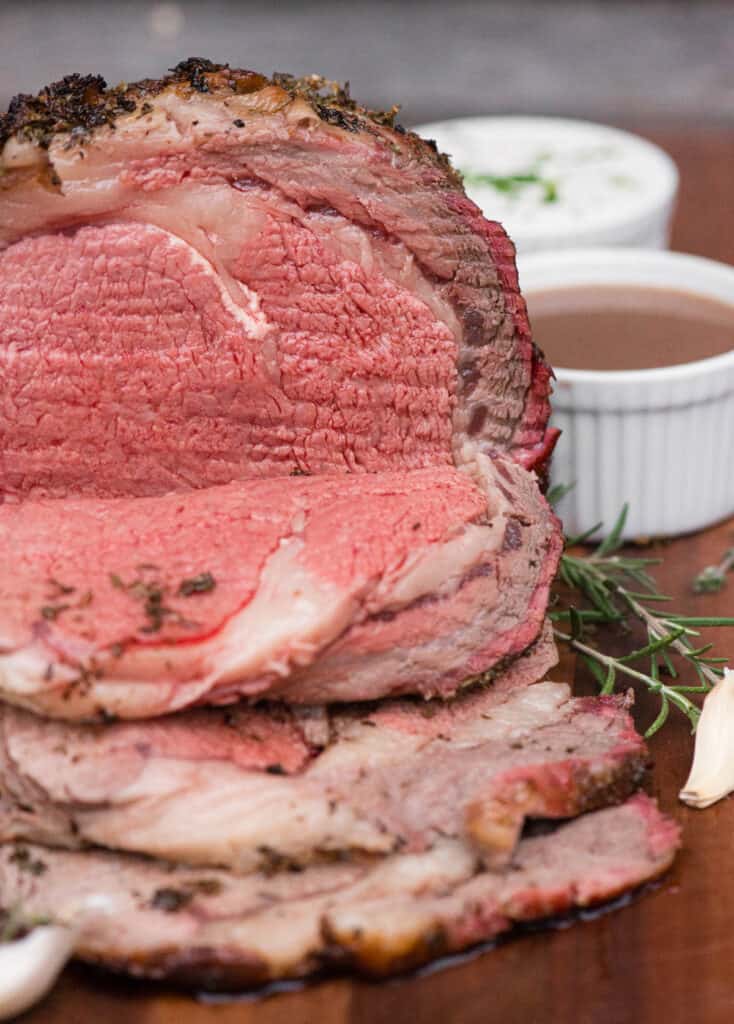
Table of Contents
- Smoked Prime Rib at a Glance
- Why You’ll Love This Smoked Prime Rib
- How to Choose a Prime Rib Roast
- What Is Prime Rib
- How Much Prime Rib per Person
- Bone-In or Boneless
- Small End or Large End
- Where to Buy a Prime Rib Roast
- Ingredients for Smoked Prime Rib
- How Long to Smoke Prime Rib
- Prime Rib Pull Temperatures
- How to Make Compound Butter
- How to Make Smoked Prime Rib
- Common Smoked Prime Rib Problems
- What to Serve With Smoked Prime Rib
- How to Store and Reheat Leftover Prime Rib
- Smoked Prime Rib FAQs
- Can I Smoke Two Prime Rib Roasts at the Same Time
- How Long Does It Take to Smoke a Boneless Prime Rib
- Should I Smoke Prime Rib at 225°F or 250°F
- Can I Make This on a Charcoal or Electric Smoker
- More Prime Rib Recipes
- Smoked Prime Rib Roast Recipe
Smoked Prime Rib at a Glance
- The recipe: a bone-in prime rib roast, salted the day before, coated in garlic herb butter, smoked low and finished with a hot reverse sear.
- Time: about 30 minutes per pound on the smoker, plus about 1 hour to rest, sear and rest again.
- Grill temperature: 225-250°F to smoke, then 400-450°F for the sear.
- Pull temperatures: off the smoker at 110°F, then off the grill about 5°F below your finished temperature (125°F for medium rare).
- Wood: cherry, hickory or a mix of the two.
- Jump to: cook time chart | pull temperature chart
Why You’ll Love This Smoked Prime Rib
- Something for everyone: With any prime rib roast, the center will be cooked less than the ends. When feeding a crowd, you will inevitably have some people who prefer their meat to be rare and others who prefer it more well done. Smoking it gives you both, and even the more well-done ends have that wonderful flavor from the smoker.
- It doesn’t taste like barbecue: If you’re worried about a smoky roast, don’t be. It doesn’t taste very smoky at all. It just has a deeper, richer roasted flavor.
- Perfect for holidays: You can easily order a smaller prime rib roast to feed your family for any kind of special occasion. But if you’re cooking a grand holiday feast for a crowd, you can smoke an entire rib roast for the same amount of effort.
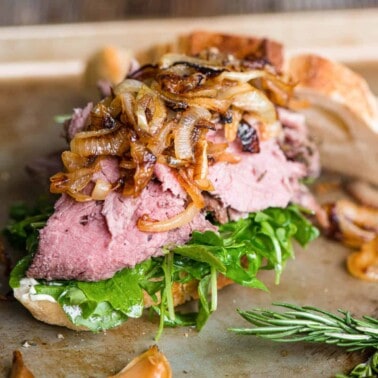
- Makes amazing leftovers: Chances are, you might not end up with any leftovers. But if you do, leftover prime rib is fantastic on a steak salad or in a prime rib sandwich.
How to Choose a Prime Rib Roast
I’ve made prime rib more times than I can count, and smoking it on my Traeger is one of the best ways I’ve found to change it up. If you’ve never made a prime rib roast before, never fear. It can be intimidating to buy such an expensive cut of meat, but with these instructions, it will turn out perfect.
What Is Prime Rib
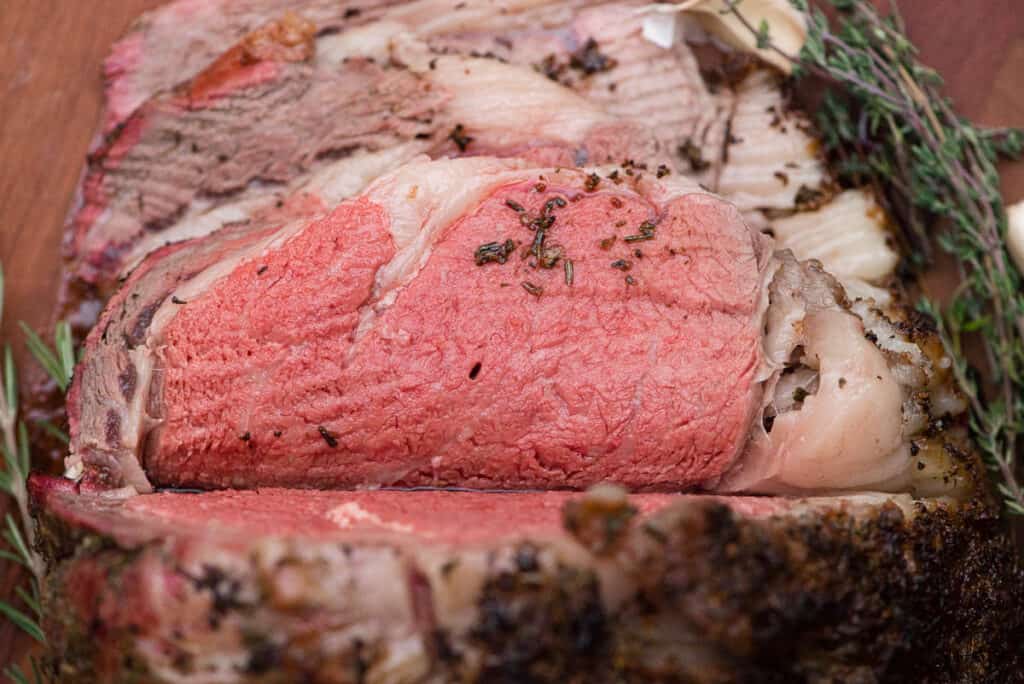
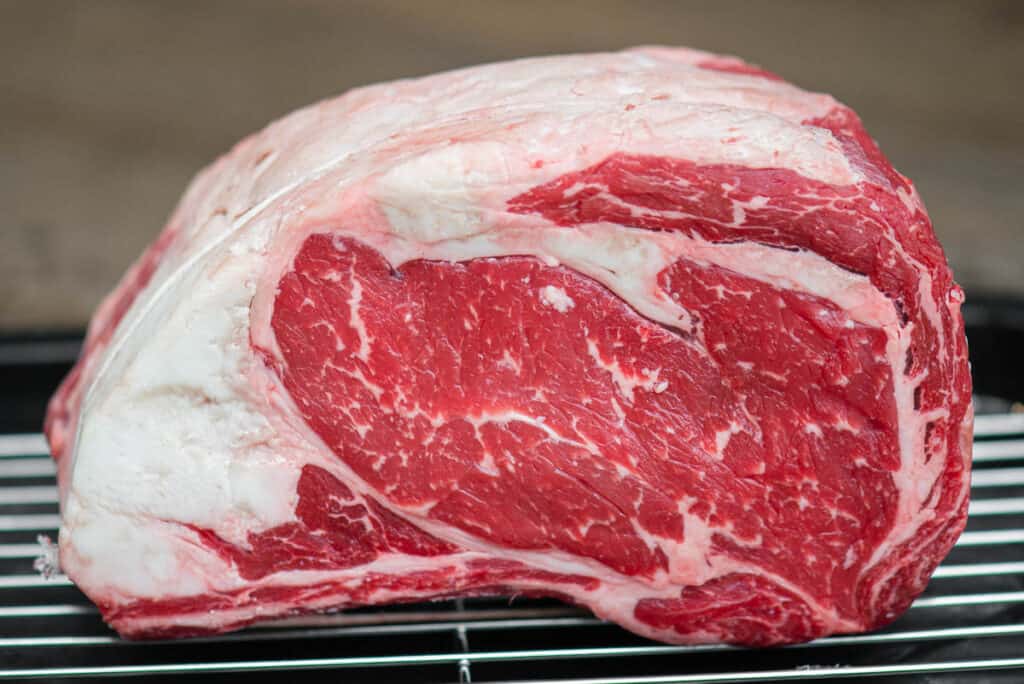
A prime rib roast, also known as a standing rib roast, is cut from the back of the upper rib section. A full roast has either six or seven ribs. Individual ribeye steaks are cut from a prime rib roast.
It is an exquisite cut of meat that is incredibly tender and marbled with just the right amount of fat that melts away when properly cooked.
“Prime rib” is the name of the cut, not the grade. A roast labeled USDA Prime has the most marbling and costs the most, but most prime rib roasts sold in grocery stores are graded Choice.
How Much Prime Rib per Person
There are two ways to figure out how much prime rib to buy.
First, a good rule of thumb is that each rib will serve about two people. The roast in these photos only had two ribs, and it was perfect for my family of four with some leftovers. So a 7-rib prime rib roast could serve about 14 hungry adults.
The second rule of thumb is to plan on about 1 pound per person for a boneless roast or 1 1/4 pounds per person for a bone-in roast.
Bone-In or Boneless
Unlike cuts of meat that are braised in liquid, like a chuck roast or a pork shoulder, a prime rib roast doesn’t need its bones for flavor. They do serve another purpose, though. The rib bones act as a heat shield, slowing the cooking on that side so the meat next to them stays tender and juicy.
The rib meat is also insanely delicious. You may just choose to keep the bones for yourself and only serve your guests the sliced prime rib!
If your prime rib came with bones, they will either be attached, or the butcher will have cut them away from the roast and tied them back on with kitchen twine. If the ribs are still attached, you have two choices: cut them away and tie them back on before cooking, or cut them off after the roast has cooked.
Small End or Large End
Did you know that when you buy a smaller roast from a knowledgeable butcher, you can choose whether it comes from the small end or the large end?
The small end, often called the first cut, is closer to the loin. It’s leaner and the most tender, with a big, even eye of meat. The large end is closer to the shoulder. It has more marbling and fat, so it’s richer and more flavorful. I prefer the small end for its tenderness.
Where to Buy a Prime Rib Roast
Around the holidays, stores like Costco have full-size prime rib roasts. These are a great option if you are feeding a crowd.
If you want to make a smaller prime rib, you will need to get one from the meat counter at your grocery store or a local butcher.
Either way, plan on spending a lot of money, but I would argue it is worth every penny.
Ingredients for Smoked Prime Rib
Exact quantities are listed in the recipe card below, but here is a summary.
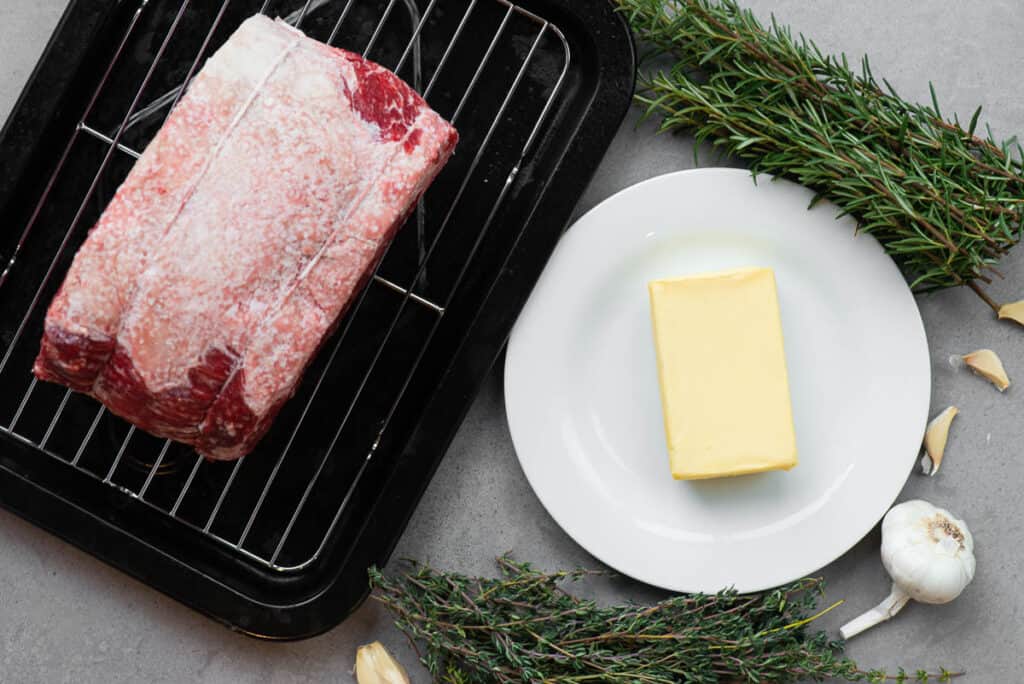
- Prime rib roast: Size depends on how many people you are serving. This recipe was made with a 5.3-pound, two-rib, bone-in roast.
- Kosher salt: I use Morton kosher salt. If you have Diamond Crystal, use a little less than twice as much, because its lighter flakes are less salty by the spoonful. Salting ahead dry brines the roast: the salt pulls a little moisture to the surface, dissolves into it and is absorbed back into the meat, seasoning it all the way through.
- Compound butter: Use a high-quality unsalted butter along with fresh rosemary, thyme and garlic.
The Best Wood for Smoked Prime Rib
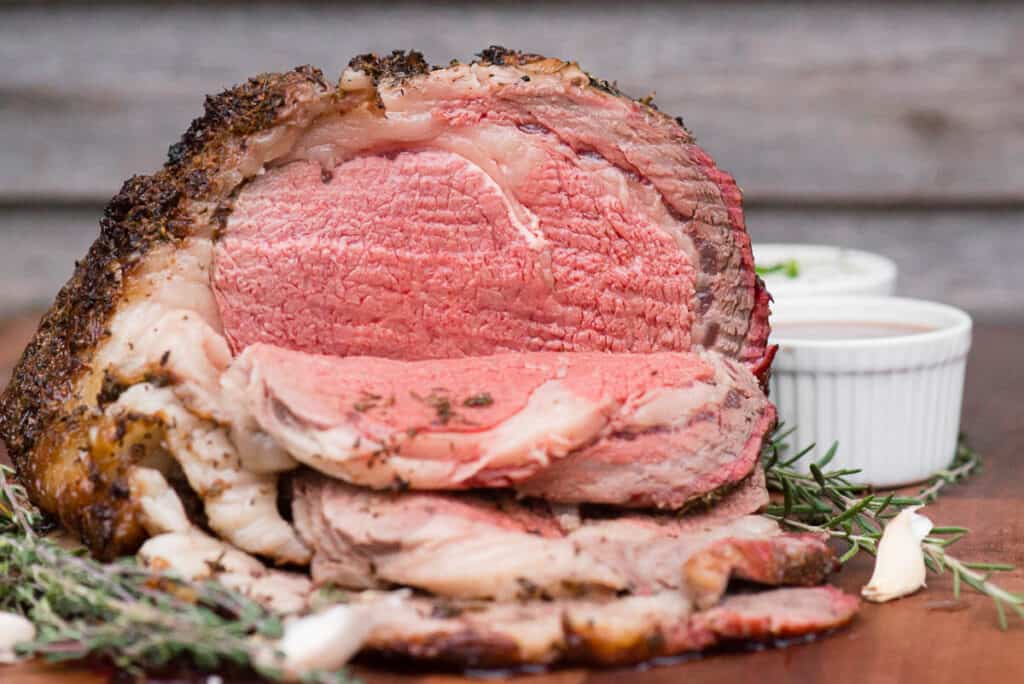
I use cherry and hickory pellets on my Traeger. I skip the mixed-blend bags and buy cherry and hickory separately. Use one or mix them.
Equipment
- A rack and pan (optional): The roast can go directly on the grill grate, but if you want to catch the drippings for au jus, you will need a rack set in a pan.
- Peach butcher paper: My favorite way to wrap the roast while it rests. I use this peach butcher paper. Foil works too.
KRISSY’S RECOMMENDATION: You simply cannot make a prime rib roast without a good thermometer. I use the Thermoworks Smoke Remote BBQ Alarm Thermometer with two probes: one in the center of the meat and one at grate level inside my Traeger, so I can see if the smoker is running too hot or too cold. You can set high and low alarms for both probes that transmit wirelessly to the receiver, and I love that it has magnets on the back so it sticks right to the grill.
How Long to Smoke Prime Rib
Planning is key when making a prime rib roast. The times below are estimates, not promises. The starting temperature of the roast, the weather around your smoker and how steady your grill holds its temperature all change them, so your thermometer decides when it’s ready. “Smoker to table” adds the 30-minute rest, the reverse sear and the final rest. Salting the day before and the time on the counter aren’t included.
Smaller Roasts (2 to 4 Ribs)
At 225-250°F, plan on about 30 minutes per pound for the center of the roast to reach 110°F.
| Roast Weight | Smoking Time to 110°F | Smoker to Table |
|---|---|---|
| 4 pounds | about 2 hours | about 3 hours |
| 5 pounds | about 2 1/2 hours | about 3 1/2 hours |
| 6 pounds | about 3 hours | about 4 hours |
| 8 pounds | about 4 hours | about 5 hours |
Whole Roasts (Costco Size, 6 to 7 Ribs)
Don’t use 30 minutes per pound for a whole roast. A whole roast is longer, but it isn’t much thicker than a small one, and thickness is what decides how long the center takes. Expect it to cook faster per pound, and start checking the temperature an hour before the time below.
| Roast Weight | Smoking Time to 110°F | Smoker to Table |
|---|---|---|
| 12 to 14 pounds | about 3 1/2 to 4 1/2 hours | about 4 1/2 to 5 1/2 hours |
| 15 to 18 pounds | about 4 1/2 to 6 hours | about 5 1/2 to 7 hours |
Working Back From Dinner Time
Here’s how the timing works for a 5-pound roast served at 6:00 p.m.
- The day before: salt the roast and refrigerate it uncovered.
- 12:15 p.m.: take the roast out of the refrigerator.
- 2:00 p.m.: preheat the smoker to 225-250°F.
- 2:15 p.m.: the roast goes on the smoker.
- 4:45 p.m.: the roast reaches 110°F. Wrap it to rest and turn the grill up to 400-450°F.
- 5:15 p.m.: reverse sear.
- 5:45 p.m.: final rest.
- 6:00 p.m.: slice and serve.
I’d rather start an hour early than late. If the roast is ready ahead of schedule, you can hold it (see Common Problems below).
Prime Rib Pull Temperatures
Keep in mind that the temperature will keep rising as the roast rests. Put the temperature probe in the center of the roast. The center will be the rarest, and the ends will be the most cooked.
Take the roast off the smoker at 110°F no matter how you like it. Doneness is decided at the reverse sear: take it off the grill about 5°F below your finished temperature, and the last rest carries it the rest of the way.
| Doneness | Color | Take It Off the Grill | Finished Temperature |
|---|---|---|---|
| Rare | Cool red center | 120°F | 120-130°F |
| Medium Rare | Warm red center | 125°F | 130-135°F |
| Medium | Warm pink center | 130°F | 135-145°F |
| Medium Well | Slightly pink center | 140°F | 145-155°F |
| Well Done | No pink | 150°F | 155°F and up |
Although the USDA recommends cooking beef roasts to 145°F with a rest of at least 3 minutes, I prefer my prime rib medium rare.
How to Make Compound Butter
This simple compound butter is perfect for prime rib roast, but it’s also wonderful on filet mignon, T-bone or ribeye steaks.
- Process the herbs and garlic: Remove the woody stems from the rosemary and thyme and add the leaves to a food processor along with the garlic cloves. Process until finely chopped.
- Add the butter: Add the softened unsalted butter to the food processor and blend until smooth.
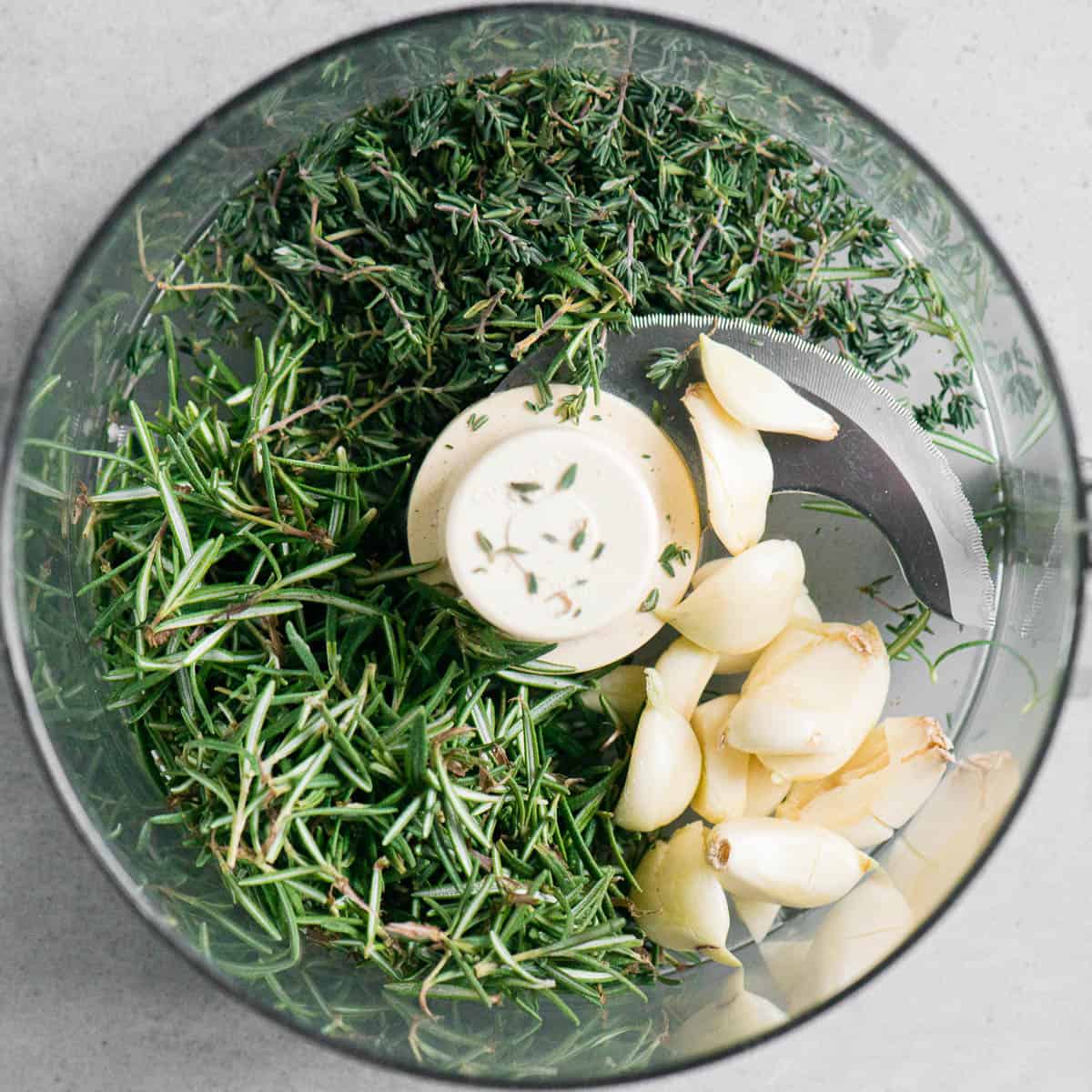
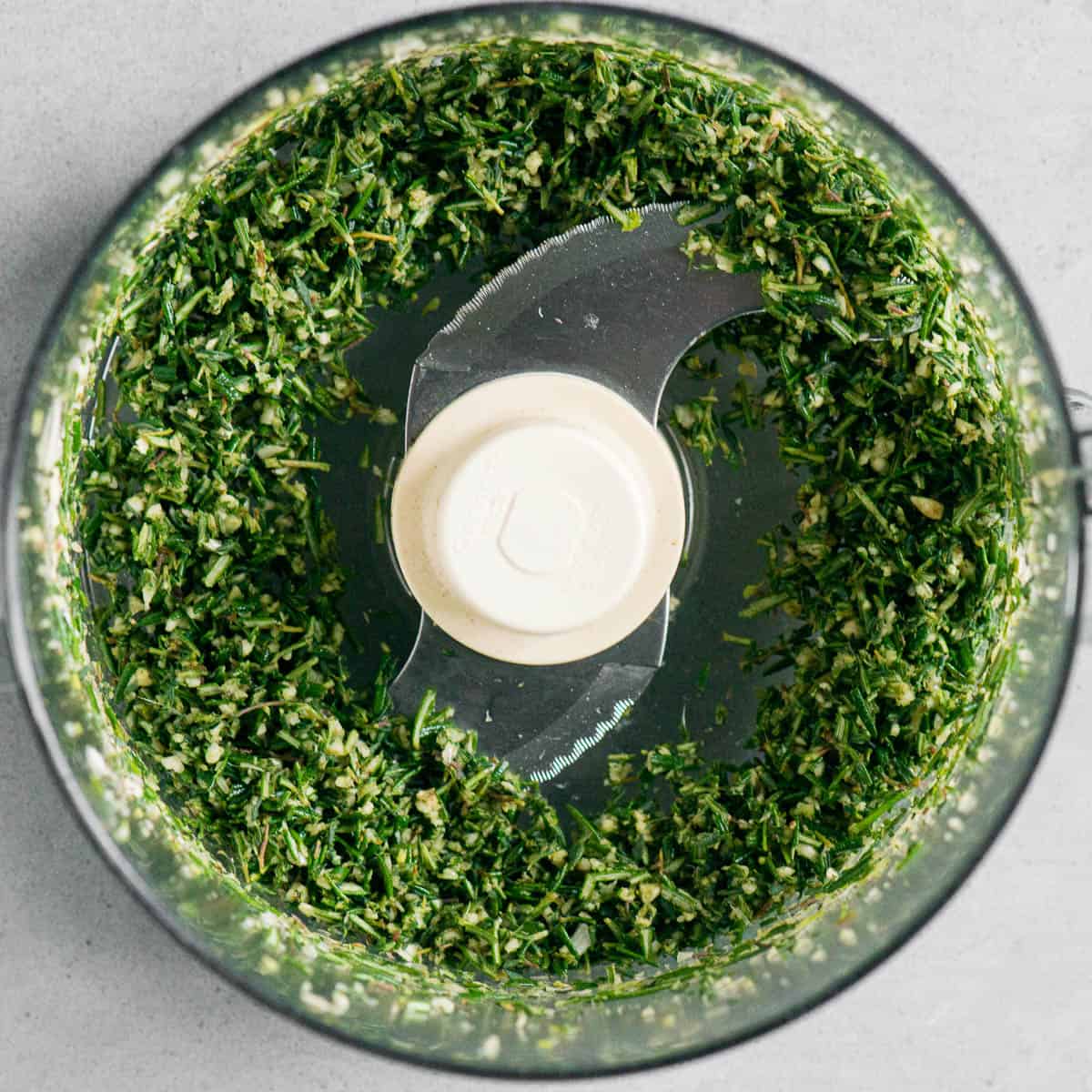
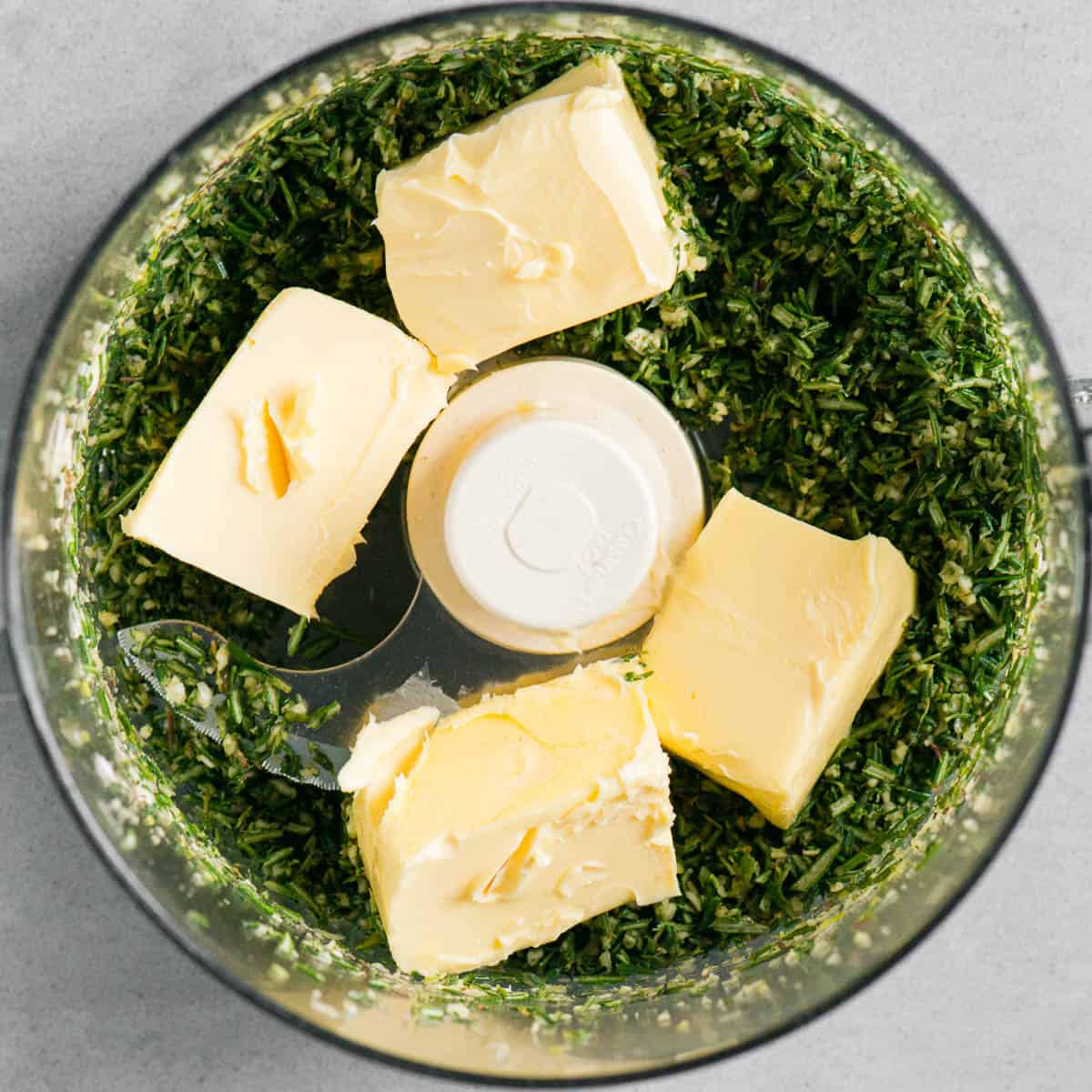
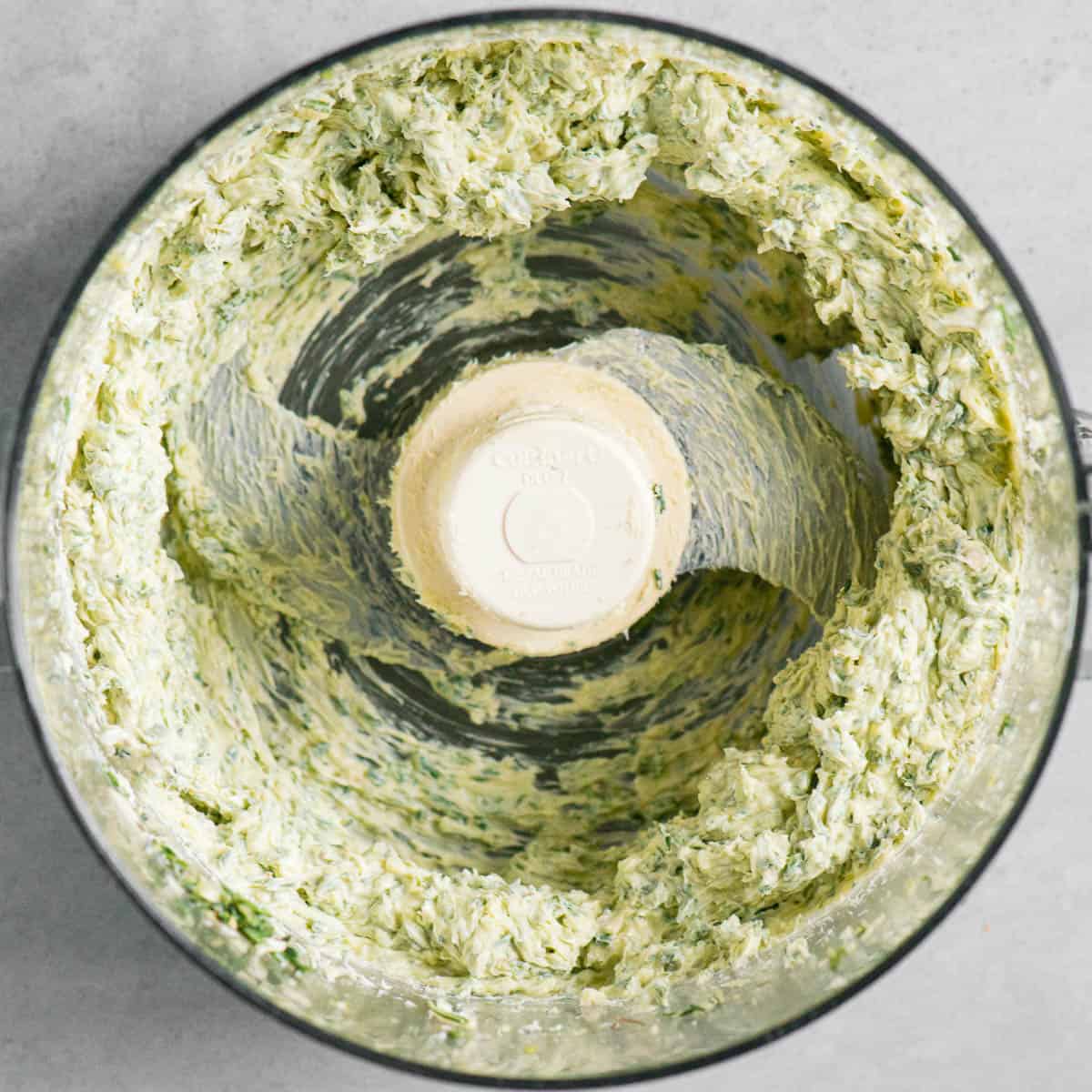
PRO TIP: Make more than you need and store the extra in the refrigerator. Spread it on hot bread, add it to the pan when making eggs or cook steaks with it.
How to Make Smoked Prime Rib
This same process works for any size prime rib roast. Simply adjust the salt, butter and time to the size of your roast.
Step 1: Salt the Roast
- Trim: When smoking a prime rib roast, you want the fat cap to be about 1/4 inch thick. Trim away excess fat, if needed. If the roast is wet, pat it dry with paper towels.
- Salt: The amount of salt and where you put it matters. Too much salt can ruin the roast, and too little can hurt the flavor. One tablespoon of Morton kosher salt was the perfect amount for this 5-pound roast, a little over 1/2 teaspoon per pound. Most of it should go on top of the fat cap, with the remaining amount on the sides and bottom.
- Chill: Refrigerate the roast uncovered on a rack for about 24 hours (up to 48). The cold air dries the surface so it browns beautifully during the sear, and the salt has time to season the meat all the way through. If you’re short on time, even 1 hour helps.
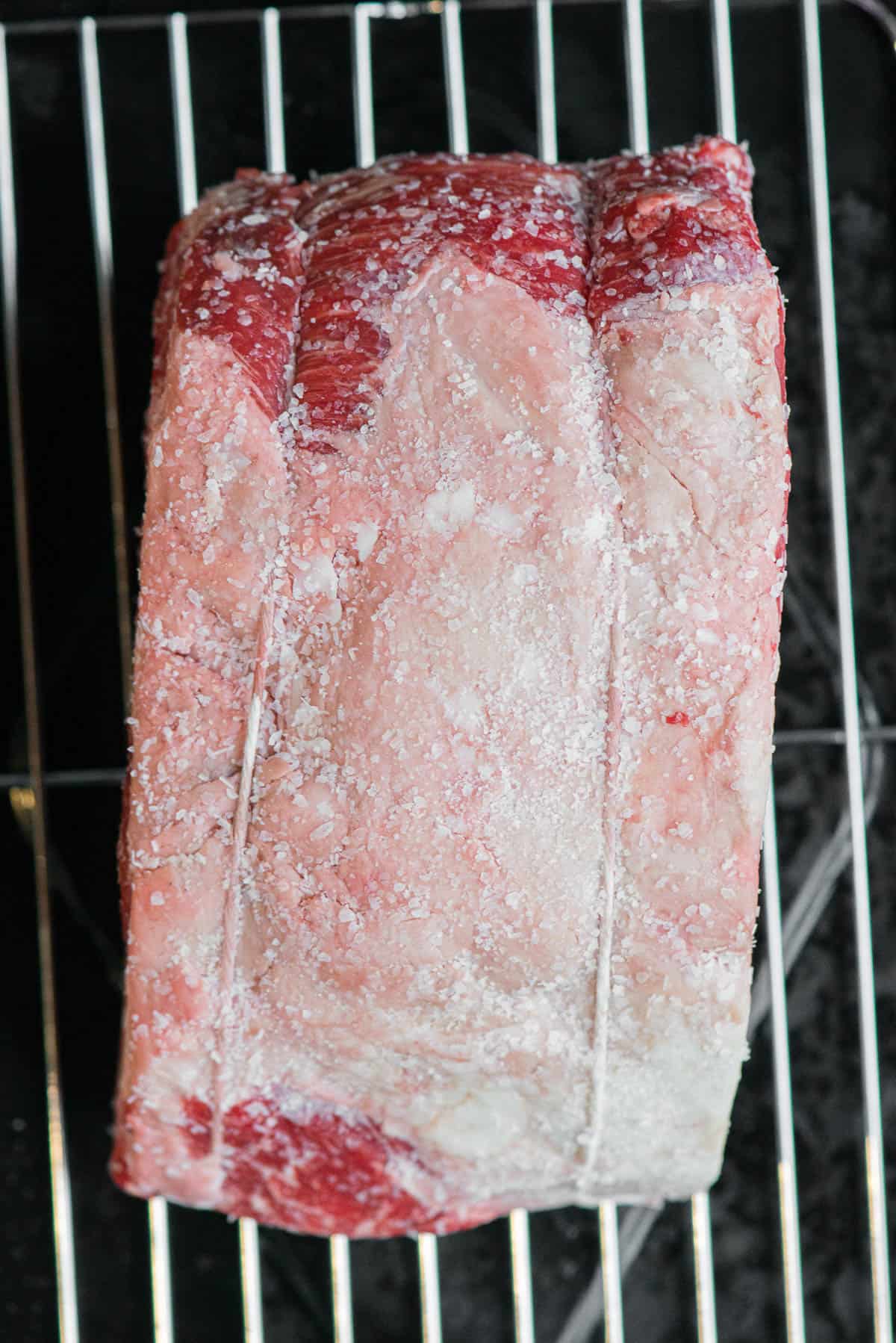
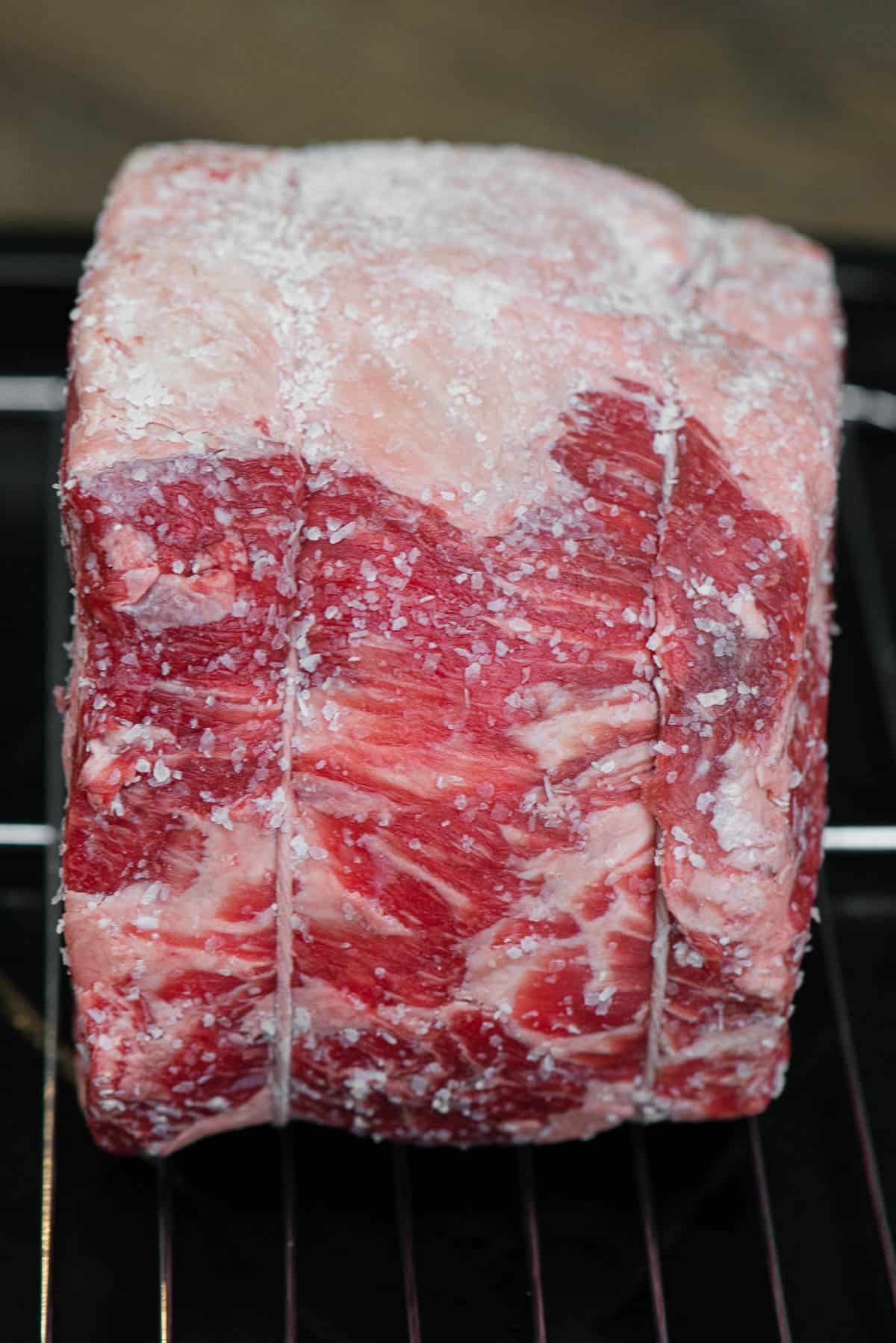
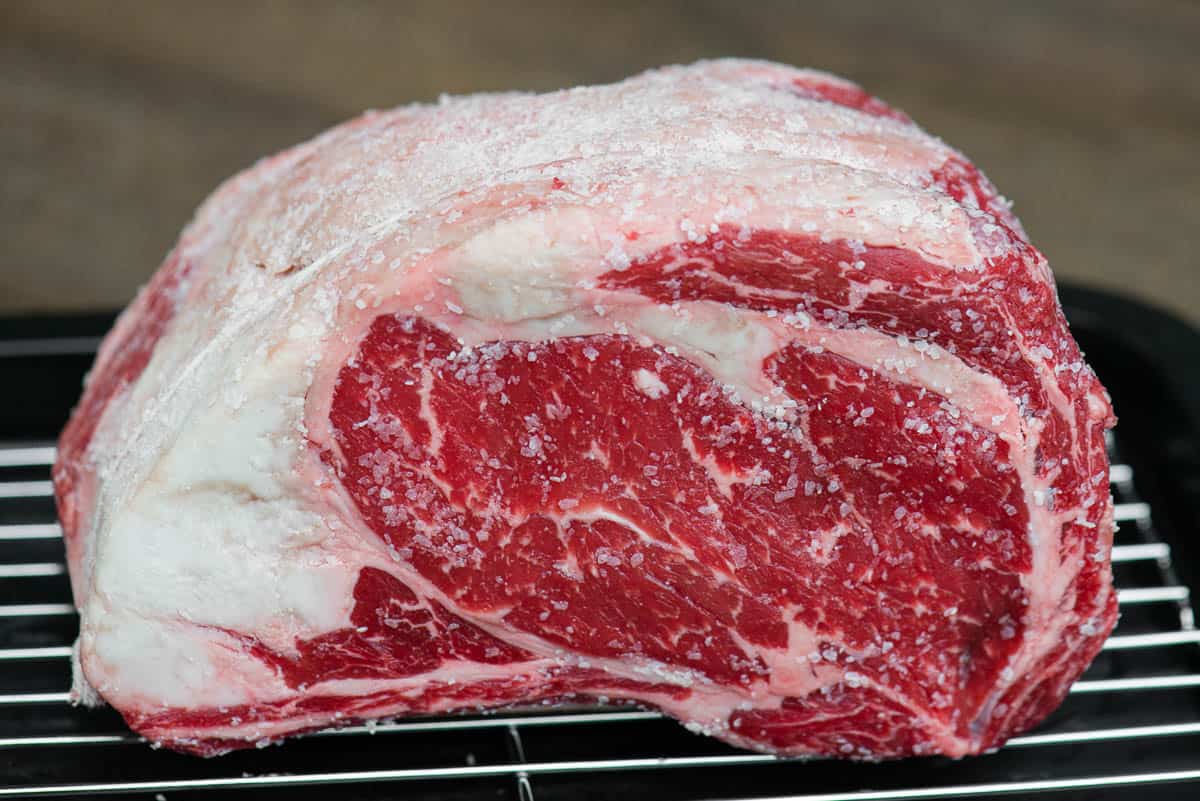
PRO TIP: Salt the roast on a cutting board or butcher paper so you can press it into any salt that falls off. Don’t salt it over the rack and pan, or the extra salt will land in the pan and make the drippings too salty.
Step 2: Smoke the Roast
- Take it out of the fridge: Take the roast out of the refrigerator up to 2 hours before it goes on the smoker. That’s USDA’s limit for raw meat at room temperature (1 hour if the room is above 90°F), so don’t go past it. A roast that starts less cold cooks more evenly.
- Coat with compound butter: Cover the top and sides of the roast with a thin layer of the butter.
- Smoke: Preheat the smoker to 225-250°F. Set the roast directly on the grate, or on a rack inside a pan if you want to catch the drippings. Insert the probe into the center of the roast and smoke until it reaches 110°F.
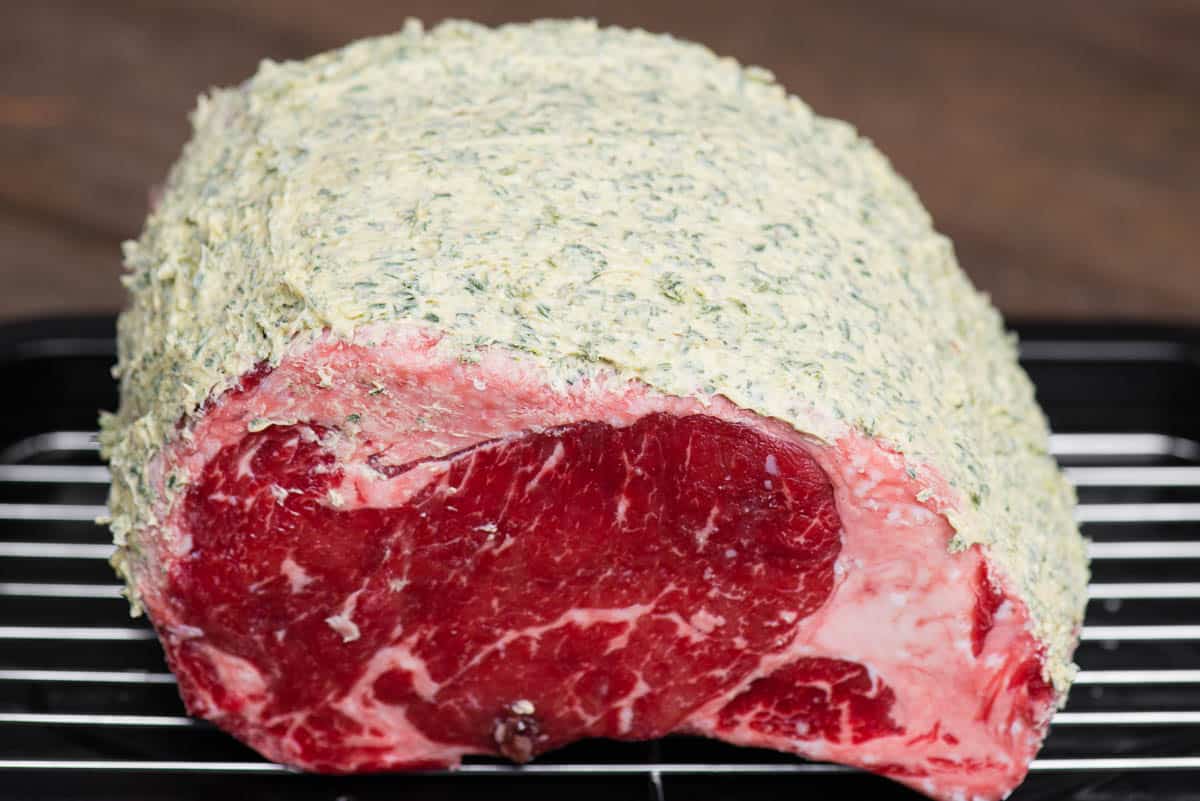
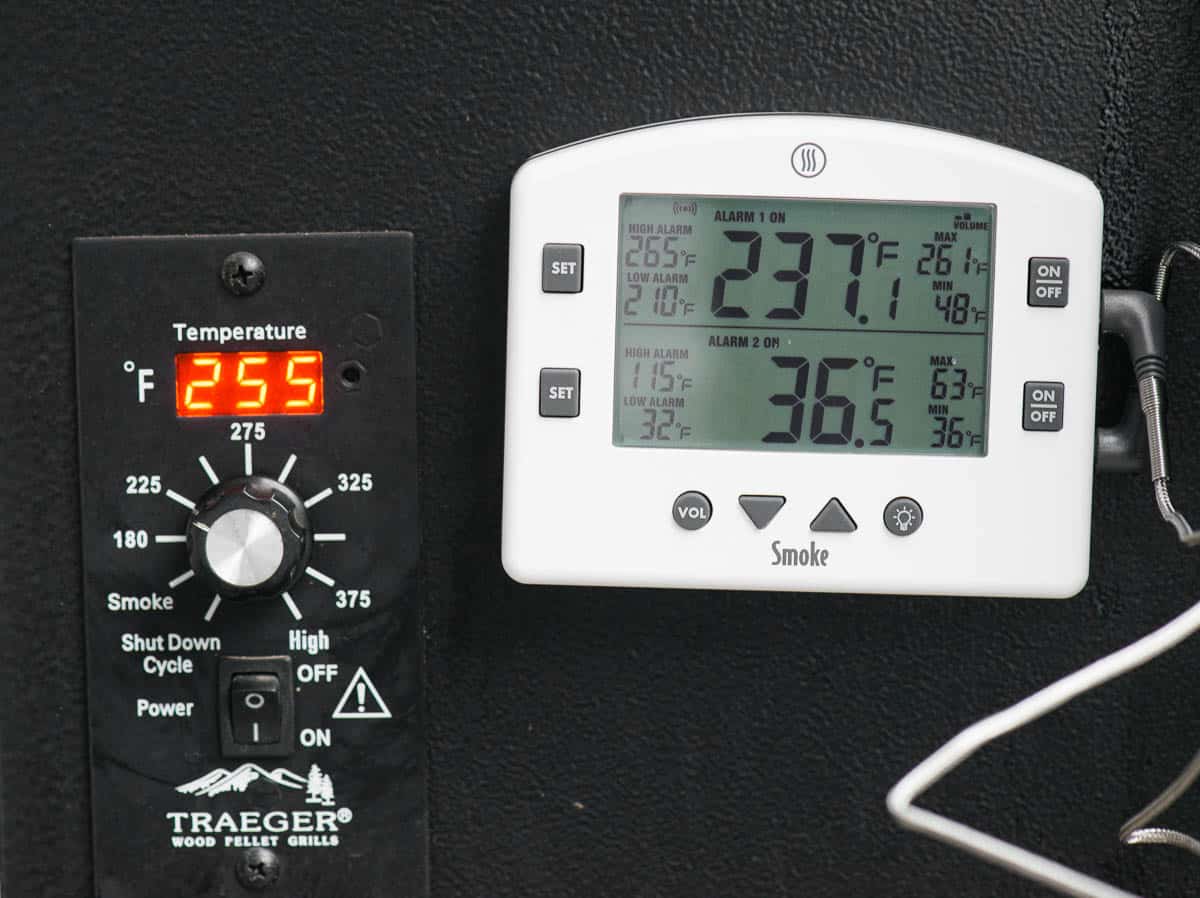
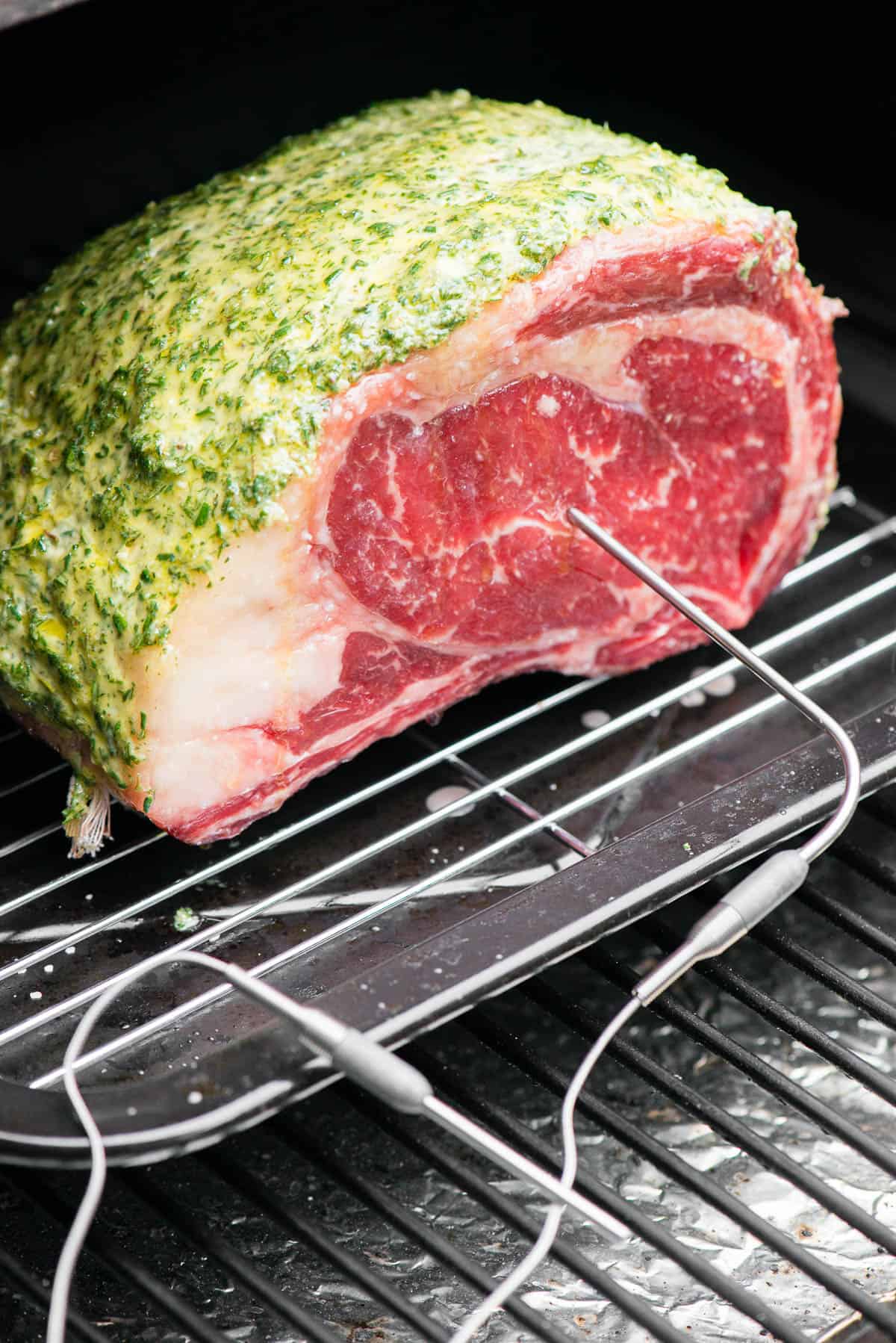
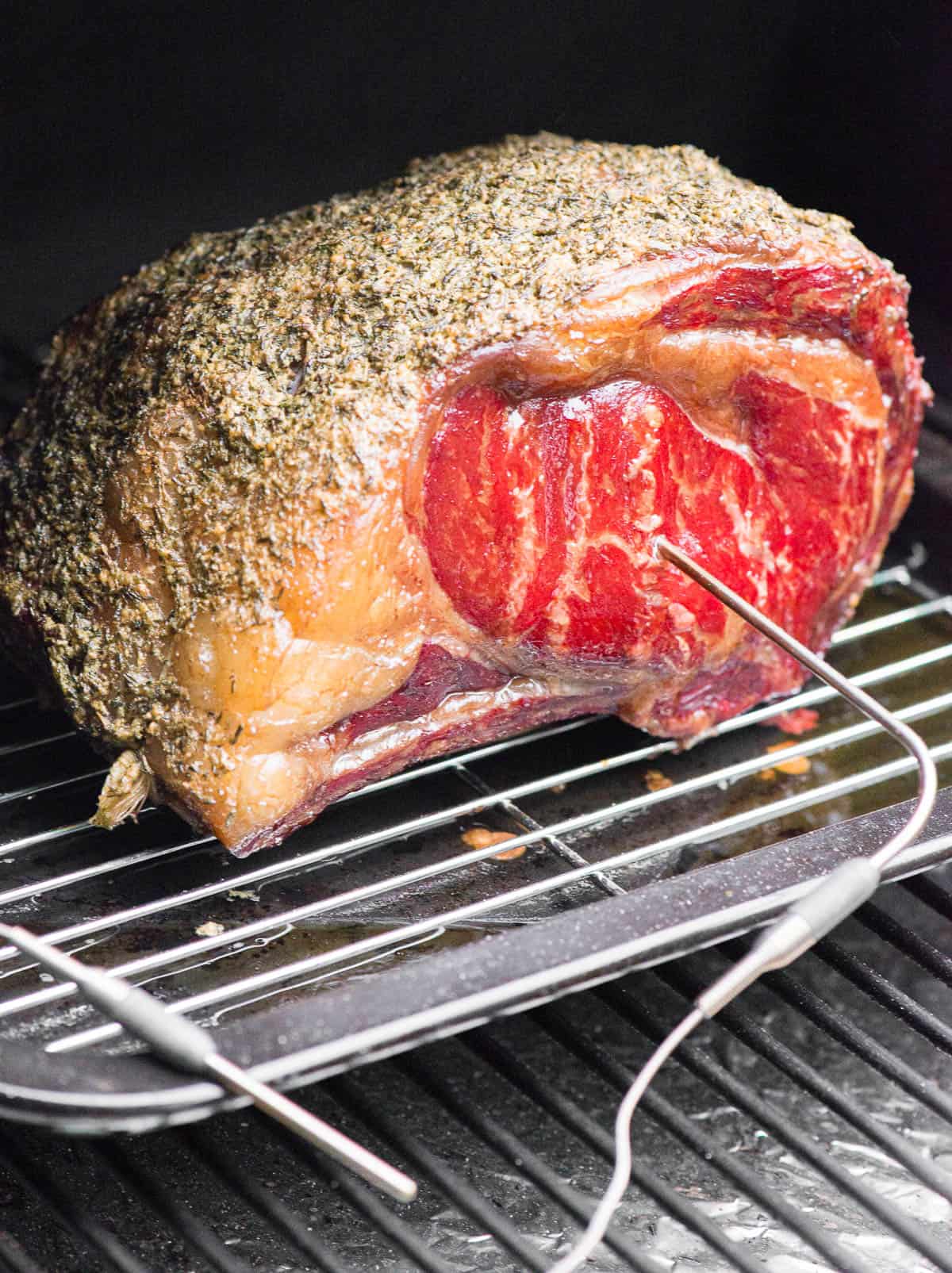
PRO TIP: When I set my Traeger to 225°F, the temperature can swing anywhere from 200 to 300°F. My second probe at grate level alarms when it’s too hot, and I lift the lid. That is usually all it takes to bring the temperature back down.
Step 3: Rest
Take the roast off the grill and let it rest for 30 minutes. The temperature will rise another 5 to 8°F.
- Wrap or cover: Loosely tent the roast with foil or wrap it in peach butcher paper (my preferred method). Leave the temperature probe in place.
- Collect the drippings: If you used a pan to collect the drippings, you can make Prime Rib Au Jus while the meat rests.
- Heat the grill: While the prime rib is resting, turn the grill up to its highest setting (400-450°F).
Step 4: Reverse Sear
The thing that really takes this recipe over the top is the reverse sear at the end. This step really browns the outside of the roast and finishes cooking the center. The result is a perfectly cooked and insanely flavorful roast.
- Sear: Unwrap the roast and carefully place it directly on the hot grill. Cook until the center is about 5°F below your finished temperature (see the pull temperature chart), usually 20 to 30 minutes.
- Final rest: Although you’ve already rested the roast once, give it one last 10 to 15-minute rest before slicing.
Common Smoked Prime Rib Problems
The Roast Is Done Too Early
Running late is always a bit of a concern when you cook on a smoker. If the roast reaches 110°F well ahead of schedule, wrap it in peach butcher paper and set it in an empty insulated cooler. That keeps it warm without cooking it much further. If you know you’ll need to hold it, take it off the smoker at about 105°F, because the temperature keeps rising for a while. Hold it no longer than 2 hours, then reverse sear as usual.
The Roast Is Cooking Too Slowly
Check the probe at grate level first. If the smoker is running cooler than you set it, that’s usually why. Keep the lid closed as much as you can, and turn the smoker up to 275°F if you need to catch up.
★★★★★
“This is perfect!! Everyone at my house was impressed!!” – Toni
What to Serve With Smoked Prime Rib
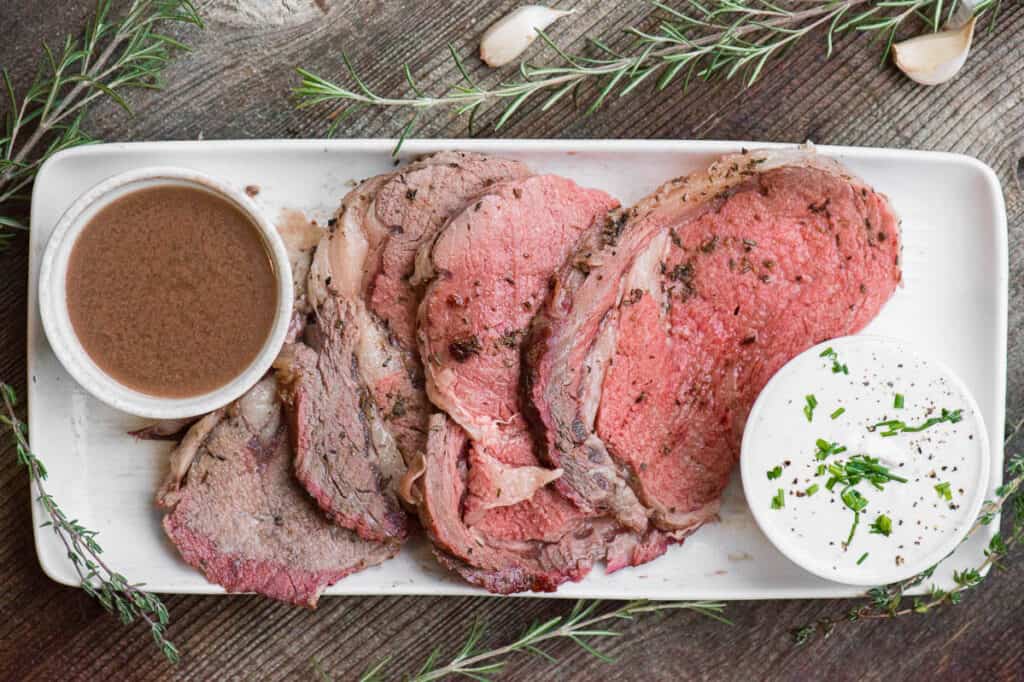
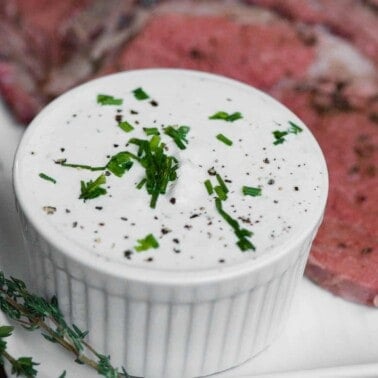
Be sure to make Horseradish Sauce for Prime Rib along with the au jus. This recipe needs nothing more than some delicious mashed potatoes and some sautéed spinach on the side.
How to Store and Reheat Leftover Prime Rib
Since you cooked the prime rib perfectly, reheating can be tricky. Refrigerate leftovers within 2 hours of serving and eat them within 3 to 4 days.
- Eat it cold. Yep. Eat it cold. It’s still delicious.
- Warm it in au jus: Heat any leftover au jus in a saucepan over medium heat, then add the sliced prime rib.
- Reheat it in butcher paper: Wrap the slices in peach butcher paper and reheat them in a low oven. The paper helps keep them from drying out.
USDA recommends reheating leftovers to 165°F. That will cook the slices past medium rare, which is one more reason I eat mine cold.
Whatever you do, please do not try to reheat it in the microwave.
Smoked Prime Rib FAQs
Here are the answers to the questions readers ask most about smoking prime rib.
Can I Smoke Two Prime Rib Roasts at the Same Time
Yes. Put a probe in the center of each roast and go by temperature, not time. The smaller or thinner roast will reach 110°F first. Take it off, wrap it and let it rest while the bigger one finishes, then sear them together.
How Long Does It Take to Smoke a Boneless Prime Rib
Plan on the same 30 minutes per pound, but start checking early. Without the bones to shield it, a boneless roast can cook a little faster. Use the same pull temperatures.
Should I Smoke Prime Rib at 225°F or 250°F
Either works. The lower temperature is slower and gives you a little more cushion on timing. I set my Traeger to 225°F, knowing it will swing.
Can I Make This on a Charcoal or Electric Smoker
Yes. Any smoker that holds 225-250°F will work. I make it on my Traeger, so the times here are from a pellet grill. For the reverse sear, you need heat around 400-450°F, so if your smoker can’t get that hot, finish the roast on a hot grill.
More Prime Rib Recipes
Round out your prime rib dinner with these favorites.


If you tried this Smoked Prime Rib recipe or any other recipe on my website, please leave a 🌟 star rating and let me know how it went in the 📝 comments below. Thanks for visiting!
Pin this now to save it for later
Pin ItSmoked Prime Rib Roast
Ingredients
Prime rib:
- 5 pound prime rib roast
- 1 tablespoon kosher salt
Compound butter:
- 1/4 cup fresh rosemary stems removed
- 1/4 cup fresh thyme stems removed
- 6 cloves garlic
- 1/2 cup unsalted butter softened
Instructions
The day before
- Trim the fat cap to about 1/4 inch thick if needed. If the roast has bones, you can cut them away and tie them back on with kitchen twine, or leave them on and slice them away after cooking. If the roast is wet, pat it dry with paper towels.

- Cover the 5 pound prime rib roast with the 1 tablespoon kosher salt, putting most of it on the fat cap and the rest on the sides and bottom. Refrigerate it uncovered on a rack for about 24 hours (up to 48). If you’re short on time, even 1 hour helps.

Smoke
- Take the roast out of the refrigerator up to 2 hours before it goes on the smoker (1 hour if the room is above 90°F).
- Make the compound butter: place the 1/4 cup fresh rosemary, 1/4 cup fresh thyme and 6 cloves garlic in a food processor and process until finely chopped. Add the softened 1/2 cup unsalted butter and blend until smooth.

- Preheat the smoker to 225-250°F. Coat the top and sides of the roast with the compound butter and insert a probe thermometer into the center. Place the roast directly on the grate, or on a rack in a pan if you’re saving the drippings.

- Smoke until the center of the roast reaches 110°F, about 30 minutes per pound for a 2 to 4-rib roast. A whole roast cooks faster per pound (see the charts in the post). Go by temperature, not time.

Rest and reverse sear
- Take the roast off the grill, leaving the probe in place. Wrap it in peach butcher paper or loosely tent it with foil and let it rest for 30 minutes. The temperature will rise 5 to 8°F. Turn the grill up to its highest setting, about 400-450°F.

- Unwrap the roast and place it directly on the hot grill. Cook until the center is about 5°F below your finished temperature (125°F for medium rare), usually 20 to 30 minutes. The ends will be more done than the center.

- Let the roast rest for 10 to 15 minutes before slicing. Serve with horseradish sauce and au jus.
Notes
Nutrition
Nutrition information is automatically calculated, so should only be used as an approximation.
This post was originally published in December 2021. I’ve updated the tips, timing and temperature charts since then.












Costco has choice that I’ve seen, where do you actually get PRIME in Portland area? I found Prime steaks not so much rib roast.
I find the BEST meat is from The Meating Place over on the west side. Ever been there? It’s VERY expensive, but you get what you pay for.
I am confused you have a title that says it’s smoked but there is no mention of what wood you used for smoking. Is it just because you used your Traeger smoker grill? Looks like delicious recipe and am going to try it.
Yes, I used my Traeger and the type of wood is just a matter of preference. I almost always cook with a combination of cherry and hickory.
Planning to make this recipe with two different roasts from two different sources so it should be interesting. I’m curious as to why you have such a range of time for refrigeration salt brine? I would think a large cut of meat like this would benefit from as much time as you can in the fridge… Do you think you could go too long with the brine? Say 24 hours
I definitely think you could go 24hrs. I was just basing it off of how I made the roast and it turned out perfect.
So juicy and so inviting. I love how you describe the steps. Makes it so easy to follow!
I was lucky enough to enjoy this at a friend’s house. Let me tell you, this prime rib was tender, juicy and super flavorful! And that compound butter. So delicious. I asked for the recipe, as I’m looking forward to making this for Christmas.
This is perfect!! Everyone at my house was impressed!!
This Prime Rib recipe sounds fantastic, and I am betting my family would love it. I have almost everything for it, so I think I will be making this recipe this week. Thanks for the great tips and instructions. Happy Holidays!
Looks delicious. I have never tried it smoked like this.