
This post may contain affiliate links. Please read our disclosure policy.



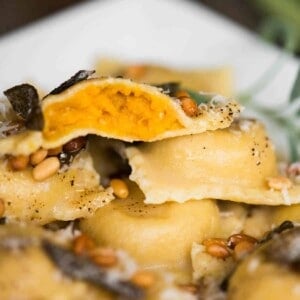
Homemade Butternut Squash Ravioli with Brown Butter Sage Sauce, made with pasta dough from scratch and roasted garlic and butternut, tastes like heaven.
I roast butternut squash all the time, and this is one of my favorite things to make with it. The squash roasts with whole cloves of garlic, gets blended into a silky filling, and goes inside homemade pasta. Then it all gets a spoonful of brown butter and crispy sage leaves. Oh my!
Yes, homemade ravioli takes an afternoon. But this recipe makes a big batch, so I cook some for dinner and freeze the rest for later.
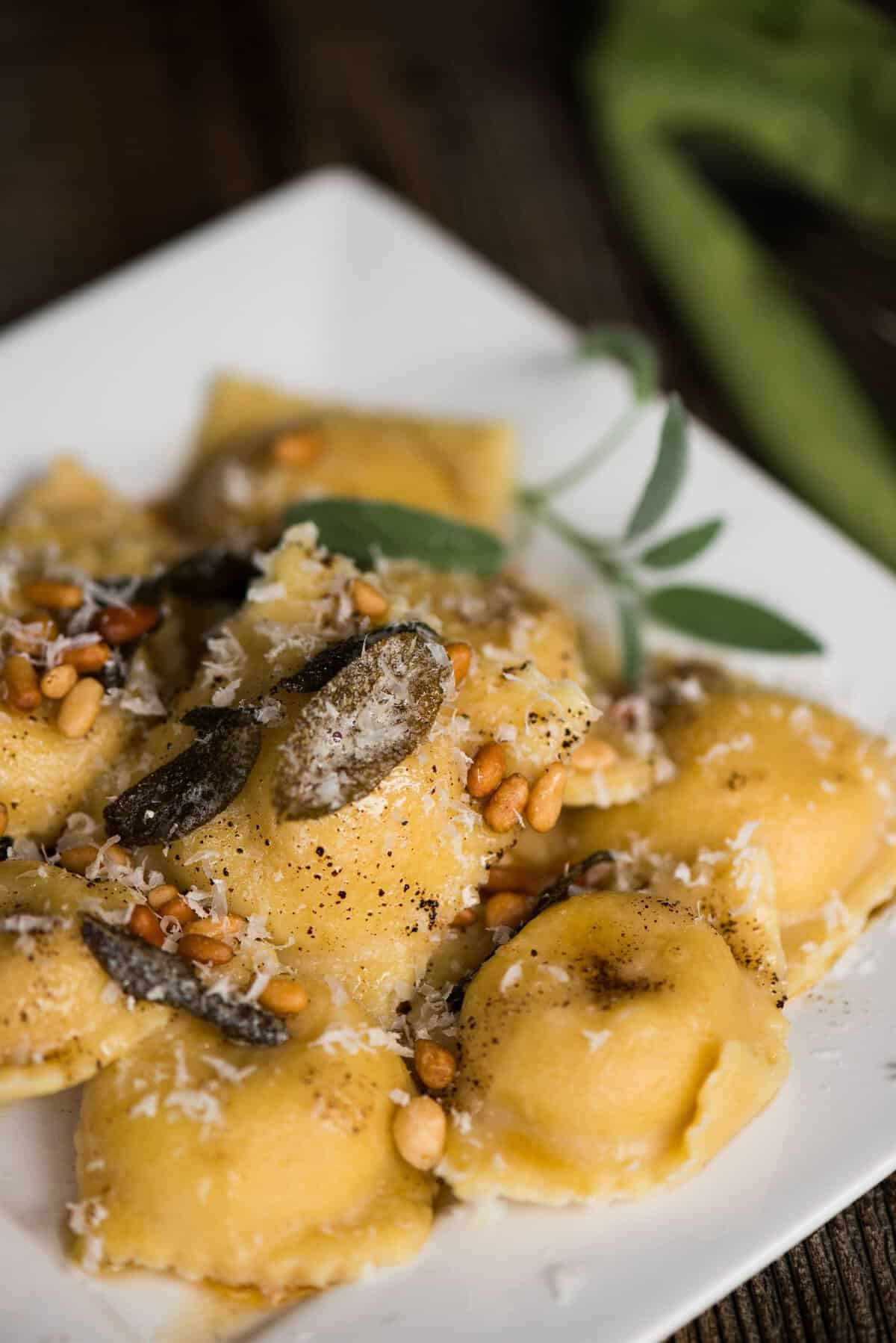
Table of Contents
- Butternut Squash Ravioli at a Glance
- Why this recipe works
- Ingredients Needed for Butternut Squash Ravioli
- How to Make Homemade Butternut Ravioli
- Step 1: Roast the Squash and Garlic
- Step 2: Puree the Filling
- Step 3: Make the Brown Butter Sage Sauce
- Step 4: Make the Pasta and Fill the Ravioli
- Step 5: Add the Top Sheet
- Step 6: Pop Out the Ravioli
- Recipe Tips
- Common Butternut Squash Ravioli Problems (and How to Fix Them)
- How to Make Ahead and Freeze Butternut Squash Ravioli
- Ways to Change It Up
- Butternut Squash Ravioli FAQs
- How many ravioli does this recipe make?
- Can I use all-purpose flour instead of semolina?
- Do I leave the roasted garlic in the filling?
- Can I roast the squash whole?
- Is there enough brown butter sauce for all of the ravioli?
- Can I make butternut squash ravioli without cheese?
- Other Great Ravioli and Pasta Recipes
- Butternut Squash Ravioli Recipe
Butternut Squash Ravioli at a Glance
- The recipe: homemade ravioli filled with roasted butternut squash and garlic, topped with brown butter and crispy sage.
- Why you’ll love it: the roasted garlic keeps the filling savory, not just sweet, and the sauce is only two ingredients.
- Time: about 1 hour 45 minutes, including roasting the squash. It’s a relaxed afternoon project.
- Main ingredients: butternut squash, garlic, parmesan, semolina and all-purpose flour, eggs, butter and fresh sage.
- Method: roast, blend, roll, fill, then a quick boil.
- Make ahead: the filling and the dough can both be made a day early, and the uncooked ravioli freeze well.
- Quick tip: let the filling cool before you fill the ravioli. Chilled filling is the easiest to work with.
Why this recipe works
Homemade Butternut Squash Ravioli with Brown Butter Sage Sauce – it’s like fall perfection on a plate. In fact, it’s one of my favorite pasta recipes.
- Roasting butternut squash is so easy to make. Once you roast butternut squash with whole cloves of garlic, you’ll never go back. Pure heaven, I tell you!
- Homemade pasta is actually super simple to make and the taste and texture can’t be beat. My pasta recipe works perfectly for this ravioli.
- And let’s not forget the brown butter sage sauce. You know I love my brown butter, and it is perfect for savory dishes like this butternut squash ravioli too. This homemade ravioli has so much flavor, but it requires the perfect sauce to complement it rather than overpower it.
Ingredients Needed for Butternut Squash Ravioli
- Butternut squash – peeled and cut into chunks. Cubed raw squash from the store works too if you don’t want to peel a whole one. Don’t stress about the exact size of your squash. I add olive oil, salt and pepper in the food processor until the filling gets to the right consistency.
- Whole garlic cloves – they roast right alongside the squash and go into the food processor with it.
- Parmesan cheese – for the filling and for the top. I grate mine from a block.
- Sage – dried sage seasons the filling, and fresh sage leaves go into the brown butter. Fresh sage works in the filling too.
- Semolina and all-purpose flour – I use an even mix of the two. Semolina gives the pasta its bite.
- Eggs, olive oil, water and kosher salt – the rest of the pasta dough.
- Butter – for the brown butter sage sauce.
- Toasted pine nuts – for the garnish, along with more parmesan.
Full amounts are in the recipe card below. Have extra squash? Use it in my butternut squash soup or butternut squash risotto.
The tools I use
Marcato Atlas 150 pasta roller
Rolls the dough thin and even. I like it even better than the KitchenAid pasta attachments.
As an Amazon Associate I earn from qualifying purchases.
How to Make Homemade Butternut Ravioli
In my opinion, there are three necessary pieces of equipment: a stand mixer with a dough hook, a pasta roller, and a ravioli maker. These are Amazon links to the products I use, or the closest match. Now, you certainly don’t need all of this equipment and people have been making pasta by hand for centuries, but if you have them, making pasta is a breeze.
Step 1: Roast the Squash and Garlic
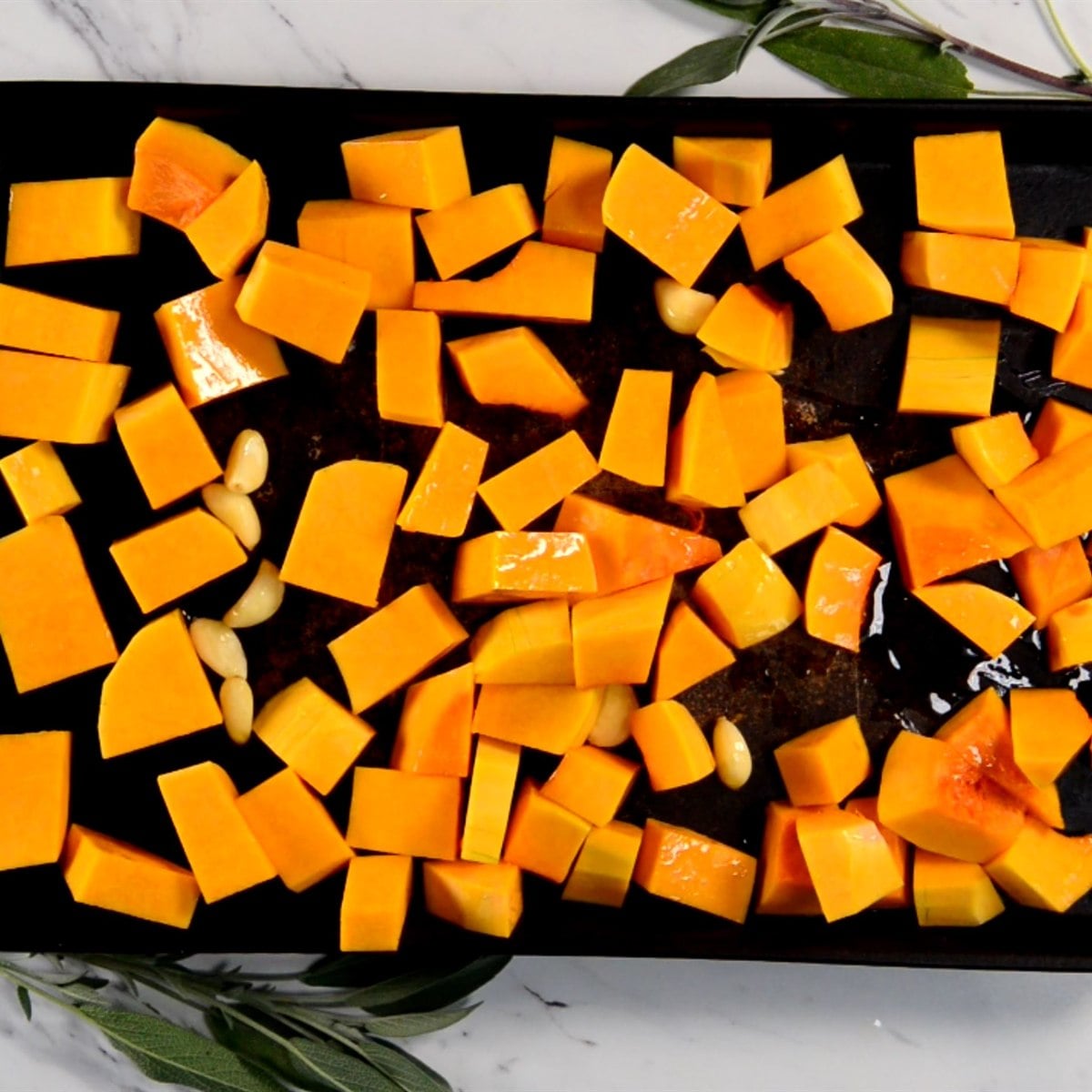
Prepare the filling. This is done by coating butternut squash and garlic cloves in olive oil and roasting on a baking sheet.
Step 2: Puree the Filling
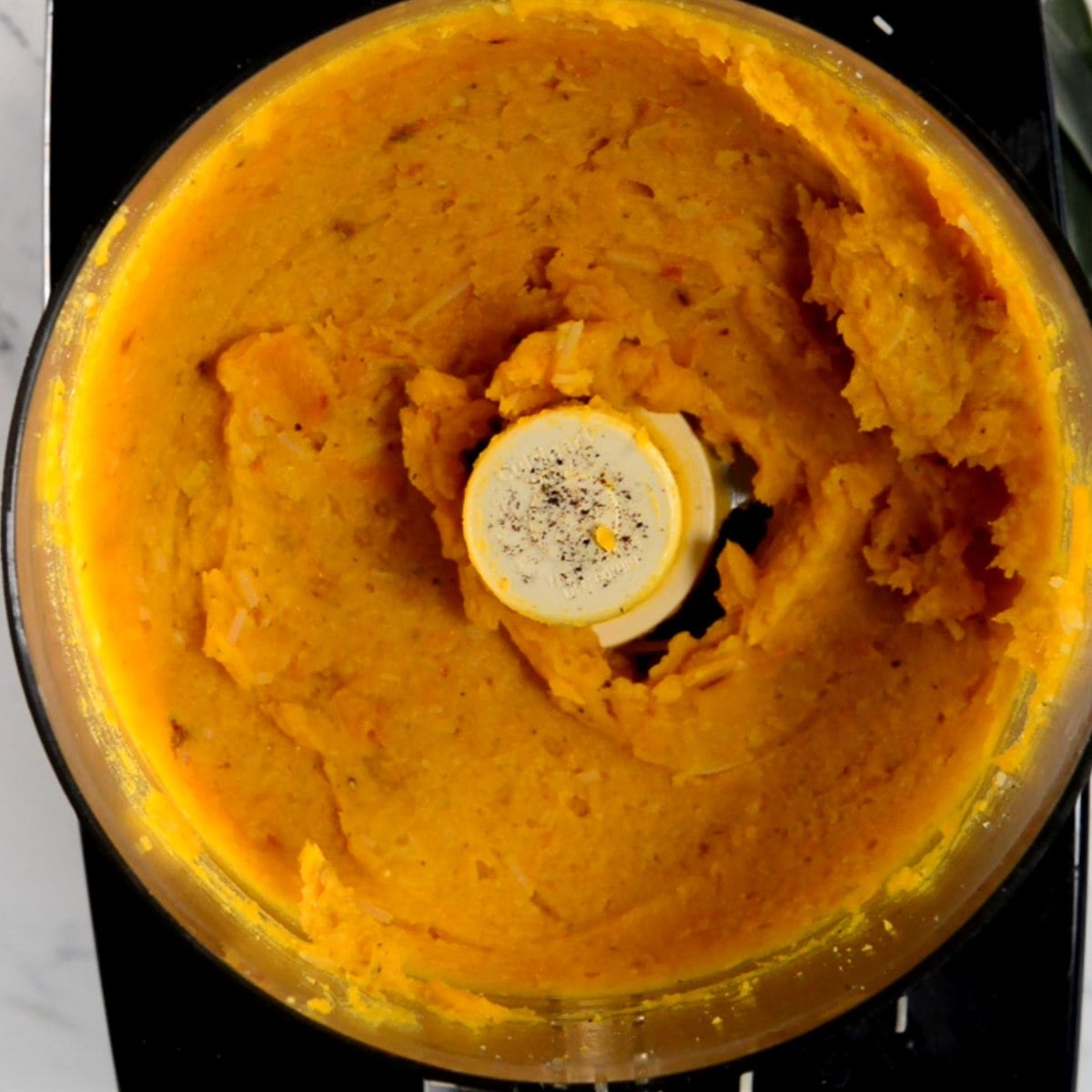
This gets pureed in a food processor with additional olive oil, parmesan cheese, dried sage, and salt and pepper.
PRO TIP: Let the filling cool before you fill the ravioli. Room temperature is fine, but chilled filling is firmer and much easier to scoop. Warm filling softens the dough and makes the edges harder to seal.
Step 3: Make the Brown Butter Sage Sauce
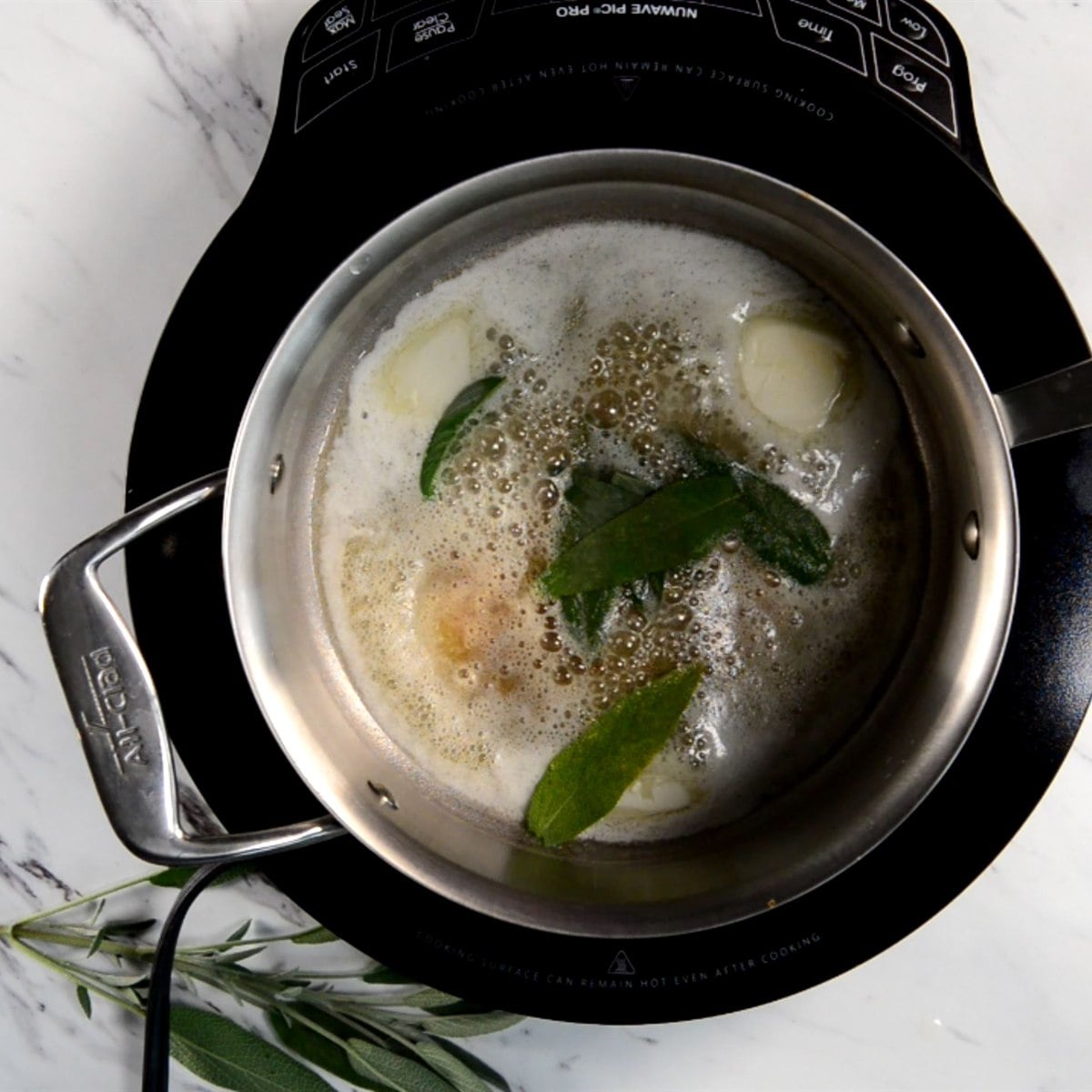
Make the sauce. Butter and fresh sage are cooked over low heat until the butter is browned and the sage is infused. This is to be done just prior to serving.
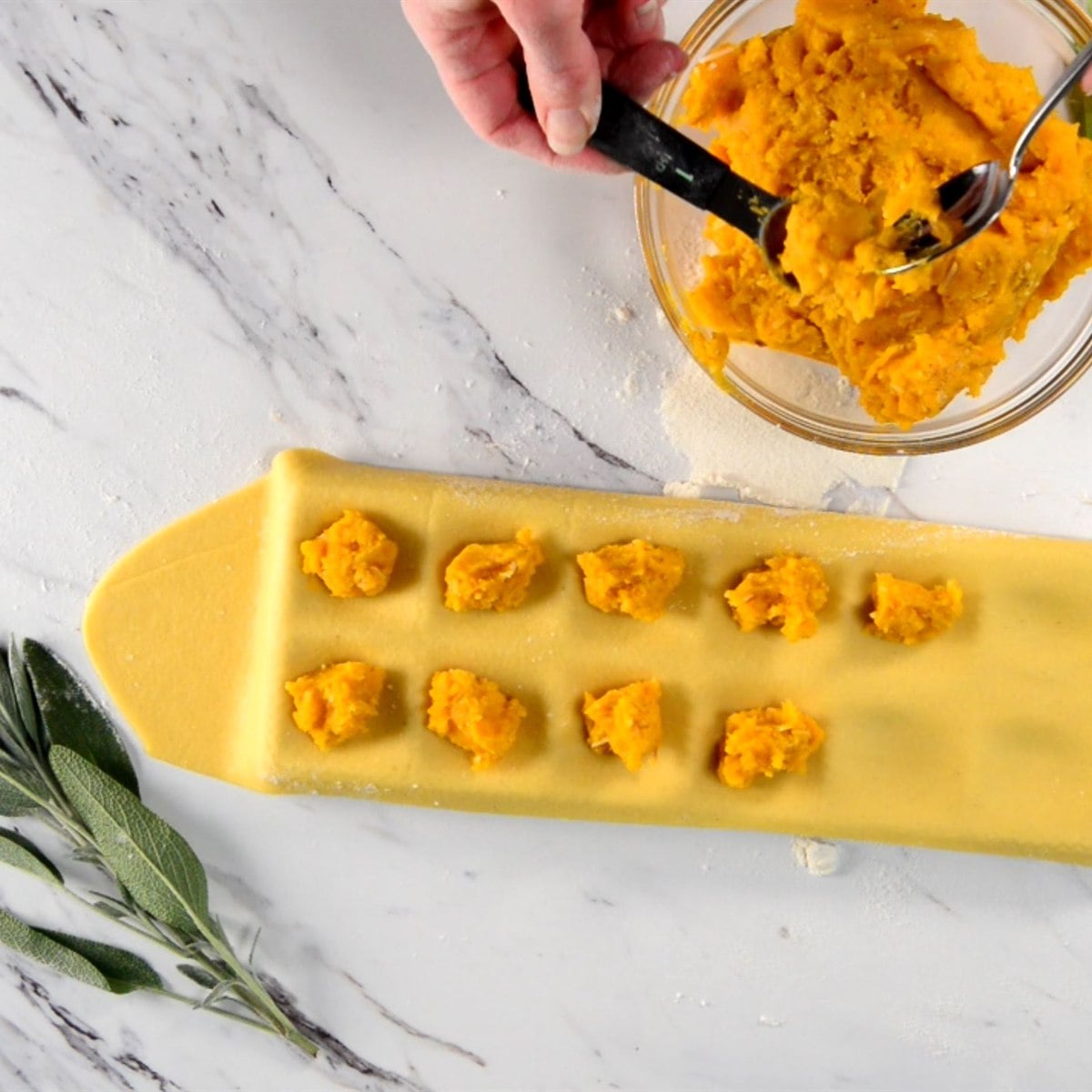
Step 4: Make the Pasta and Fill the Ravioli
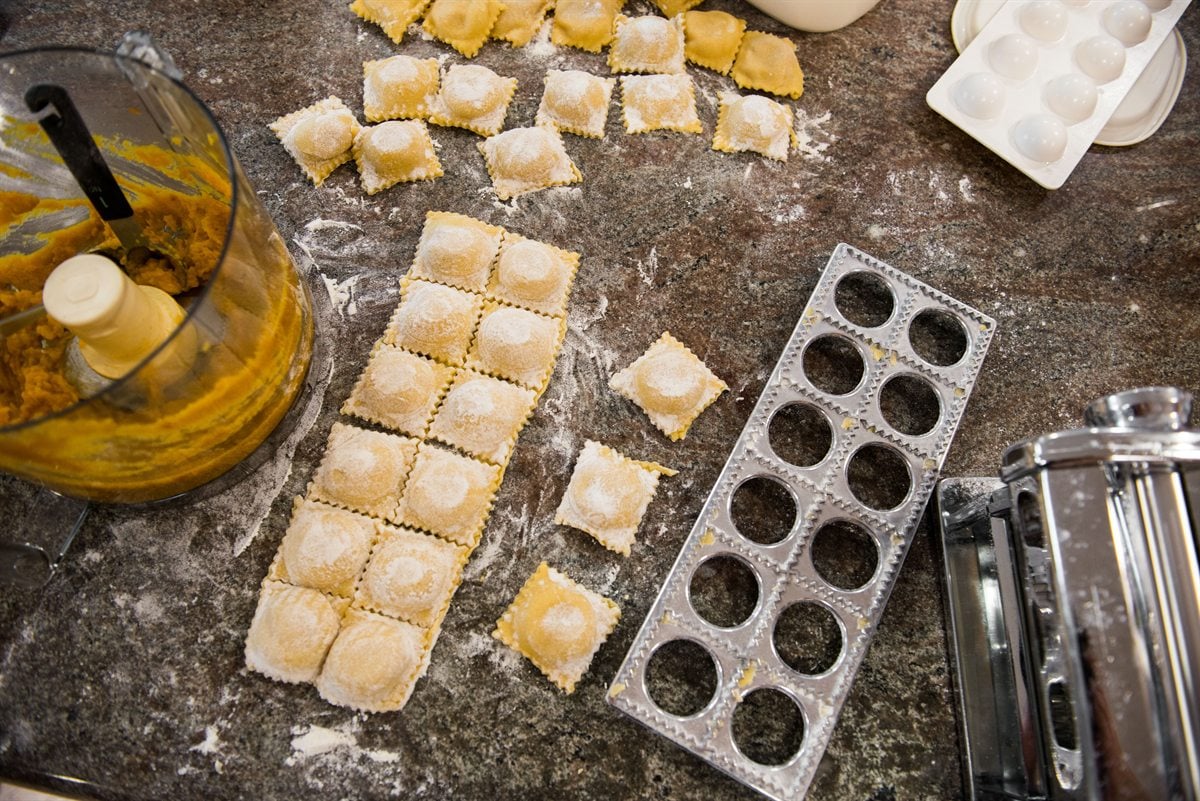
Make the pasta. Equal parts of all-purpose and semolina flour are combined with eggs, olive oil, water and salt, then kneaded until elastic. After a period of rest, the dough gets rolled into sheets. Assemble the ravioli. Cover the ravioli mold with the pasta dough, create a well for the filling, and add about a heaping teaspoon of roasted garlic butternut squash filling to each well.
PRO TIP: Not sure the dough has been kneaded long enough? Press your knuckle into it. When it’s ready, it bounces right back.
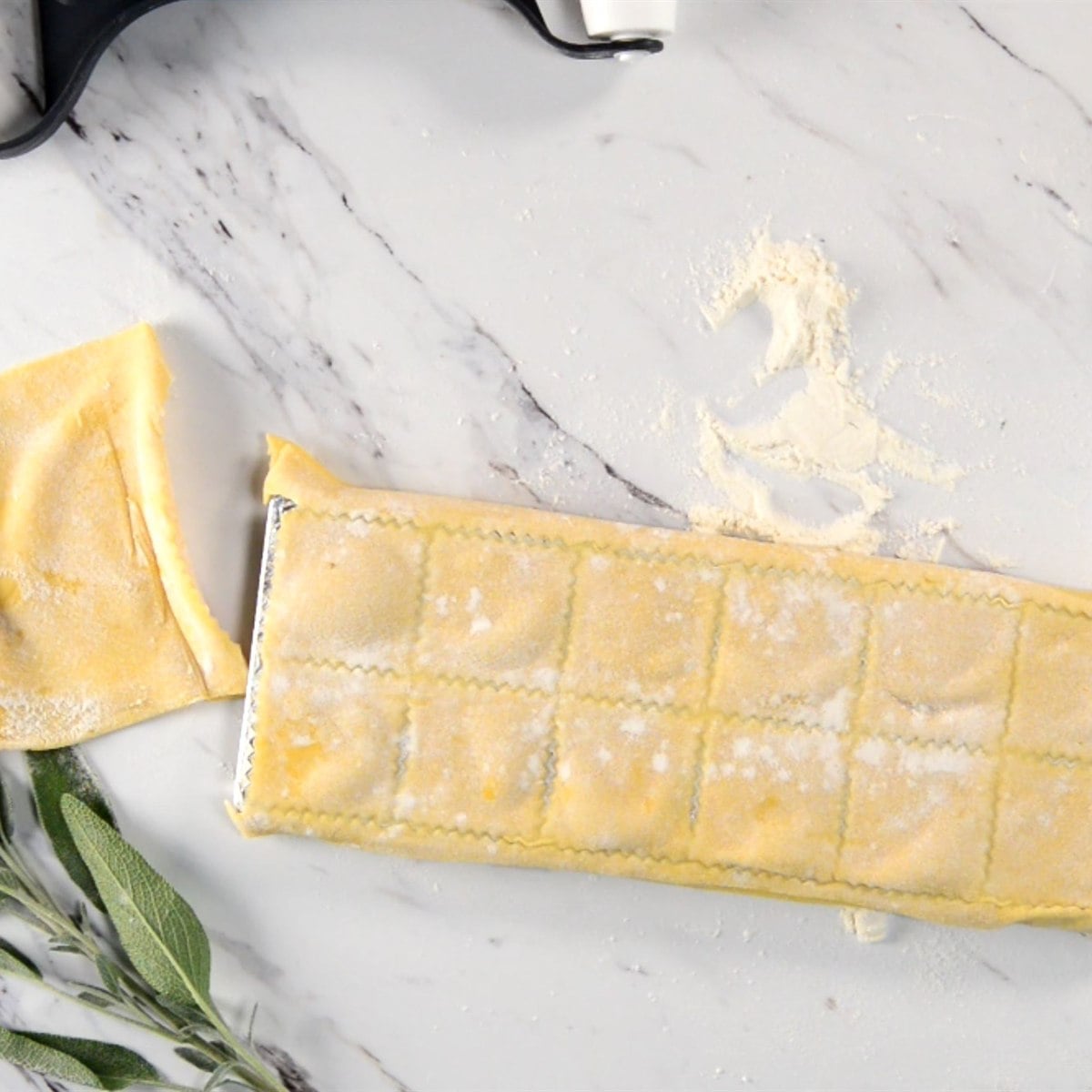
Step 5: Add the Top Sheet
Cover with the second sheet of dough and gently roll the dough together to cut the pieces.
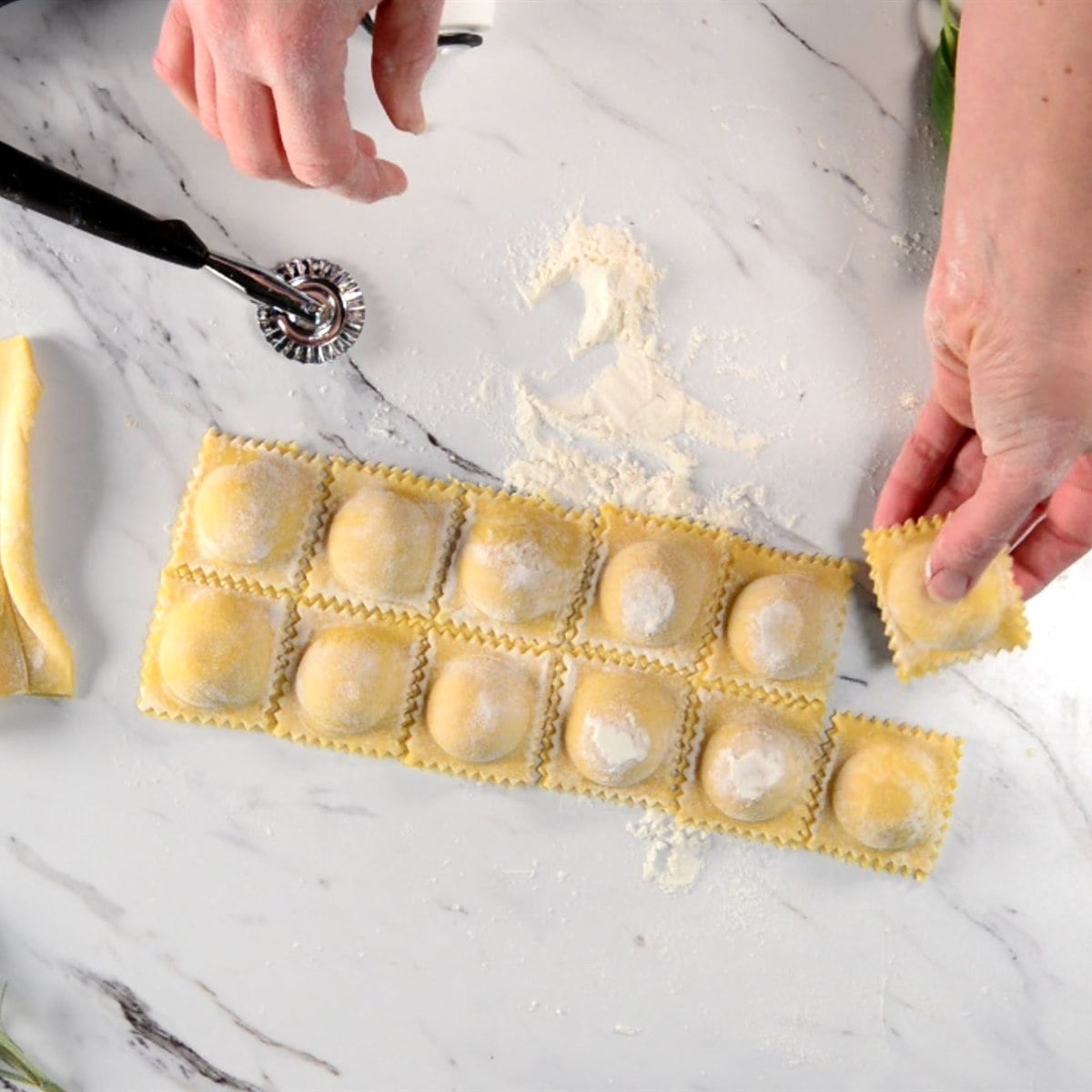
Step 6: Pop Out the Ravioli
Then, all you have to do is turn it over, give it a tap, and they all fall out. Easy!
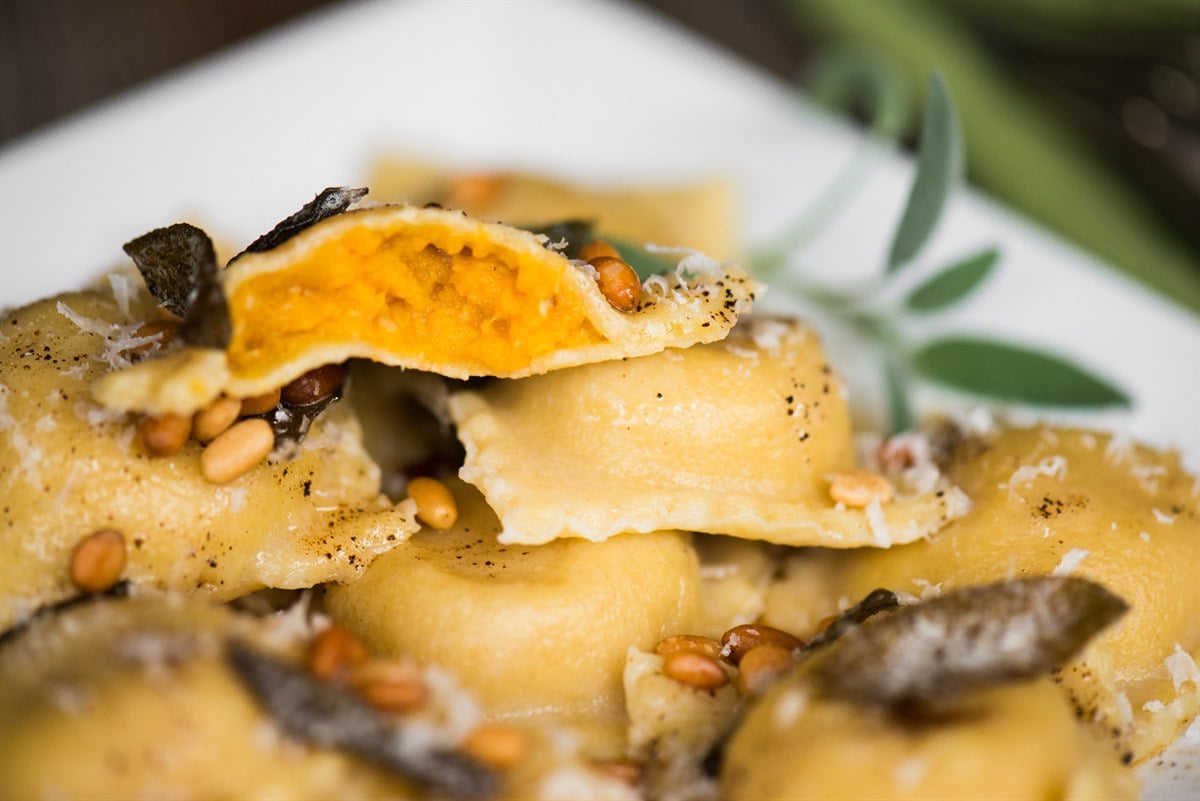
To cook, drop the ravioli into a big pot of salted boiling water. They only take a few minutes and float to the top when they’re done. Spoon the brown butter and crispy sage over the top, then finish with toasted pine nuts and plenty of freshly grated parmesan.
Recipe Tips
- Making the pasta: I prefer an even mix of semolina flour to all-purpose flour. It gives the pasta great texture and chew, plus it’s insanely easy to work with. The addition of olive oil to the dough can be tasted in the final pasta – YUM! You must knead your pasta dough for a solid ten minutes. If you want to do this by hand, more power to you, but pasta dough is not a soft dough like bread dough, so you’re in for a workout. I highly recommend using your KitchenAid mixer. You have to be sure to cover the dough and allow it to rest. This process allows the gluten to do whatever gluten does to make pasta wonderful. (Technically, the rest gives the flour time to soak up the liquid and lets the gluten relax, so the dough rolls out without springing back.)
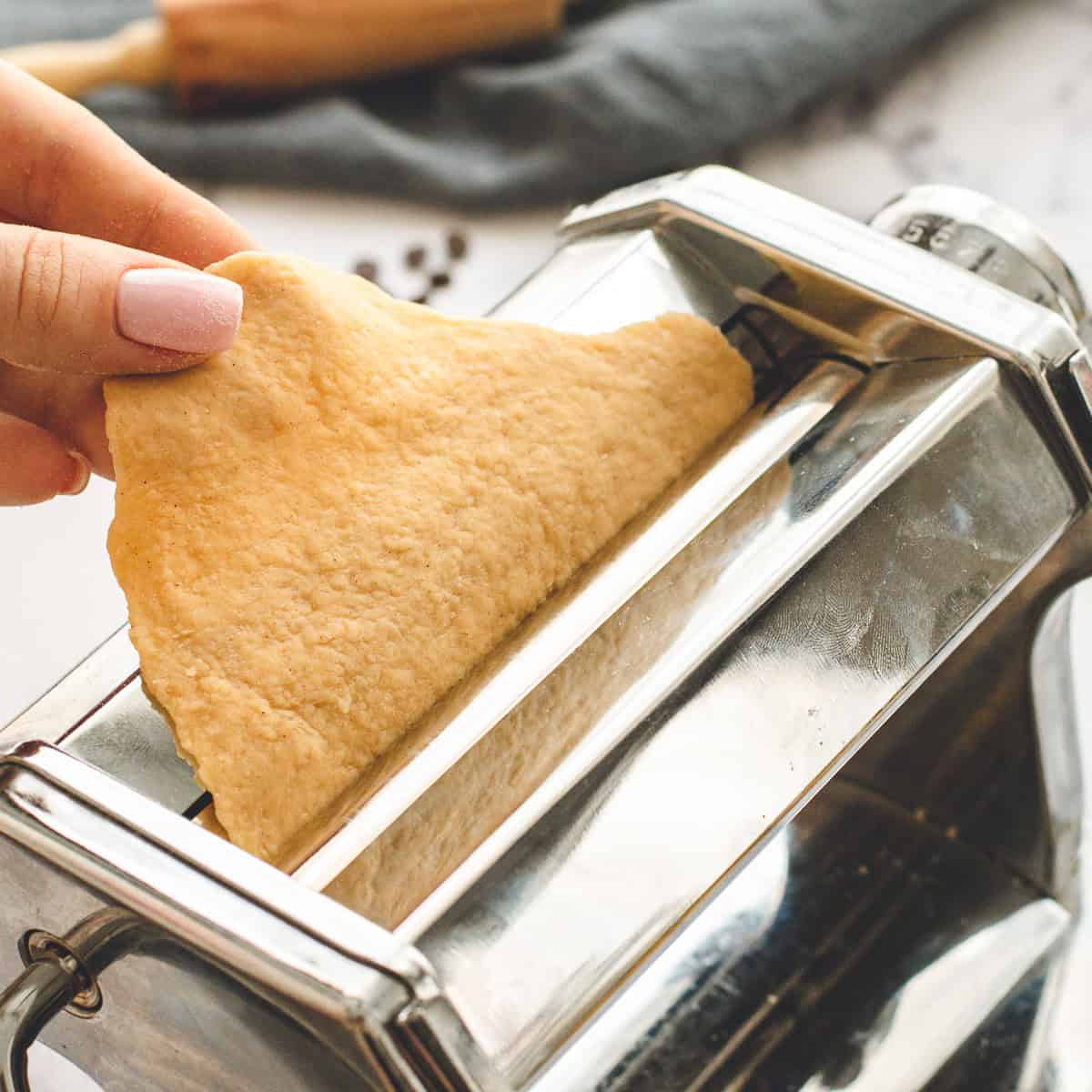
- To roll out the sheets of pasta dough to make your homemade ravioli, you can roll it on the counter by hand, but I highly recommend using a pasta roller. I’ve used the KitchenAid pasta attachments before, and while they certainly are easy to use, there is something so satisfying about rolling pasta dough in a quality made in Italy pasta roller. Just be sure you use enough flour to avoid any sticking in your pasta machine.
- When forming the ravioli, be sure to have floured all of your dough generously so that it releases easily from the mold.
Common Butternut Squash Ravioli Problems (and How to Fix Them)
Most homemade ravioli problems come down to a filling that’s too wet or a dough that’s too wet or too dry. Here’s how to fix each one.
- The filling is watery. The squash probably didn’t roast long enough. Roast it until it’s very soft. If thawed frozen filling releases liquid, drain it before you fill the ravioli.
- The filling is too sweet. Butternut squash is naturally very sweet. Use a winter squash that isn’t as sweet, or mix in some ricotta cheese so there’s less squash in each bite.
- The dough is sticky. Add flour a tablespoon at a time while it kneads, until it stops sticking. The size of your eggs and the humidity in your kitchen both change how much flour pasta dough needs. I have backyard chickens, and their eggs have very large yolks.
- The dough cracks or tears in the roller. It has usually dried out. Keep the dough you aren’t rolling wrapped in plastic. Start on the widest setting and fold and re-roll the sheet a few times before you go thinner.
- The ravioli open up when they cook. Wet the edges with a little water before you add the top sheet, press out the air, and don’t overfill them. A heaping teaspoon of filling is plenty for bite-size ravioli.
★★★★★
“We had them yesterday for dinner and they were MINDBLOWING! The filling is so simple but so incredibly delicious! Thank you so much! A keeper!”
Eneko, reader review
How to Make Ahead and Freeze Butternut Squash Ravioli
This recipe makes a big batch, so it’s perfect for working ahead.
- Make the filling ahead. Make it the day before and keep it covered in the refrigerator.
- Freeze the filling. Freeze it in a bag with all of the air squeezed out. Thaw it in the refrigerator, and drain off any liquid before you fill the ravioli.
- Make the dough ahead. Wrap it tightly in plastic wrap and keep it in the refrigerator overnight, then let it come to room temperature before you roll it. Raw egg dough shouldn’t sit on the counter for more than 2 hours.
- Freeze the uncooked ravioli. Set them in a single layer on a parchment-lined baking sheet and freeze. Once they’re frozen, move them to a resealable bag and squeeze out as much air as possible. When you’re ready to cook, drop them straight into boiling salted water. There’s no need to thaw them first; they just need a couple more minutes.
- Leftover cooked ravioli. Refrigerate them within 2 hours and eat them within 3 to 4 days.
Ways to Change It Up
- Add ricotta to the filling for a creamier, milder ravioli.
- Add a little warmth. Readers love a pinch of nutmeg or a little brown sugar in the filling.
- Try amaretti cookies. One reader adds crushed amaretti cookies to the filling and sprinkles more over the top. It sounds weird, but sweet amaretti and squash is a classic Italian pairing.
- Swap the pine nuts for chopped pistachios.
- Change the shape. The same filling works for agnolotti, or roll and cut the ravioli by hand if you don’t have a press.
- Short on time? The brown butter sage sauce is great over store-bought ravioli too.
- Want a different filling? Try my four cheese ravioli or meat and cheese ravioli. And if you love a homemade pasta project, my homemade potato gnocchi is another fun one.
Butternut Squash Ravioli FAQs
Here are the questions readers ask me most about this recipe.
How many ravioli does this recipe make?
It depends on the size of your mold and how thin you roll the dough. I use a press that makes bite-size ravioli and roll the dough to setting 5 on my Atlas pasta roller. Bigger ravioli or thicker dough will give you fewer.
Can I use all-purpose flour instead of semolina?
Yes, you can make the dough with only all-purpose flour. It will turn out, but I find it tastes doughy and doesn’t have the bite that semolina gives homemade pasta.
Do I leave the roasted garlic in the filling?
Yes! The roasted garlic cloves go right into the food processor with the squash. That’s what keeps the filling savory.
Can I roast the squash whole?
Yes. Roast it until it’s very soft, then scoop out the seeds and use the flesh. Cubing it first just makes it quicker.
Is there enough brown butter sauce for all of the ravioli?
Not if you cook them all at once. The brown butter is more of a flavor enhancer than a sauce, and it’s so rich that you don’t want to drown your pasta in it. The amount in the recipe is right for my family of four, so double or triple it if you’re cooking the whole batch.
Can I make butternut squash ravioli without cheese?
Yes. The cheese is mostly for flavor, so you can leave it out of the filling and the ravioli will still be delicious.
Other Great Ravioli and Pasta Recipes
Once you make your own homemade pasta, you’ll want to find every recipe that you can that uses it. Here are some of my favorites!
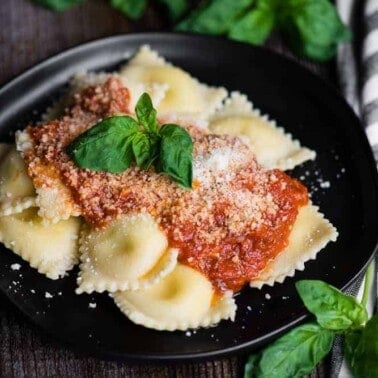
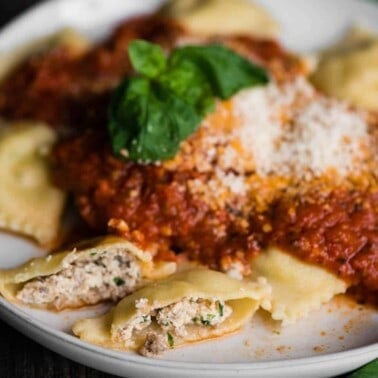
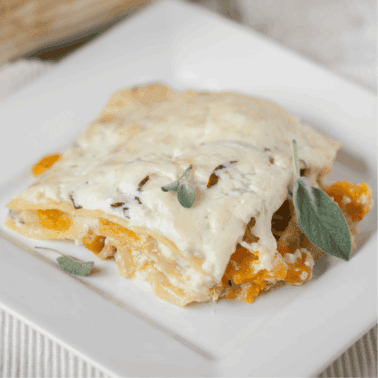
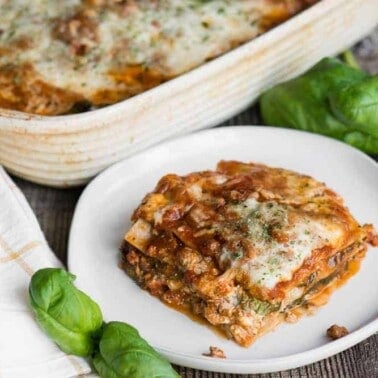
If you tried this Butternut Squash Ravioli recipe or any other recipe on my website, please leave a 🌟 star rating and let me know how it went in the 📝 comments below. Thanks for visiting!
Pin this now to save it for later
Pin ItButternut Squash Ravioli
Ingredients
Pasta
- 1 1/2 cups Semolina Pasta Flour
- 1 1/2 cups all-purpose Flour
- 4 whole eggs
- 4 tablespoons olive oil
- 4 tablespoons water
- 1 teaspoon kosher salt
Filling
- 2 1/2 lbs butternut squash peeled and roughly chopped
- 8 whole garlic cloves
- 1/4 cup olive oil
- 1/2 cup parmesan cheese
- 1/2 teaspoon dried sage
- salt and pepper to taste
Sauce & garnish (see notes below)
- 4 tablespoons butter 1 stick is 8 tablespoons
- 10 whole fresh sage leaves
- 1/4 cup toasted pine nuts
- freshly grated parmesan cheese for serving
Instructions
To make the pasta dough:
- Combine all pasta ingredients and mix together to make a stiff dough. Knead by hand or in a stand mixer with the dough hook on medium low speed for 10 minutes or until dough is elastic. Wrap dough in plastic wrap and let rest for at least 20 minutes. On a lightly floured surface roll out to desired thickness and cut as desired.1 1/2 cups Semolina Pasta Flour, 1 1/2 cups all-purpose Flour, 4 whole eggs, 4 tablespoons olive oil, 4 tablespoons water, 1 teaspoon kosher salt
To make the filling:
- Toss the 2 1/2 lbs butternut squash with the 8 whole garlic cloves in a bowl with just enough olive oil to evenly coat everything. Roast on a baking sheet at 400°F for about 45 minutes until soft. Remove from the oven and mix in a food processor to combine – slowly pouring additional olive oil into the mixture until the consistency is smooth. Add 1/2 cup parmesan cheese, 1/2 teaspoon dried sage, and salt and pepper, to taste. Use this filling to make the ravioli.
To make the sauce:
- Combine 4 tablespoons butter and 10 whole fresh sage leaves in small sauce pan. Heat over low heat for at least 15 minutes to infuse the butter. Then, increase the heat just a bit (take care not to burn) and stir continuously until the butter browns slightly and the sage leaves crisp.
To prepare:
- Use a ravioli press to add and seal one teaspoon of filling in between each pasta sheet. Dip finger in water and wet edges of pasta before adding second sheet to allow for a nicely sealed ravioli. Use a roller, gently pressing down, to seal them up. Be sure to heavily flour the outside of your pasta to enable easy release.
- Boil the ravioli in plenty of salted water until just done. This will only take a short time! The ravioli will float on the surface of the water when they are finished. Carefully remove and drain. Serve with sage butter, 1/4 cup toasted pine nuts, and a generous amount of freshly grated parmesan cheese.
Notes
- To cook: toss the ravioli in salted boiling water for just a few minutes until they float.
- To freeze: line a baking sheet with parchment paper and add a single layer of the homemade ravioli. Set in freezer and once completely frozen, they can be added to a resealable plastic bag. Be sure to squeeze out as much air as possible to prevent freezer burn.
- Sauce amount – Since I typically don’t cook all of these ravioli (I cook some and freeze the rest), the amount of sauce in this recipe is perfect for my family of four. If you’re planning on cooking ALL of the ravioli at the same time, you may want to double or triple the sauce amount.
Video
Nutrition
Nutrition information is automatically calculated, so should only be used as an approximation.
This post was originally published in November 2017. I’ve updated the photos and tips since then. Don’t worry, the recipe hasn’t changed!











Seems like not enough sauce for that much ravioli?
It’s more of a flavor enhancer than a sauce. The browned butter is so rich, you wouldn’t want to drown your pasta in it.
This recipe sound delicious! I’m looking forward to trying this as I grew some butternut squash last summer but haven’t used it all yet. Do you think I could just make the stuffing and freeze it for later use? Thank you!
Yes, for sure. When it thaws I imagine there will be some liquid released. If that does happen, I would probably drain off the liquid before using it in the ravioli.
Can you use fresh sage in the filling with freezing?
yes!
The hubby and I made this recipe yesterday and it’s a definite 5 star recipe. The pasta recipe is so easy and easy to use. The filling is amazing (I did add brown sugar to the mix) and all together with the sages brown butter sauce! Absolutely delightful! We are bringing the dish to his family’s Christmas celebration. I’m sure it will be a wow for them too!
Our taste buds and tummy thank you!
Can you make the filling ahead & freeze it?
Yes, but when you thaw there may be some residual liquid. If that happens, I would drain before filling.
I would give 10 stars if I could. Recipe is easy to follow & delicious. The raviolis were absolutely yummy & the brown butter sauce with fresh crisped sage made the dish a treat. I have had sage growing in the garden for ages and have never used it. This fall it will be harvested, frozen & enjoyed with this recipe again & again….
I used a ravioli mole and even if I couldn’t get all the air out they stayed intake.
Also thank you for the easy kneading in the kitchen aid mixer! I have been making pasta for ages and never thought of using the mixer. Worked beautifully.
I love your recipes, I have made a lot of homemade pasta. My problem the last time I had too many air holes and some of them came apart, did not use a ravioli mold. What brand is the one you used? Thanks,
I use a 12-hole ravioli press, and there’s a link to it in the “tools I use” box in the post. To keep the air out, wet the edges with a little water before you add the top sheet, don’t overfill them, and roll gently over the top so everything seals.