
This post may contain affiliate links. Please read our disclosure policy.


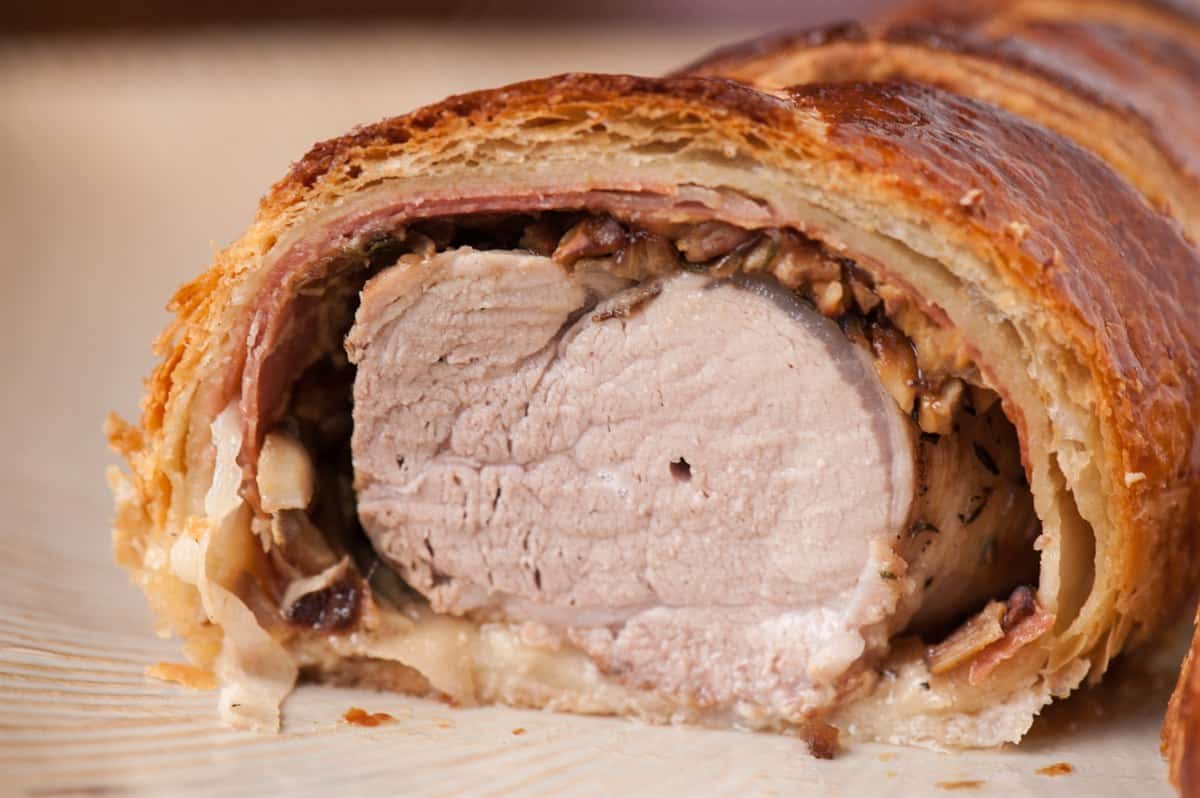
Pork Wellington, made with pork tenderloin wrapped in flavorful prosciutto, a sauteed mushroom and shallot blend, and puff pastry, is the kind of homemade dinner recipe that will impress!
This recipe reminds me of a high-end version of one of my favorite appetizers – Puff Pastry Wrapped Kielbasa Bites.
I cook with pork tenderloin all the time. It’s quick, it’s easy, and it costs a lot less than beef. So when I want something that looks like a special-occasion dinner without the beef Wellington price tag, this is what I make.
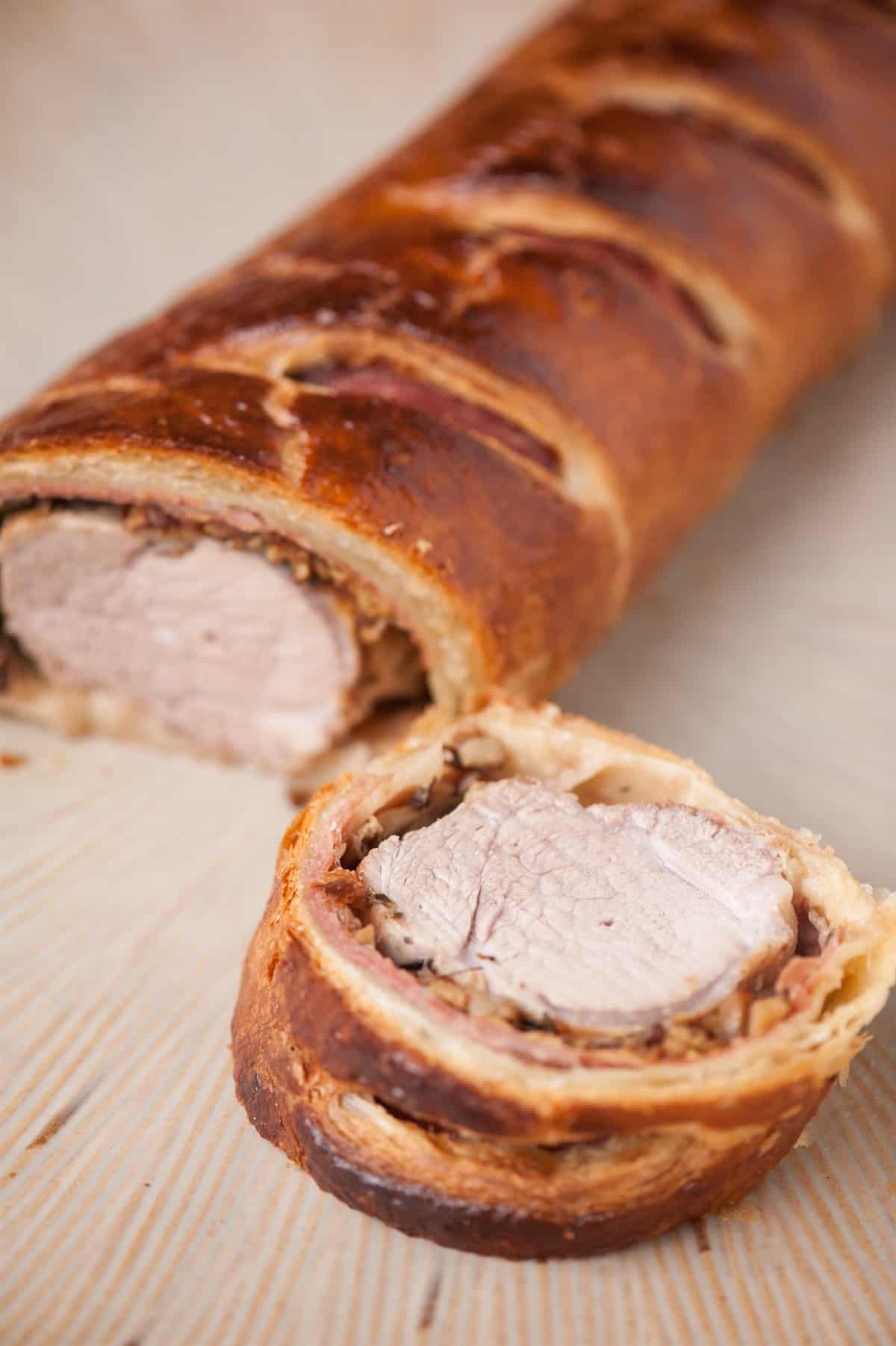
Table of Contents
- Pork Wellington at a Glance
- Why You’ll Love This Pork Wellington
- Ingredients for Pork Wellington
- How to Make Pork Wellington
- Step 1: Roll out the puff pastry
- Step 2: Add the prosciutto
- Step 3: Spread the mustard
- Step 4: Add the mushrooms
- Step 5: Sear the pork
- Step 6: Add the tenderloin
- Step 7: Wrap and seal
- Step 8: Bake and rest
- Cooking Tips
- Common Pork Wellington Problems to Avoid
- Making Pork Wellington Ahead, Storing and Reheating
- What to Serve with Pork Wellington
- Pork Wellington FAQs
- Is it okay if the pork is a little pink?
- Can I double this recipe?
- What is the difference between pork Wellington and beef Wellington?
- What sauce goes with pork Wellington?
- More Pork Tenderloin Recipes
- Pork Wellington Recipe
Pork Wellington at a Glance
- What it is: a seared pork tenderloin wrapped in prosciutto, Dijon, sautéed mushrooms and shallots, and puff pastry.
- Why make it: it looks like a holiday centerpiece but uses a cut that costs much less than beef tenderloin.
- Time: about 1 hour, 20 minutes of it hands-on.
- Ingredients: 10, including one sheet of store-bought puff pastry.
- Method: sear the pork, layer the fillings on the pastry, roll it up and bake at 425°F.
- Make ahead: cook the mushrooms up to 3 days ahead, or assemble it with unseared pork up to a day ahead.
- Quick tip: cook the mushrooms until the pan is dry, or the bottom of the pastry gets soggy.
Why You’ll Love This Pork Wellington
This is truly an easy yet impressive pork dinner recipe that is sure to please!
- This dinner recipe features a fresh cut pork tenderloin along with the beautiful combination of puff pastry, prosciutto, dijon mustard, and sautéed mushrooms.
- You will enjoy the most flavorful, moist, and downright delicious dinner that is actually quite easy to prepare.
- A pork tenderloin is already a tender and moist cut of meat, but when wrapped in prosciutto and puff pastry, the additional fat adds a ton of flavor and keeps it moist and juicy.
- Pork tenderloin Wellington is perfect to share with friends or family and an excellent main course.
Ingredients for Pork Wellington
- Pork tenderloin: one tenderloin, about 1 1/2 pounds. Use tenderloin, not pork loin. A loin roast is much wider, so it takes longer to cook through and needs more pastry, and it has the texture of a pork chop instead of the soft, tender bite of a tenderloin.
- Puff pastry: one sheet of store-bought puff pastry, thawed. I usually use Pepperidge Farm, and I’ve used Trader Joe’s too. One sheet covers a 1 1/2 pound tenderloin. If it feels tight, roll it out or stretch it a little.
- Prosciutto: thin slices, laid in a single layer between the pastry and the mushrooms. Substitutions: Bacon could be used in place of the prosciutto however it would need to be partially cooked first.
- Dijon mustard: spread over the prosciutto. A couple of readers said they’d use more next time, so spread it as thick as you like.
- Mushrooms and shallot: diced and sautéed in butter and olive oil. Red onion could be used in place of the shallot. If you don’t like mushrooms, caramelized onions work, and readers have used thinly sliced apples or spinach instead.
- Seasoning: I use a combination of salt, pepper and dried thyme on the pork.
- Egg: beaten, to seal the seam and brush over the top so the pastry bakes up shiny and golden.
Full amounts are in the recipe card below.
How to Make Pork Wellington
The process for this recipe is simple. Preheat the oven to 425°F before you start.
Step 1: Roll out the puff pastry
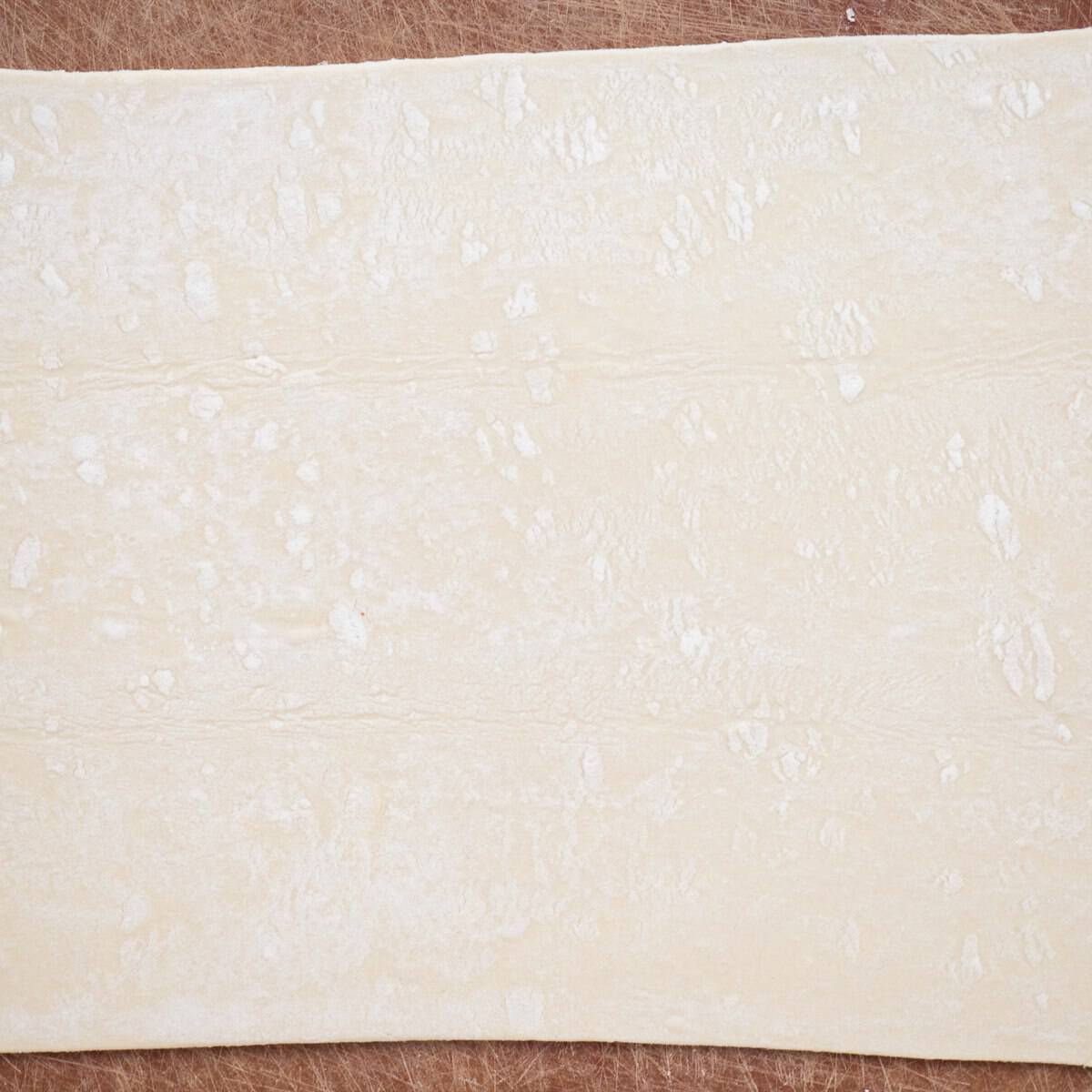
Roll out the puff pastry so that it is big enough to wrap around your tenderloin. It should be as long as the tenderloin and wide enough to wrap all the way around it.
Step 2: Add the prosciutto
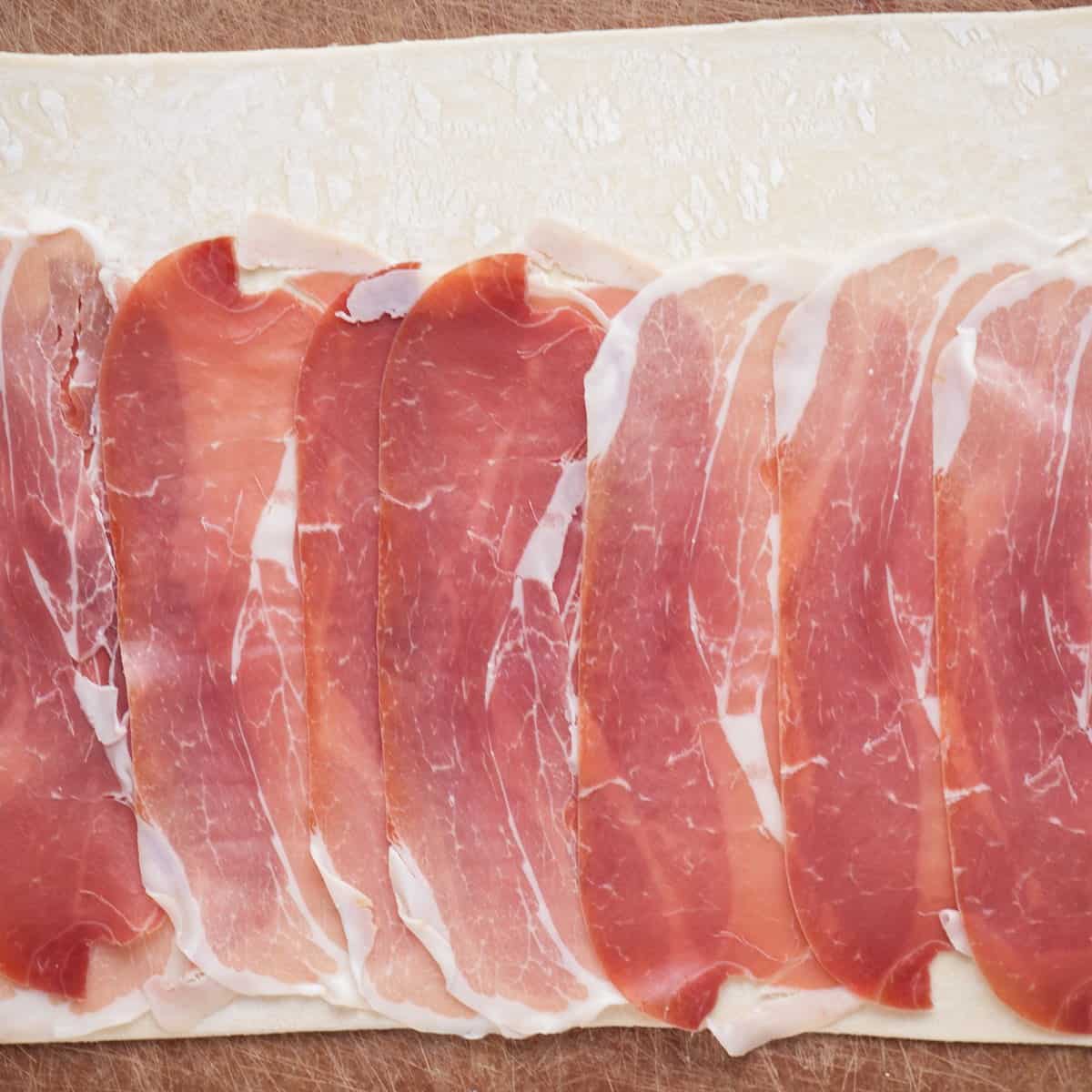
Cover it with a blanket of thinly sliced prosciutto. Overlap the slices a little so there are no gaps.
Step 3: Spread the mustard
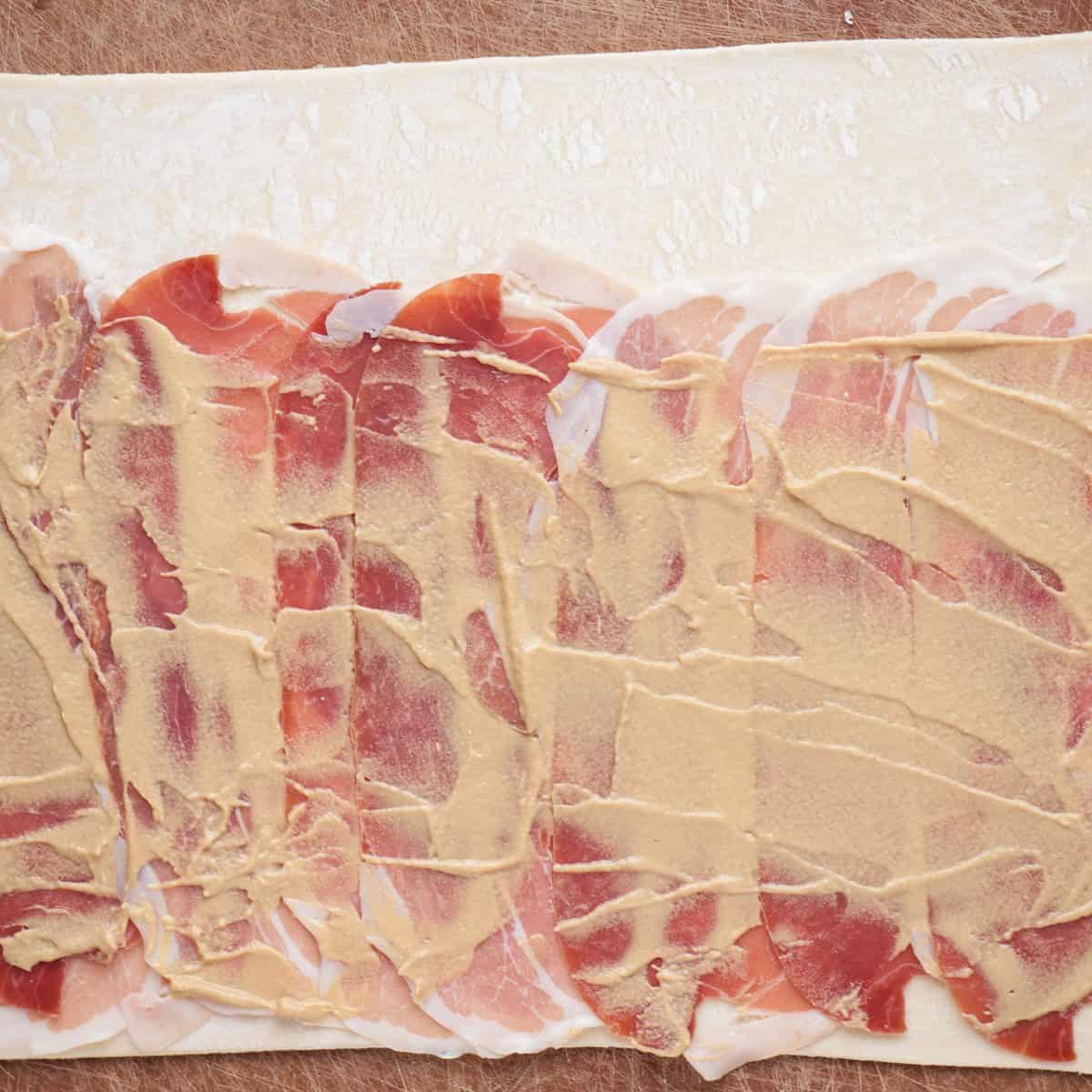
Slather on some Dijon mustard because we all know how wonderful pork and mustard are together.
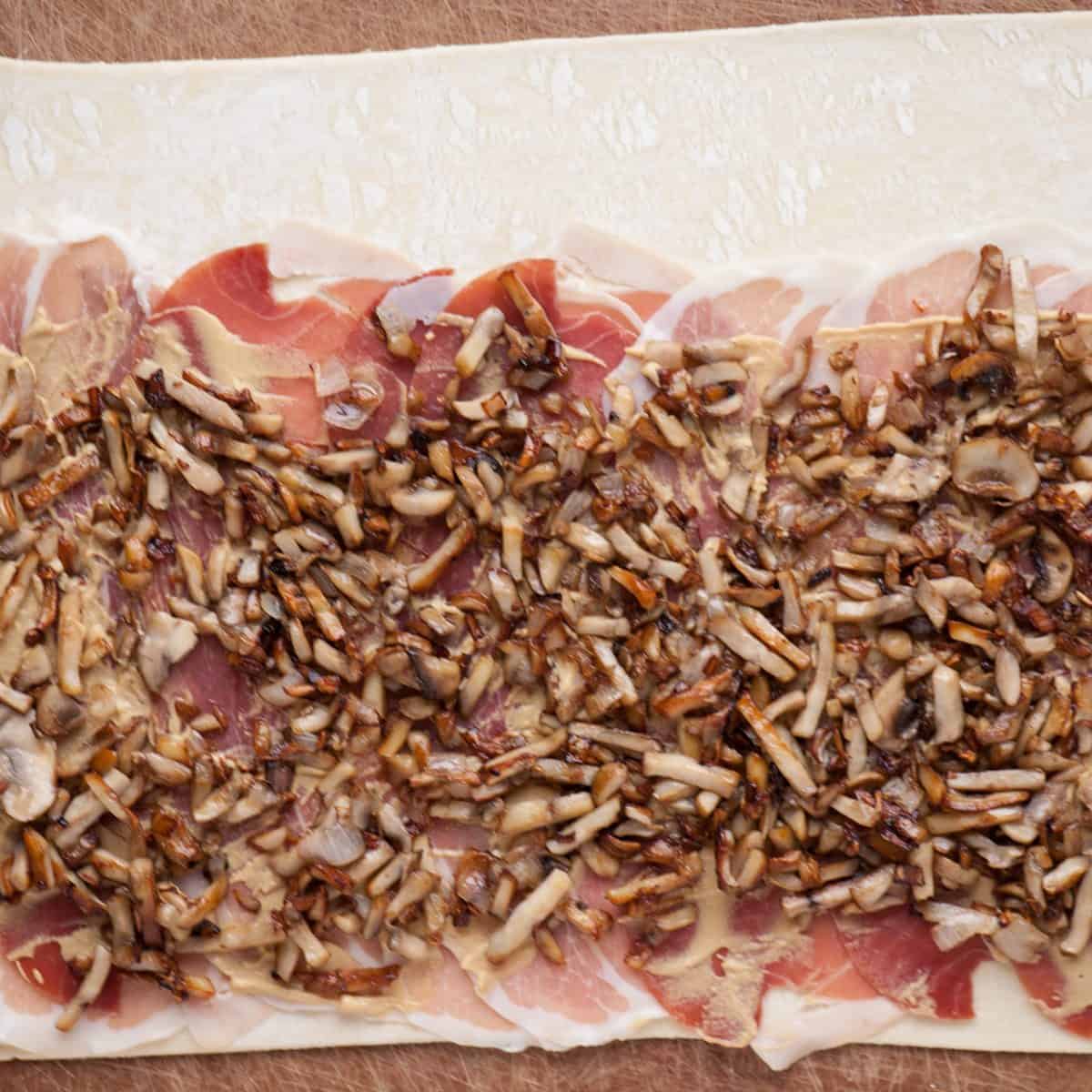
Step 4: Add the mushrooms
Cover that with some sautéed mushrooms and shallots. Cook them first in a hot skillet with the butter and olive oil, in a single layer, until they’re golden brown, then spread them out in one layer.
PRO TIP: Wet mushrooms are the number one cause of a soggy bottom. Don’t crowd the pan, stir only now and then, and keep cooking until the liquid they release has cooked off and the pan is dry.
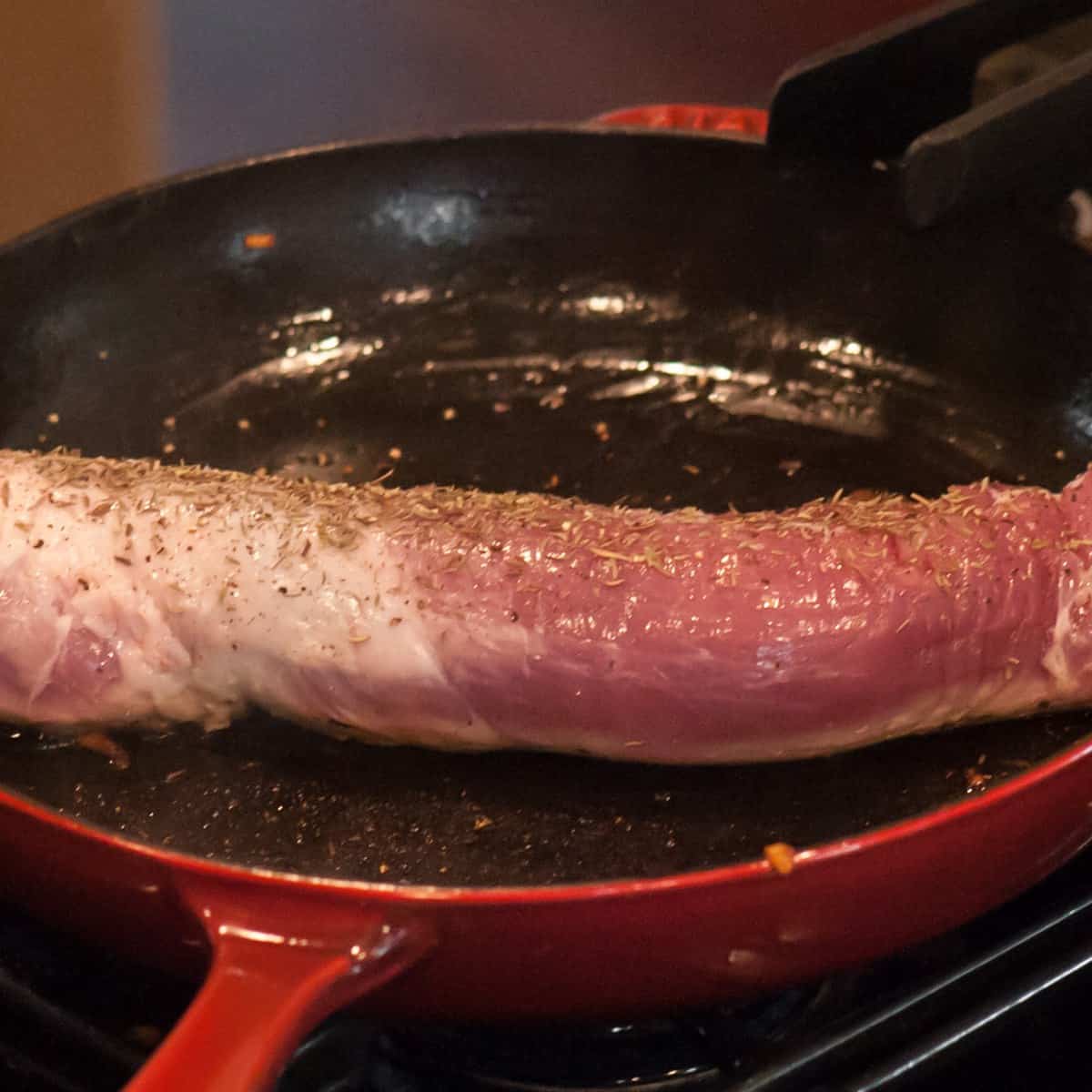
Step 5: Sear the pork
Before you add the pork tenderloin, you’re going to lightly season it and then give it a nice sear in that mushroom pan to build a flavorful crust. About 1 to 2 minutes per side is all it needs, since it finishes cooking in the oven.
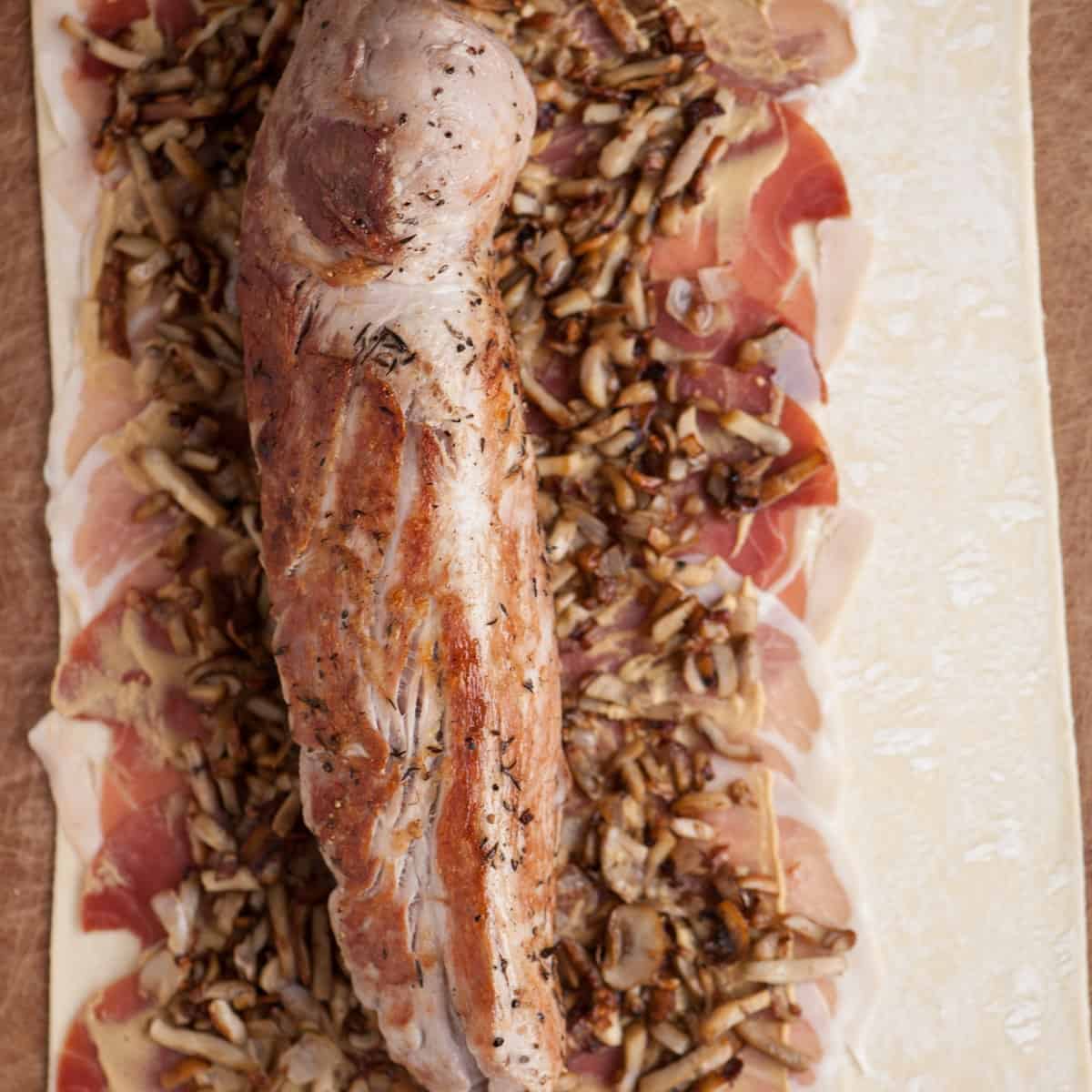
Step 6: Add the tenderloin
Lay the seared tenderloin on the mushrooms. If you have a probe thermometer, push it into the thickest part of the meat from one end, so it sticks out after you roll everything up.

Step 7: Wrap and seal
Wrap it all up, seal it with a bit of egg wash and then paint on some more egg wash to give that pastry a golden brown shine while it cooks. Easy! Set it seam side down on a parchment-lined baking sheet and cut a few slits in the top so steam can escape.
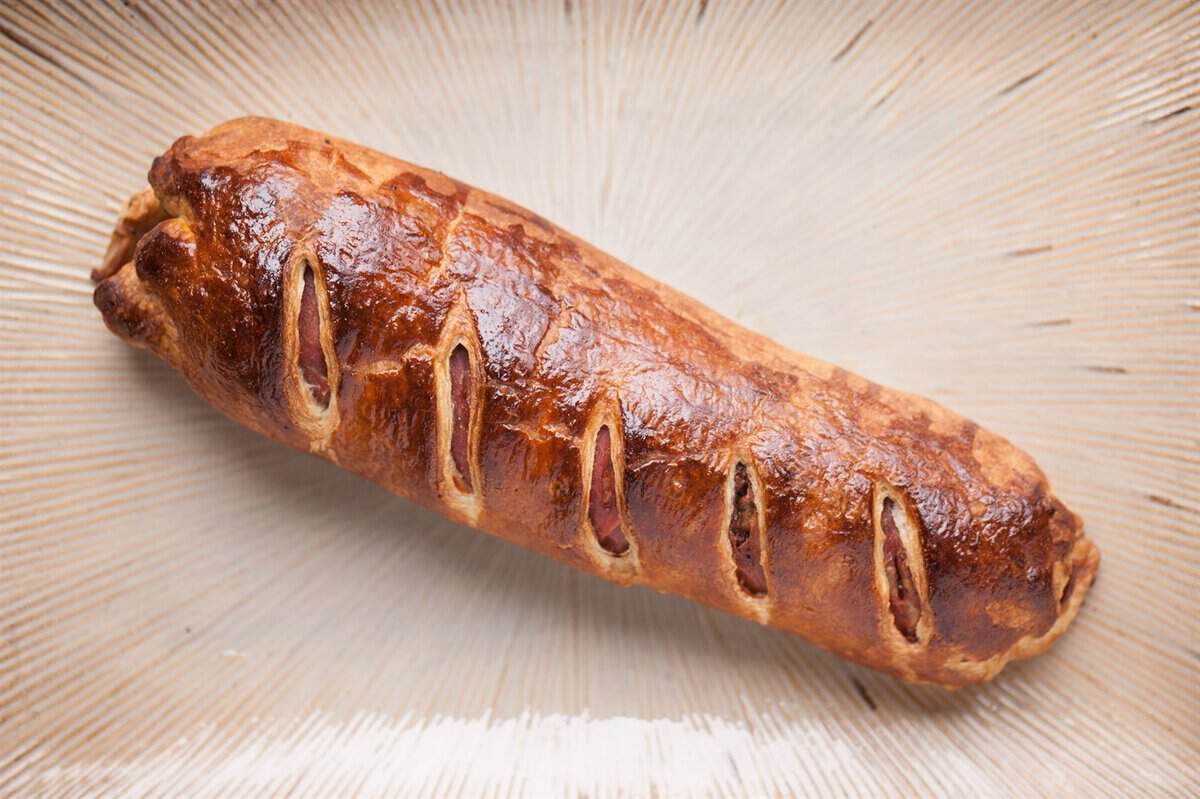
Step 8: Bake and rest
Bake for 20 to 30 minutes, until the pastry is deep golden brown. The time depends on the size of your tenderloin and how cold it was, so go by the thermometer, not the clock (the temperature is in the cooking tips below). Let it rest before you slice it.
Cooking Tips
- Pork tenderloin is a lean cut of meat but can sometimes have fat or a thin layer of silver skin on the outside. I recommend removing all of that with a sharp knife prior to cooking.
- Use a good quality meat thermometer to ensure you get perfect results.
- Plan on cooking until you reach an internal temperature of at least 145°F, followed by a minimum three-minute rest.
Common Pork Wellington Problems to Avoid
- A soggy bottom: besides wet mushrooms (see the PRO TIP above), an oven that isn’t hot enough can cause it. One reader baked it at 375°F instead of 425°F and the pastry came out soggy. Putting the baking sheet in the oven while it preheats gives the bottom a head start, and serving it right away keeps the pastry crisp.
- Pale pastry: brush the egg wash over every bit of the top and sides. If it’s still pale when the pork is almost done, the oven rack may be too low; next time bake it on a rack in the middle or upper third of the oven.
- Melty, goopy pastry before it goes in the oven: one reader assembled it with the pork and mushrooms still hot. Hot fillings melt the butter layers in puff pastry, so let the mushrooms cool before they go on, keep the pastry in the fridge until you’re ready to wrap, and get it into the oven as soon as it’s rolled up.
- Pastry falling apart when you slice it: let it rest first, then slice with a sharp serrated knife using a gentle sawing motion instead of pressing down.
- Dry pork: tenderloin is lean, so a few extra minutes in the oven makes a big difference. Pull it as soon as it hits the temperature in the cooking tips.
★★★★★
“I recently found this recipe and made it exactly to the recipe. It was fantastic. Came out perfectly. I was worried because I dislike dry pork. But it remained moist and very flavourful. I would make it again in a heartbeat.”
Terri, reader review
Making Pork Wellington Ahead, Storing and Reheating
Can I make it ahead? That’s the question I get asked more than any other on this recipe. I’ve always made it start to finish the same day, so I checked the USDA’s food safety rules before answering, and here’s the safe way to do it.
- Don’t sear it the day before: the USDA says never to brown or partially cook pork, then refrigerate it and finish cooking it later, because searing doesn’t cook it long enough to kill bacteria. If you sear the pork, wrap it and bake it right away.
- Up to 3 days ahead: cook the mushrooms and shallots, let them cool, and refrigerate them in an airtight container. This is the biggest time saver.
- Up to 1 day ahead: skip the sear and assemble it with the seasoned raw tenderloin. Wrap it tightly in plastic wrap and refrigerate. When you’re ready, brush on the egg wash, cut the slits and bake it straight from the fridge. It may need a few extra minutes, so go by the thermometer.
- Freezing: I don’t recommend freezing it unbaked. Pepperidge Farm says not to refreeze puff pastry once it’s thawed, and pastry that thaws around a moist filling tends to bake up soggy.
- Taking it to a party: assemble it at home with raw pork, carry it in a cooler with ice packs so it stays at 40°F or below, and bake it when you get there. If there’s no oven, bake it at home and keep it hot (140°F or above) until you serve it. Don’t partly cook it at home and finish it later.
- Leftovers: refrigerate within 2 hours and eat within 3 to 4 days. To reheat, warm slices in the oven or toaster oven covered loosely with foil, so the pork doesn’t dry out, until they reach 165°F. The microwave works but makes the pastry soft.
What to Serve with Pork Wellington
A nice vegetable on the side is all that is needed to complete this delicious meal. Roasted Brussels sprouts and asparagus are my favorites with it, but any green vegetable or roasted root vegetables work. Here are some recommendations:
- Roasted Asparagus
- Sautéed Brussels Sprouts
- Roasted Root Vegetables
- Roasted Green Beans
- Wilted Garlic Spinach
- Roasted Cauliflower Rice
- Raw Beet Salad
I also like a little spicy grainy mustard on the side, the same way I serve my pan seared pork chops.
Pork Wellington FAQs
Here are the other questions readers ask about making pork Wellington.
Is it okay if the pork is a little pink?
Yes, as long as it reached the safe temperature. The USDA says pork that has reached 145°F all the way through can still be slightly pink in the center and be safe to eat.
Can I double this recipe?
Yes, but make two separate Wellingtons instead of one big one. Each tenderloin gets its own sheet of puff pastry, and they bake side by side on a large baking sheet. Check each one with a thermometer.
What is the difference between pork Wellington and beef Wellington?
The cut of meat. Beef Wellington uses beef tenderloin and is usually served medium rare. Pork Wellington uses pork tenderloin, which is smaller, bakes faster and costs a lot less, and it’s cooked through to the safe pork temperature.
What sauce goes with pork Wellington?
Besides the grainy mustard I mentioned above, readers have served it with an onion pan gravy, a creamy cider and sage sauce, and a sherry mushroom sauce.
More Pork Tenderloin Recipes
Pork tenderloin is on my table all the time. Here are a few more ways I cook it.


If you tried this Pork Wellington recipe or any other recipe on my website, please leave a 🌟 star rating and let me know how it went in the 📝 comments below. Thanks for visiting!
Pin this now to save it for later
Pin ItPork Wellington

Ingredients
- 1.5 pound pork tenderloin
- 1 teaspoon seasonings I use a combination of salt, pepper, and dried thyme
- 1 sheet puff pastry dough
- 4 ounces thinly sliced prosciutto
- 1 tablespoon dijon mustard
- 1 tablespoon olive oil
- 1 tablespoon butter
- 8 ounces mushrooms diced
- 1 shallot diced
- 1 egg beaten
Instructions
- Preheat oven to 425°F.
- Season 1.5 pound pork tenderloin with salt, pepper, and dried thyme. Set aside.
- Roll out 1 sheet puff pastry dough (thawed) so that it’s as long as your tenderloin and wide enough to fully wrap around it.
- Arrange the 4 ounces thinly sliced prosciutto so that there is a thin layer covering the dough. Spread 1 tablespoon dijon mustard over the top.
- In a large skillet over high heat, melt 1 tablespoon butter with 1 tablespoon olive oil. Cook 8 ounces mushrooms and 1 shallot in a single layer, stirring only occasionally, until golden brown, about 5-10 minutes. Remove from pan and set aside.
- Add seasoned pork tenderloin to the hot pan and brown on all sides, about 1-2 minutes per side.

- Spread sautéed mushroom mixture on top of the prosciutto in a single layer. Add seared tenderloin. Insert meat thermometer into the thickest part of the meat at the end – the thermometer will be able to stick out even after rolled. Roll tenderloin in dough and seal the edge with the beaten egg. Place the wellington on a parchment lined or stone baking sheet, seam side down. Brush top of dough with egg wash and cut slits in the top to release steam.
- Cook in preheated oven for 20-30 minutes. Time will vary depending on size and starting temperature of the meat. Remove from oven when the internal temperature has reached between 145°F and 150°F. Allow meat to rest at least 3 minutes before slicing. Enjoy!

Notes
- Pork tenderloin is a lean cut of meat but can sometimes have fat or a thin layer of silver skin on the outside. I recommend removing all of that with a sharp knife prior to cooking.
- Use a good quality meat thermometer to ensure you get perfect results.
- Plan on cooking until you reach an internal temperature of at least 145°F, followed by a minimum three-minute rest.
- Substitutions: Bacon could be used in place of the prosciutto however it would need to be cooked first. Red onion could be used in place of the shallot.
- Make ahead: cook the mushrooms up to 3 days ahead, or assemble it with the raw, unseared tenderloin up to a day ahead and refrigerate. Don’t sear the pork and then refrigerate it to finish cooking later.
- To double: make two separate Wellingtons, each with its own sheet of puff pastry.
Video
Nutrition
Nutrition information is automatically calculated, so should only be used as an approximation.
This post was originally published in 2015. I’ve updated the photos and tips since then. The recipe itself is the same, except the card now says to cook the pork to at least 145°F, the USDA safe minimum.












I’m going to make this for a dinner party, can I use a pork loin roast instead?
So sorry for the late reply! Pork loin would work, but it would not be as tender as a tenderloin.
I am planning to make this for Christmas dinner. Can you make it earlier in the day and refrigerate it until you’re ready to put it in the oven?
Yes, with one change: skip the sear. Assemble it with the seasoned raw tenderloin, wrap it tightly and refrigerate it for up to a day, then bake it straight from the fridge, going by a thermometer since it may need a few extra minutes. You can also cook the mushrooms up to 3 days ahead. The USDA says not to sear pork and then refrigerate it to finish cooking later. Let me know how it goes!
I made this and it was delicious. My problem was because of the water contained in the mushrooms the bottom of my pastry got soggy. I tried to drain them as best I could, but unfortunately the bottom was more wet than anything. Any suggestions as to what I might have done wrong?
Hmmmm. My guess is that either all of the moisture didn’t cook out of the mushrooms when you sauteed them (over crowding in pan maybe) or they continued to “sweat” in the bowl after you cooked them and added the liquid to the pastry? I’m glad you still thought it was tasty! Hopefully it’s not so wet next time.
Thanks so much for the response. I probably didn’t sweat them out enough in the pan. I loved it so I know I’ll be making it again
I love this recipe..so do my friends and family. I use bacon as prosciutto is very spendy where i live..it sounds weird but i boil the bacon…it adds moisture and flavor and cuts down on the salt and fat. Works great. I never had the nerve to try a pork wellington…but this recipe is so easy and delicious. I serve with roasted baby potatoes, peas and gravy. Thanks!
I have never heard of boiling the bacon! Does it render the fat? I love cooking with bacon in recipes like these but the fat has to be completely rendered or it makes me ill. Such a great tip! -Krissy
Omg- fantastic recipe! It turned out perfectly and soooo yummy! One of my new favs!
this way amazing!!!! I had to strain the mushroom bc there was a bit too much liquid from them and I think I will add some white wine and cook the liquid off more next time. This is a keeper! LOVED IT!!! Thank you!
I did a trial run. Since I planned to prep the night before, I prepped and fridged it for a few hours. I then baked it to 135 degrees, wrapped it as I will for travel, and let it sit for 3 hours. When I unwrapped it, the crust was a bit limp, so I placed in oven for 10 minutes to crisp up. The pork was more well done, no pink, but I prefer it that way, It was still moist, very delicious, and a nice presentation, But no doubt, it’s best to serve immediately.
Thanks for sharing your trial run, Sandra. For anyone planning the same thing: the USDA says cooked food shouldn’t sit out more than 2 hours, and partly cooked pork shouldn’t be held to finish later. The safer way to travel with it is to assemble it with raw pork, carry it cold in a cooler and bake it when you get there.
I’d like to make this for a dinner party. The problem is that we’ll be driving almost 2 hours to the party. How will it hold up on the journey? I’d (under)cook it at home before leaving since it’ll continue to cook. Will the puff pastry get soggy? Would another kind of dough hold up better? Should I transport it wrapped in foil? Oven space may not be available when I arrive, but I’m guessing a few minutes to crisp it up would make it tastier. .
I wouldn’t partly cook it at home and finish it later. The USDA says not to do that with pork. Instead, assemble it at home with the raw, unseared tenderloin, carry it in a cooler with ice packs (40°F or below) and bake it when you get there. If there’s no oven, bake it fully at home and keep it hot (140°F or above) until dinner. Good luck!
I want to make this tonight but don’t understand cooking time and instructions .. and my oven is Celsius 🙈
Sorry I missed this! 425°F is 220°C (200°C in a fan oven). Bake it for 20 to 30 minutes, until a thermometer in the thickest part of the pork reads 145°F (63°C), then let it rest at least 3 minutes before slicing.
I would love a substitute for the mushrooms too. I really hate them.
Say it isn’t so! You could always caramelize onions and use those instead.
Dehydrated apples can be substituted for the mushrooms.
Oooh.. great suggestion!